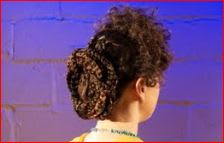
Hairdressing Archaeologist Janet Stephens has combined career with personal passion and the result is rewriting history---literally. A stylist with an intense interest in hair and costume history, most notably the lives of ancient Greeks and Romans, Stephens recreates the hairstyles captured in marble of the imposing Empresses and goddesses of old and in doing so, proved that the intricate braids and time-consuming styling was done not with wigs (as scholars have proposed for years) but on the long-ago lovelies’ own hair.
“One day, I was killing time at the Walters Museum in Baltimore while my daughter was at a music lesson and I ended up in the Ancient Roman collection,” says Stephens. “They were making changes in the gallery and they had set some of the portrait statues in the middle of the gallery and I got to see the back of the head and that is where all the hairdressing happens. Usually, they are pushed up against a wall because they expect you to be most interested the face but I’m a hairdresser--I don’t care about her face, I want to see the hair. I looked at the back of these heads and mentally started dissecting the style.”
Ad Loading...
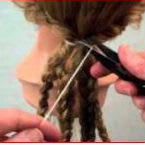
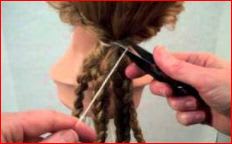
Once home, Stephens pulled out a long hair mannequin and got braiding and weaving, using reverse engineering and her hairdresser smarts to recreate the shape. But when she got to the point where she would attach to the head, she couldn’t make it work with u-shaped hair pins—the style kept falling apart.
“For years, scholars assumed that the styles were either invented by the sculptors or that these were wigs. Technologically, wigs are much harder to make than to dress the natural hair. Plus, if every single elite woman in Rome was wearing someone else’s hair, where was all this hair coming from? Ancient authors talk about wigs pejoratively; things that are normal and accepted rarely get talked about it, while things that are unusual do get talked about. So it made sense that wigs were not the norm.”
She hit the research library and tried to find any references to wigs, to hairdressing. She knew from previous study that every woman at this time, regardless of class, was trained in needle work. It was a natural leap to surmise that woman had translated needle and thread technology to hairstyles, “sewing” the many braids to attach them.
“It’s hard in our industrial world to think of a time when every single object was handmade, every thread of your garment was spun by hand, every fabric hand woven," says Stephens. "There were fewer things so you had to be more creative with them. Fashion was expressed through hairstyles.” And those hairstyles were created like the couture of today—they were sewn.
In her videos, Stephens uses tools typical of the time to create her styles. The videos have thousands of views and comments from hairdressers, costume designers, and people fascinated with period styling.
Ad Loading...
“I throw it out there because there have to be other hair wonks like me.”
What makes salon content worth a pause? Hairstylists Janelle Eyre, Sean Crutcher and Luis Rodriguez share how they show their work, earn guests’ trust and make posting feel manageable. You can get MORE from these artists in our upcoming webinar!
Anny VanDriel, owner of Be Rosie Salon and creator of Pricing Isn’t Personal, volunteered to share a pricing presentation to beauty school students a year ago, and ended up learning more than she expected.
From the launch of the Ulta BeautyArtist Collective to the evolution of Trendspiration, celebrating stylists is what The Salon at Ulta Beauty does best.
With more than four decades in the industry, hairdresser and MODE Education founder Stan Newton has built a career around the art and discipline of cutting hair, learning the rules so he can break them.
Beauty professionals should evaluate each service based on its popularity, profitability, and alignment with current trends. Conducting client surveys and analyzing booking data can provide insights into which services are in demand and which might be phased out.
LifeSpa leader Ali Yanez explains why strong mentorship, predictable income, meaningful recognition and the right work environment help beauty professionals build careers that last.
Whether a beauty professional chooses a commission salon, booth rental, salon suite or salon ownership, the common thread is having more choices than ever before.
Sport Clips Haircuts will host its inaugural "Level Up Live," a first-of-its-kind virtual event that combines live haircutting education, career inspiration, product knowledge, and employment opportunities for licensed stylists and cosmetology students nationwide.
Orthopedic PT reveals three daily exercises plus ergonomic advice that can help salon professionals avoid the aches and injuries caused by standing, bending and repetitive overhead work.
Salon suite pioneer Karen Kaminski argues that the next evolution of independent beauty businesses won't be defined by beautiful spaces alone, it will be driven by smarter systems that help professionals spend less time on administrative work and more time serving clients.
At a time when many LGBTQ+ people felt compelled to hide parts of themselves, Carlos Valenzuela found a career in beauty and a community that offered opportunity based on what you could do and how well you could do it.
Whether it's social media, fashion, film, art, or culture, Chaz Dean advises stylists to stay aware of what's inspiring people. Take the elements that make sense for you in these five lessons learned through a life in beauty.
For Jessica Domoney, building a successful career isn't about saying yes to every opportunity, it's about protecting your time, investing in yourself and creating an experience clients won't forget.
"The mistake people make is treating AI like a vending machine instead of a personal assistant." Digital marketing expert Scott Moon shares how beauty professionals can use AI while staying authentic