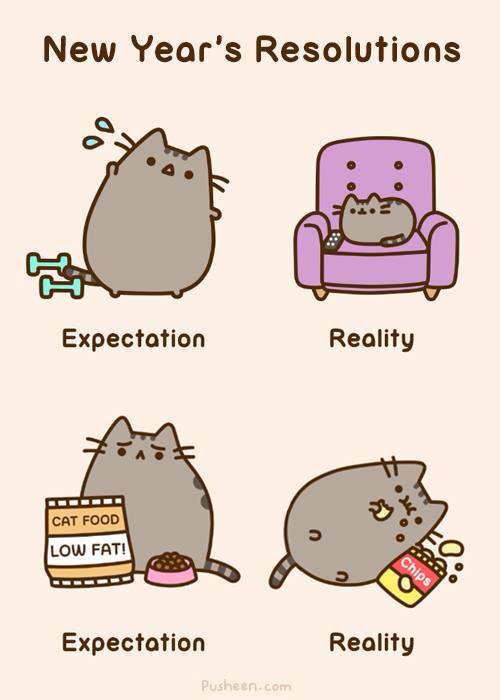
Just five days into the new year, we asked you on MODERN SALON's Facebook page whether you were keeping your resolutions or ditching them. In just five days, about half of your responses indicated that you’d already given up! As contributor Daniel Massé put it: expectations .... replacing reality by really.
Let’s put you back on track. Dr. John Norcross, a researcher at the University of Scranton, did a study on New Year’s resolutions, and his work became the subject of a really cute Upworthy.com video by Dr. Mike Evans, associate professor of family medicine and public health at the University of Toronto, staff physician at St. Michael’s Hospital and director of the health Design Lab at the Li Ka Shing Knowledge Institute of St. Michael’s Hospital.
Ad Loading...
Some major findings of the study were:
50 percent of people make a commitment to improve some aspect of themselves in the coming year, with 41 percent making actual resolutions.
71 percent remained successful through week 2; the figure dropped to 46 percent at six months. "People who set their goals at the New Year were 10 times more likely to be successful than those who tried at some other point during the year.
In evaluating why the success rate is higher for goals set at the New Year, Dr. Evans concluded that New Year’s is recognized as a time to be mindful and reflect, and we tend to announce our New Year’s resolutions and receive support from friends who are also are making changes. He offers some tips for sticking with your goals:
1. Become a “reflective learner.” That means being able to see your personal strengths and weaknesses, gain clarity about priorities, balance optimism with realism and have flexibility.
Ad Loading...
2. Think small, not big. Set little increments for each goal and celebrate each short-term success. Don’t copy the CEO and lay out a huge agenda. Instead, think of yourself as a plumber or carpenter. Set up your tools, reframe and adapt your structure and be confident that you can rebuild with better habits, one task at a time.
3. Don’t rely on willpower. Rather, set up your routine and environment to minimize temptation. “If you have a bigger bucket of popcorn, you’ll eat it,” Dr. Evans says. “Successful people schedule weekly sports games, hire a trainer, throw out the ashtray, put out their running shoes, cut up fruits and veggies and put them in the front of the fridge. They use their high-willpower moments to prepare for the low-willpower moments. We’re creatures of habit.”
January is named after the Janus, the Roman god of beginnings of transitions, who faces both the future and the past. Dr. Evans says, “That’s what’s special about New Year’s—learning from the past but pointing to a ‘new you’ and saying, ‘That’s where I want to go.’”
Anny VanDriel, owner of Be Rosie Salon and creator of Pricing Isn’t Personal, volunteered to share a pricing presentation to beauty school students a year ago, and ended up learning more than she expected.
From the launch of the Ulta BeautyArtist Collective to the evolution of Trendspiration, celebrating stylists is what The Salon at Ulta Beauty does best.
With more than four decades in the industry, hairdresser and MODE Education founder Stan Newton has built a career around the art and discipline of cutting hair, learning the rules so he can break them.
Beauty professionals should evaluate each service based on its popularity, profitability, and alignment with current trends. Conducting client surveys and analyzing booking data can provide insights into which services are in demand and which might be phased out.
LifeSpa leader Ali Yanez explains why strong mentorship, predictable income, meaningful recognition and the right work environment help beauty professionals build careers that last.
Whether a beauty professional chooses a commission salon, booth rental, salon suite or salon ownership, the common thread is having more choices than ever before.
Sport Clips Haircuts will host its inaugural "Level Up Live," a first-of-its-kind virtual event that combines live haircutting education, career inspiration, product knowledge, and employment opportunities for licensed stylists and cosmetology students nationwide.
Orthopedic PT reveals three daily exercises plus ergonomic advice that can help salon professionals avoid the aches and injuries caused by standing, bending and repetitive overhead work.
Salon suite pioneer Karen Kaminski argues that the next evolution of independent beauty businesses won't be defined by beautiful spaces alone, it will be driven by smarter systems that help professionals spend less time on administrative work and more time serving clients.
At a time when many LGBTQ+ people felt compelled to hide parts of themselves, Carlos Valenzuela found a career in beauty and a community that offered opportunity based on what you could do and how well you could do it.
Whether it's social media, fashion, film, art, or culture, Chaz Dean advises stylists to stay aware of what's inspiring people. Take the elements that make sense for you in these five lessons learned through a life in beauty.
For Jessica Domoney, building a successful career isn't about saying yes to every opportunity, it's about protecting your time, investing in yourself and creating an experience clients won't forget.
"The mistake people make is treating AI like a vending machine instead of a personal assistant." Digital marketing expert Scott Moon shares how beauty professionals can use AI while staying authentic
Real-world advice on creativity, consultations, color, burnout, business, boundaries, inclusivity, client care, and career growth from educators and industry experts.
Real-world advice on creativity, consultations, color, burnout, business, boundaries, inclusivity, client care, and career growth from educators and industry experts.