In the Market for Shears? Here's What You Need to Know to Make the Most of Your Investment
No single tool is more important to stylists than their shears. It’s equivalent to a chef’s knives or a baker’s oven. Your shears are literally in your hands all day, every day, so when you’re shopping for scissors, you need to get it right.
April 14, 2021
In partnership with
5 min to read
No single tool is more important to stylists than their shears. It’s equivalent to a chef’s knives or a baker’s oven. Your shears are literally in your hands all day, every day, so when you’re shopping for scissors, you need to get it right.
The folks at Scissor Tech really know their shears—they’re an online global leader in shears and accessories for hair pros with hundreds of truly top-quality products to choose from. If you’re in the market for a new pair of pro shears, they recommend understanding the following factors to help you make your choice.
Ad Loading...
Get Schooled on Your Blade Edge Choices
When it comes to the cutting technique you’re performing, the choice of blade is critical. When it comes to blades, you have three options:
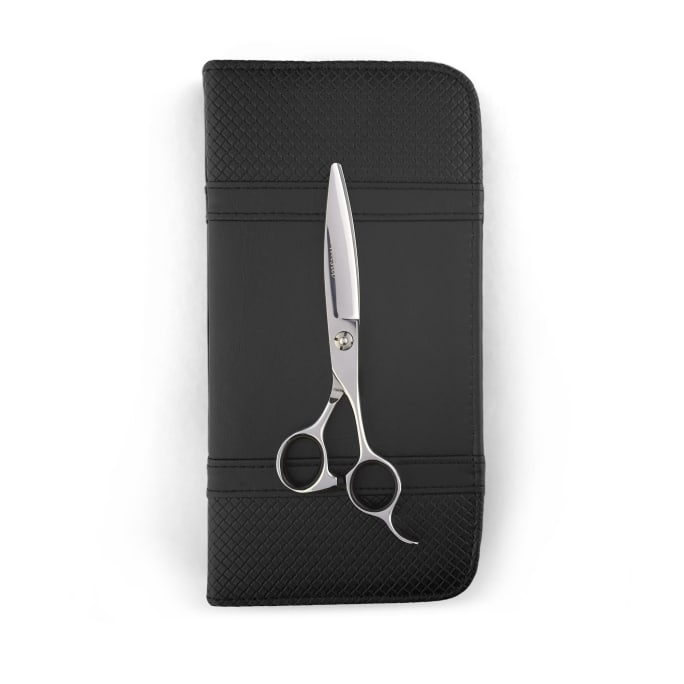
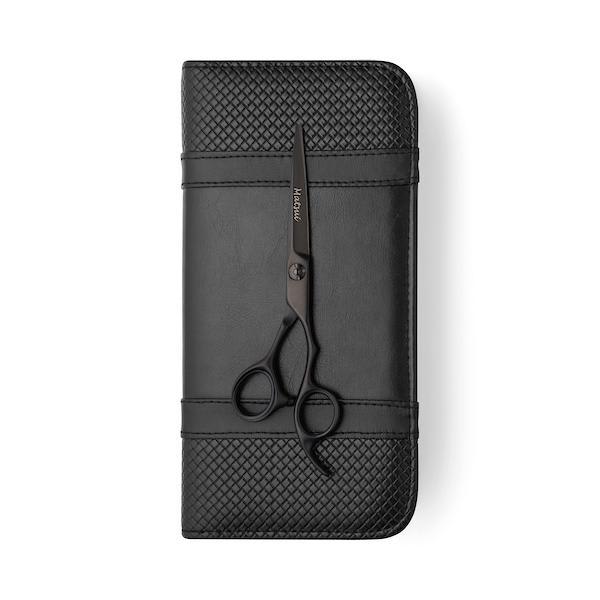
What they are: Convex blades are the sharpest tools in the shed—literally. They are so sharp, they slice through anything like buttah, which means they should only be handled by seasoned pros!
Best for: If you like to slice, feather, slide cut and point cut, a pair of convex shears like these are a must-have. Convex shears aren’t always your first choice for blunt and perimeter cutting since they’re so fine and razor sharp, but having a good pair in your kit is perfect for fine and detail work.
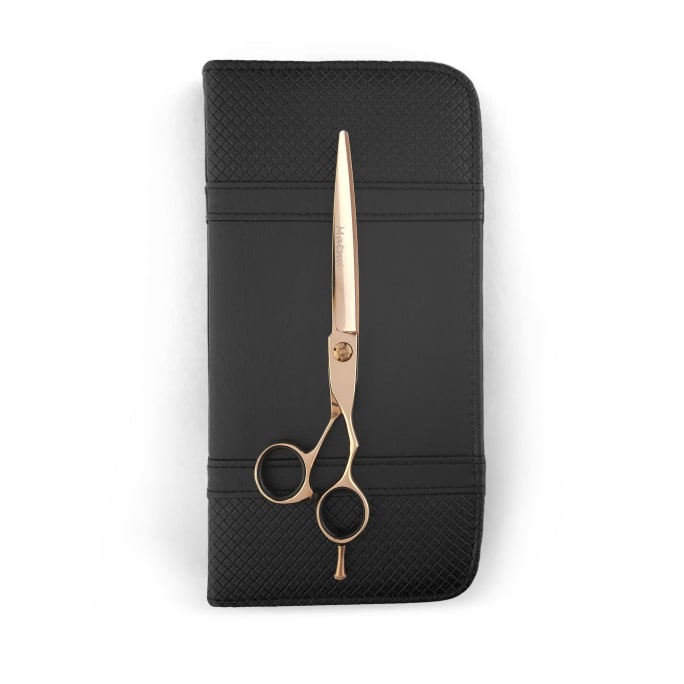
What they are: Beveled blades are the classic workhorses of the shear universe. They’re not as sharp as convex blades, but they get the job done and they’re affordable.
Best for: Blunt cutting and scissor-over-comb, which makes a pair like this an essential for barbers. Blunt blades probable aren’t the best choice for precision detail techniques like slide cutting.
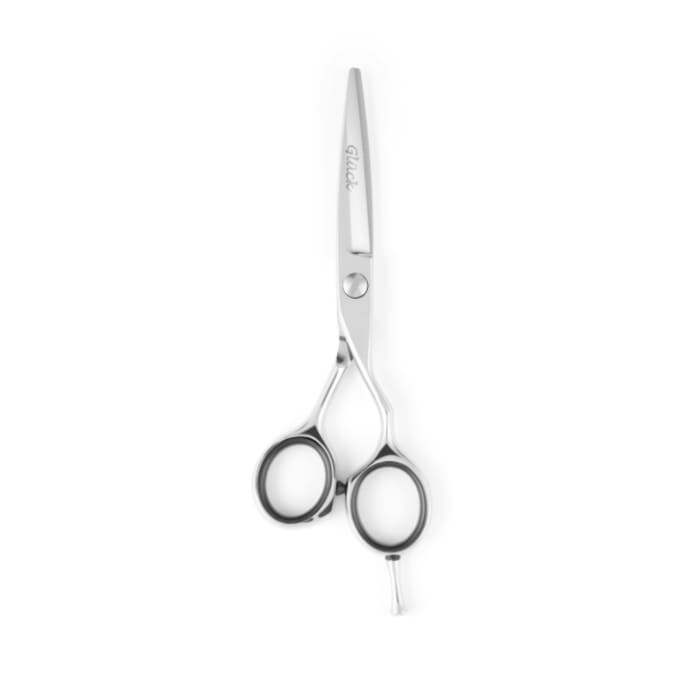
What they are: A bit narrower than a classic beveled blade, and less fine than a convex blade, the semi-convex blades offer the best of both worlds.
Best for: You can perform perimeter and interior techniques with semi-convex blades. If you’re using them to slide cut or point cut, be sure your sections aren’t too thick. If you already own a pair of shears with convex blades, a pair with semi-convex blades like this is a perfect companion.
Study Your Handle Design Choices
Blades are about achieving the most effective performance, while handle choice is all about comfort—namely yours. Here are the four top handle choices with tips on finding the perfect fit!
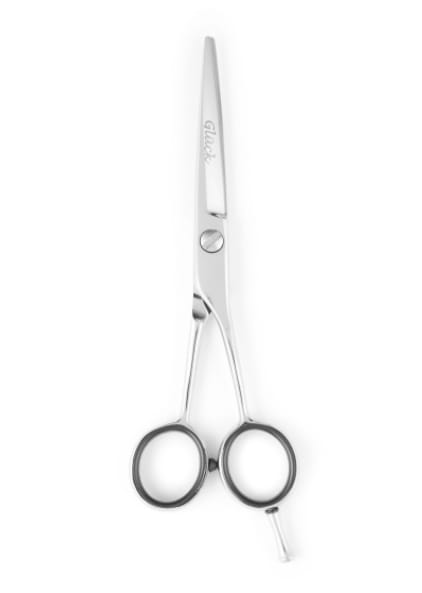
What it is: Just that—the classic side by side configuration. Look for a pair like this, which features plastic inserts to ensure a comfortable finger fit.
Best for: Haircutters who hold their scissors with their middle fingers rather than their ring fingers. If you do cut this way, be aware it could lead to problems like carpal tunnel syndrome in the future.
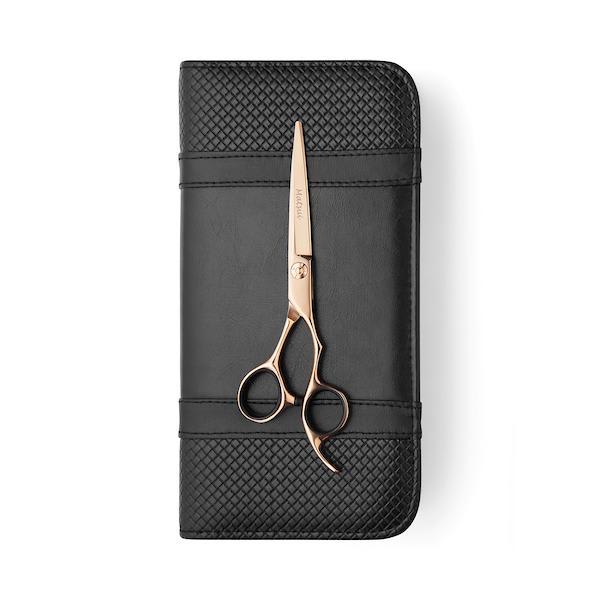
What it is: Arguably the most common handle shape, the offset offers a relaxed, free-flowing grip that reduces risk of injury while keeping the thumb in a natural position.
Best for: Cutters who use their ring finger to hold the scissors while cutting. To diminish risk of injury even more, be sure to raise your elbow while cutting. Consider a pair of shears like this which features a tension system for extra smooth handling.
What it is: An even more angled version of the offset is the crane handle that doesn’t compromise on maneuverability.
Best for: Due to the angle in the arch, the crane handle encourages the cutter to drop the elbow and improve the body position while working, thereby preventing fatigue and injury. If you’re experiencing neck, shoulder or wrist pain, or you would like to prevent pain in the future, a pair of shears like this is the way to go.
What it is: This handle offers 360-degree rotation for ease and comfort regardless of your cutting angle or position. It may take some getting used to working with a swivel handle, but once you adjust to a set like this, you’ll never work with another type of handle.
Best for: Anyone who wants to banish neck, wrist or shoulder pain for good.
Learn the Difference Between Thinning Shears and Texturizing Shears
Ad Loading...
Is there a difference between the two? Absolutely! And mastering both types will greatly elevate your cutting skills!
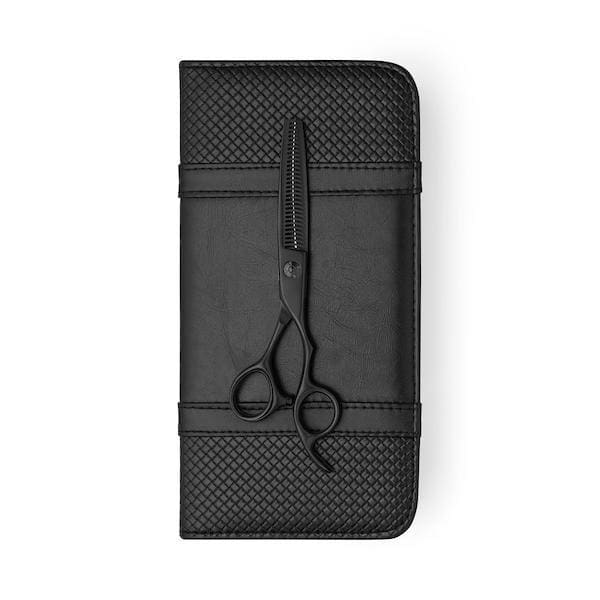
What they are: Thinning scissors feature 40 or more teeth on one blade and a smooth second blade.
Ad Loading...
Best for: No surprise here—they’re used to thin the hair and remove excess bulk! The more teeth on the serrated blade, the more hair will be removed. Thinning shears can also polish up a haircut by blending heavy lines. Keep in mind it’s important to use a light touch. With thinning shears like these, a little goes a long way!
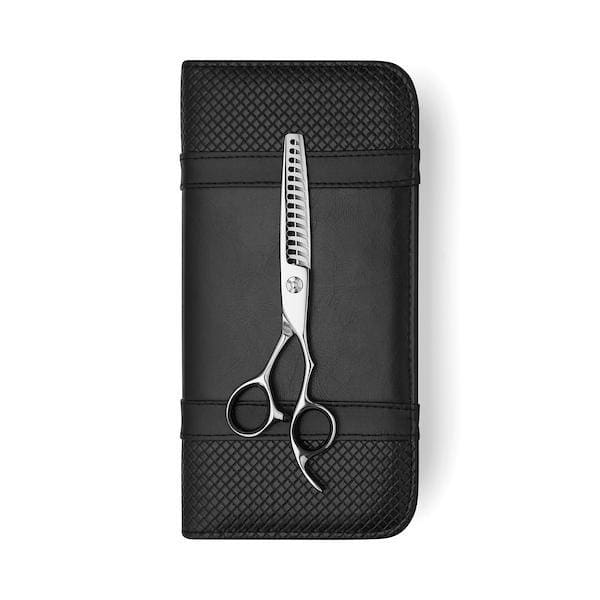
What they are: Texturizing shears are constructed with five to 25 evenly spaced teeth on one blade and a smooth second blade.
Ad Loading...
Best for: With fewer teeth, texturizing shears remove less hair than thinning shears, thereby offering subtle texturizing effects for body and dimension. The fewer the teeth, the more extreme the finished texture will be. Use shears like these to shatter a blunt bob or blend an unruly fringe.
Launch Your Career With a Starter Kit
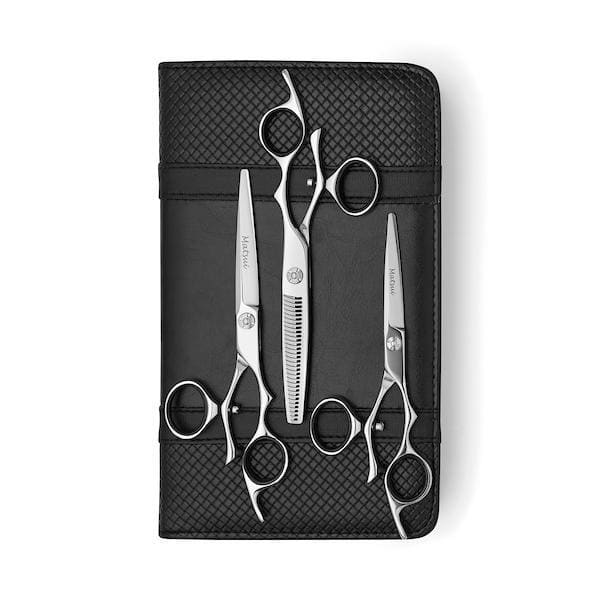
New to the business and still not sure how to start building your scissor tool kit? Consider a starter pack like this one. The best-selling kit includes a 5.5-inch Matsui Apprentice Cutting Scissor, 6-inch Matsui Apprentice Cutting Scissor with serration for blunt cutting and 6-inch Matsui Apprentice Thinning Scissor, plus a case, razor, spare blades, scissor oil, cleaning cloth, tension adjuster and spare finger inserts. It’s everything you need to get started on your cutting career!
Regardless of where you are on your haircutting journey, check out Scissor Tech for a wide selection of cutting tools, shipped straight to your door and supported by in-depth information and a seven-day exchange or refund policy.
Here’swhat stylists have to say about Scissor Tech!
HUSH Pro USA addresses an overlooked Issue: the stress of loud clippers and trimmers. Inspired by the need for more accessible and comfortable grooming experiences, the company develops clippers and trimmers engineered for control, precision, and reduced noise.
With more than four decades in the industry, hairdresser and MODE Education founder Stan Newton has built a career around the art and discipline of cutting hair, learning the rules so he can break them.
Get the steps to create this look, New Muse, which is a "couture cut," that perfectly accentuates the client’s face shape and haircolor. Straight lines build structure, while soft, jagged, diffused lines showcase a delicate beauty.
“We are some of the luckiest creatives on the planet. As hairdressers, we get to shape more than hair—we shape identity. We create for our clients, inspire fellow artists, and are continuously inspired by each other. That exchange of artistry is at the heart of this story and at the heart of this haircut."
This collection of color formulas is your recipe box for luscious finishes with the ingredients, tested techniques, and step-by-step guidance to satisfy your color cravings. And just like in any great kitchen, the real magic happens when the chef adds a personal twist.
Discover the Cascade Cut, a trending haircut technique from Lloyd Court, creative director and co-owner of seanhanna salons in Wimbledon. This disconnection-based layering method can be customized for any hair type, especially fine hair in need of volume.
Learn how to cut the perfect pixie haircut with expert advice from Sam Villa Team Member Adrian Sandoval. Step-by-step techniques and pro tools included.
The disconnected cheekbone-grazing layers, and the heavy fringe, are the hallmarks of the hime or princess cut, also sometimes known as the jellyfish cut.
Great Clips keeps stylists’ skills sharp with advanced techniques and trends training. Meet The Alex, a hairstyle inspired by a stylist's child and a desire to create gender-neutral looks.