Hair Thinning: What Stylists Should Know About the Early Signs, Scalp Health and When to Refer
If you can help a client in the early stages of hair loss, you not only help preserve their hair but also their relationship with you is preserved. We hear from certified trichologists on some myths, early warning signs, plus a launch that will help stylists support their clients with an easy solution.
Anne Moratto Director of Brand Content Strategy, MODERN SALON and NAILS
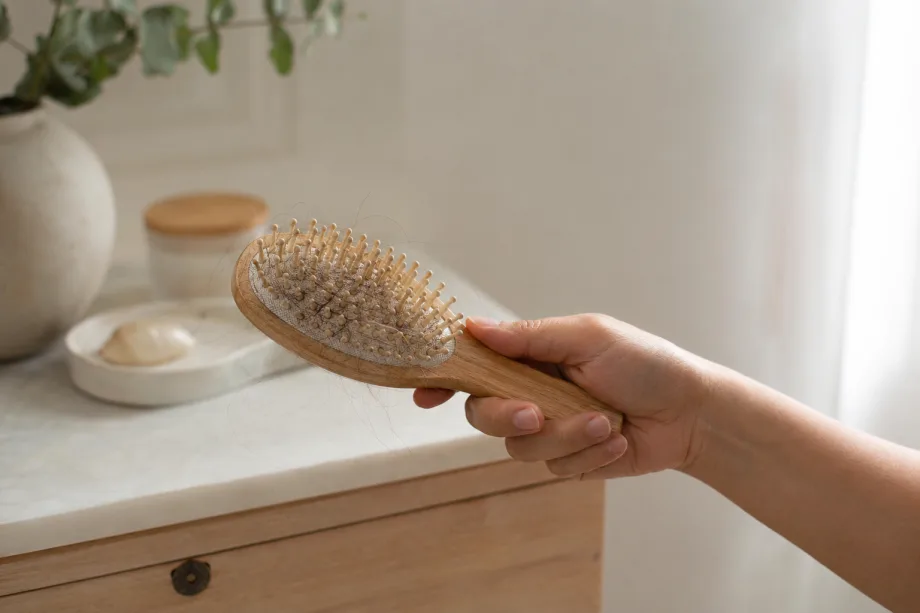
This image was AI-generated using ChatGPT. Refer to our Terms of Use.
5 min to read
Stylists should recognize early signs of hair thinning to provide timely advice to clients and potentially prevent further hair loss.
Understanding scalp health is essential for stylists, as it is a fundamental aspect of addressing hair thinning issues effectively.
When hair thinning persists or underlying health issues are suspected, stylists need to refer clients to a certified trichologist or medical professional.
*Summarized by AI
Does it seem like every week another client is asking about thinning hair, increased shedding or scalp concerns? Whether the cause is hormones, stress, nutrition (and how GLP-1s might contribute to this), inflammation or genetics, hair loss has become one of the most common conversations happening in salons today.
While stylists aren't expected to diagnose hair loss, they are often the first professionals to notice subtle changes in a client's hair or scalp, sometimes long before the client does. Understanding a few trichology fundamentals can help stylists recognize when something isn't quite right, educate clients with confidence and know when it's time to refer someone to a dermatologist or certified trichologist.
Ad Loading...
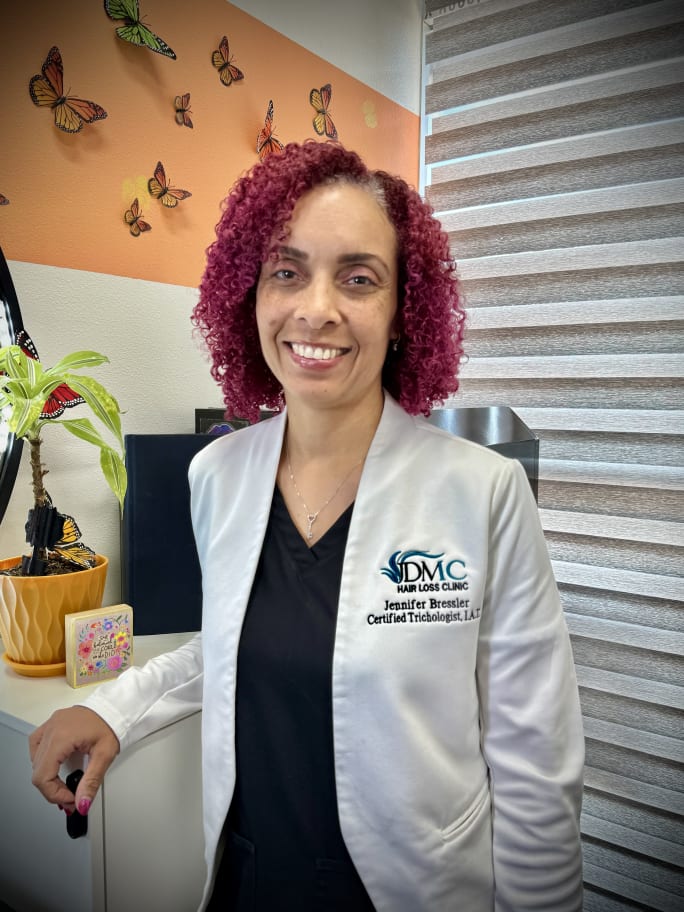
Jennifer Bressler is a certified trichologist and curly hair specialist dedicated to helping clients achieve healthy hair and scalp goals. As the founder of Jennifer Does My Curls and JDMC Hair Loss Clinic, she combines science, continuing education and personalized care to uncover the root causes of hair and scalp concerns.
"I take a compassionate approach and educate my clients on what is happening on an individual basis," says Bressler. "I empower clients with knowledge so they can make confident decisions about their hair. Whether I'm restoring scalp health, caring for curls or educating on my social platforms, my mission is simple: cater to each person based on their individual needs."
We asked Bressler to share what every salon professional should know.
"The hair tells a story that something is off in the body."--Jennifer Bressler
MODERN SALON: Stylists often see subtle changes in a client's hair long before the client notices them. What are the earliest indicators of thinning or follicular miniaturization that every salon professional should recognize?
JENNIFER BRESSLER: When it comes to thinning and follicular miniaturization, the key thing to recognize is what is going on with the client hormonally.
In this particular case, we're referencing Female Pattern Hair Loss (FPHL) (gradual thinning, typically across the crown and part line) or Male Pattern Hair Loss (MPHL) (a receding hairline and/or thinning at the crown). Males will often experience MPHL earlier in life if they have a genetic predisposition to DHT (dihydrotestosterone), while females usually experience FPHL during perimenopause to menopause and also have a genetic predisposition and sensitivity to DHT.
The biggest visual clue is a widening of the part. The hair will gradually show signs that terminal hairs are miniaturizing (becoming progressively finer, shorter, and less visible with each growth cycle), causing noticeable thinning over time.
Why K18's New Hair Longevity Serum Is Worth Watching
Known for bringing biotechnology to hair care, K18 is taking on premature hair aging and hair thinning.
K18 built its reputation around hair repair through biotechnology. Now, the company is applying that same biology-first philosophy to one of today's fastest-growing client concerns: thinning hair, increased shedding and premature graying.
Its new FutureIQ™ Biomimetic Hair Longevity Serum, a lightweight nightly serum targets three interconnected concerns at once—hair retention, scalp vitality and pigment longevity—through what K18 calls a biology-first approach to premature hair aging.
One Product. One Routine.
One of the biggest challenges with any hair-loss regimen is compliance. Clients are often asked to juggle multiple products, so K18's FutureIQ serum is intended to simplify that process. Applied once nightly, the all-in-one formula is designed to support scalp health, reduce visible shedding and help preserve natural pigment, all in a single step.
A Shift Toward Prevention
Rather than waiting until hair loss becomes significant, K18 positions the serum as an early intervention for clients and support for the biology of the scalp and hair follicle before visible changes become more difficult to reverse.
For stylists, products like FutureIQ also create an opportunity to expand consultations beyond cosmetic concerns and begin conversations about long-term hair health, an approach that aligns with the growing emphasis on scalp wellness and trichology education throughout the professional beauty industry.
MS: When a client says, "I think I'm losing my hair," where does the conversation begin?
JB: Usually a client will begin by sharing what's going on in their life. They may be severely stressed, depressed, have lost a loved one, had major surgery, lost their job or be dealing with ongoing work stress.
If they simply come out and say they think they're losing their hair, it's important not to disregard their claim. At the same time, you want to show empathy and remain calm.
To understand whether a client is experiencing shedding, breakage or progressive hair loss, we first have to understand that any significant change to the hair is multifactorial.
The hair tells a story that something is off in the body.
Key factors include:
Nutritional deficiencies
Hormonal deficiencies
Stress
Autoimmune disorders
Inflammatory issues
Normal shedding is about 100 to 150 hairs per day. If someone shampoos only every seven days, they're going to see an accumulation of that daily shedding all at once.
When it isn't normal is when hair is coming out in clumps while running your hands through it, brushing, combing or when clients find clumps of hair on their pillow. That's when we need to find the root cause of why it's happening. It's simply like peeling back the layers of an onion.
If you're trying to determine whether you're seeing breakage, ask questions:
When was their last haircut?
How do they style their hair?
Do they wear tight ponytails?
How do they remove their scrunchies?
Sometimes clients are creating unnecessary breakage without realizing it.
In rare cases, they may even have a condition like monilethrix, an inherited hair disorder that causes the hair shaft to break easily and develop a bead-like appearance.
Progressive hair loss is much more complex because it depends entirely on the individual dealing with it. That's when stylists should refer clients to a certified trichologist or dermatologist with in-depth knowledge of hair loss.
Helping Clients with Hair Loss: Three Practical Reminders
Certified trichologist Kati Giles shares three takeaways for helping clients navigate thinning hair with confidence.
For more than 20 years, Kati Giles, a World Trichology Society Certified Trichologist, has specialized in hair restoration, alternative hair solutions and scalp health. She helps clients experiencing thinning hair, medical hair loss and hormonal changes while educating salon professionals on hair loss solutions throughout North America.
Hair loss is a symptom not a diagnosis.
"Hair loss of all kinds is indicative of something else going on," says Giles. "Many stylists don't know the difference between shedding and actual hair loss, let alone how to help."
She encourages stylists to remember that every client is different, and solutions should be based on the stage of hair loss, lifestyle and budget.
Recommend products you trust.
Giles advises clients to purchase professional products through salons rather than relying on Amazon or social media ads.
"So many ads are misleading," she says. "That's why it's important to recommend products you've researched and trust."
Giles encourages stylists to recommend professional-grade products they've researched and trust, rather than relying on products promoted through online marketplaces or social media advertising. She notes that evidence-based options, including FDA-cleared low-level light therapy devices, may be appropriate for some clients, depending on their diagnosis and treatment plan."
Never stop learning.
"There are so many solutions available today to help clients experiencing hair loss," says Giles. "Staying on top of advanced education and emerging technology helps you continue to grow as a stylist while better serving your clients."
MS: Scalp wellness has become a much bigger focus in the salon. What does a healthy scalp actually look like?
JB: I think it's important that scalp health doesn't become "trendy." Proper education is needed to understand what can be done safely in the salon versus when a client needs medication or medical treatment from a dermatologist.
Some conditions may look very similar. For example, a client may actually have psoriasis while you're trying to treat dandruff. Those are two completely different conditions, and a simple scalp treatment isn't going to address the root cause.
If you're unsure of your client's concerns, don't guess. Kindly recommend they see their dermatologist or a certified trichologist for further evaluation.
A healthy scalp has a balance of good and bad microorganisms living in harmony. It should be free of redness, irritation, flaking and excessive buildup. It shouldn't be excessively oily or overly dry, and the follicular openings should appear clear.
MS: What's one myth about thinning hair you wish stylists would stop repeating?
JB: Oh boy...just one? I would love our industry to know that biotin is not scientifically supported as a way to grow hair.
In fact, it's extremely rare to have a true biotin deficiency because our everyday diet provides it, and we only need a very small amount.
Biotin does support keratin production, and it's safe and inexpensive to take, which is why companies continue using it as a familiar marketing buzzword.
MS: As more clients ask about thinning hair and scalp health, where do you see the biggest gap in professional education?
JB: There is so much we don't know. I'm constantly reading and studying to better understand the scalp microbiome and hair loss. You really have to continue your education if you want to understand every aspect and properly interpret the science.
The biggest gap is believing scalp health is an overnight certificate. It isn't. I can't stress this enough.
You can't possibly understand this complex subject without a full commitment. It takes years of learning about scientific research, nutrition, hormones, stress, sleep, exercise, genetics—and the list goes on.
If you can help a client in the early stages of hair loss, you not only help preserve their hair but also their relationship with you is preserved. We hear from certified trichologists on some myths, early warning signs, plus a launch that will help stylists support their clients with an easy solution.
The most successful salon suites balance personality, function, and comfort. Megan Communale of My Salon Suite shares her best advice for designing a space that supports your business goals and leaves a lasting impression on every guest.
Real-world advice on creativity, consultations, color, burnout, business, boundaries, inclusivity, client care, and career growth from educators and industry experts.
For salons and stylists ready to tackle hair-thinning, understanding the why, building the right network of partners, and offering scalp-focused services will be key.