Challenging the Rules of Haircutting: An Interview with Nashville Artist Stan Newton
With more than four decades in the industry, hairdresser and MODE Education founder Stan Newton has built a career around the art and discipline of cutting hair, learning the rules so he can break them.
Anne Moratto・Director of Brand Content Strategy, MODERN SALON and NAILS
Stan Newton has over four decades of experience in the hairdressing industry.
He is the founder of MODE Education, focusing on the art and discipline of haircutting.
Newton's career is marked by a commitment to curiosity and challenging traditional rules in haircutting.
*Summarized by AI
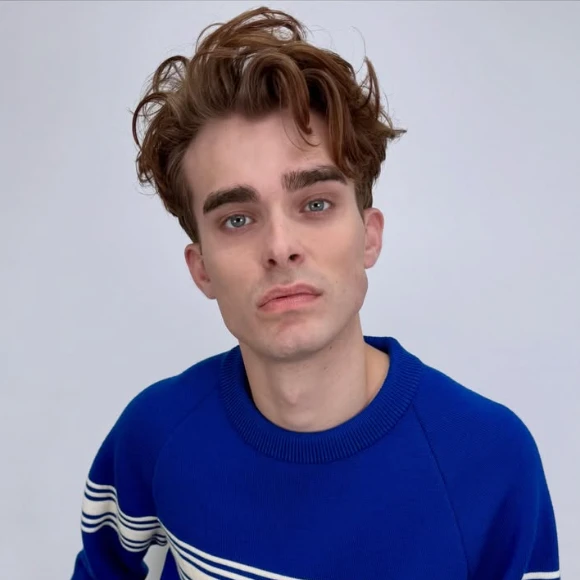
With more than four decades in the industry, hairdresser and MODE Education founder Stan Newton (@stannewtonhair) has built a career around the art and discipline of cutting hair. As a MODERN SALON 100 Honoree in 2025, I have wanted to speak with Newton for over a year, and we found time this summer to really dive into his start in England, his apprenticeship with Sassoon, later roles with renowned creative teams, and the development of his own cutting and styling education.
Today, working out of the Nashville salon, Local Honey, Newton continues to celebrate shape and challenges the idea of "suitability." In this interview, we talked about why consultation should inspire curiosity, how hairdressers can break through a creative plateau, and why, at this stage of his career, he is having such a blast.
Ad Loading...
MODERN SALON: How did you get started in hairdressing, and who were some of your early mentors?
Credit:
Stan Newton Hair
STAN NEWTON: My story began very humbly. After completing a three-week work experience program at Jeeves, a salon group in southeast England, I was offered a Saturday job. I washed hair and did a lot of neutralizing because perms were very popular then.
The industry was like love at first sight. I’m an obsessive character, and I became obsessed with hair very quickly. The people at Jeeves took me to my first hair show, the L’Oréal Colour Trophy, around 1984. That experience cemented it for me: This was what I wanted to do.
A married couple I worked with encouraged me to find an apprenticeship in London’s West End, to be at the heart of the industry. I interviewed with all the big names at the time, including John Frieda, Daniel and Joshua Galvin, Trevor Sorbie and Sassoon.
I was constantly looking at imagery in Hairdressers Journal, which was published weekly then, and Sassoon’s work really stood out. That’s where my full-time career began. I became a Sassoon apprentice and quickly realized it was going to be an intense education. The standards were strict, and there was a very definite philosophy behind everything.
Ad Loading...
"I was fortunate to have some incredible mentors. Drew Jarrett had a major influence on how confidently I presented myself and helped me understand that hair could be about more than the person sitting in the chair. Howard Harrison, the creative director at the time, was a magician. He could make anyone in his chair feel incredibly attractive, and the way he worked appeared effortless."--Stan Newton
Credit:
Stan Newton Hair
I was also influenced by people such as Christopher Brooker, Tim Hartley and Pam Roscoe. Ray Allington took me under his wing while I was still an apprentice. He was well known in the editorial world, which was very different from my Sassoon education in graphic lines, strong shapes, form and function. Watching him work more fluidly—manipulating hair rather than simply cutting it—was enlightening. That experience played into my career later.
"Hairdressing is part of a constant evolution. Our industry continually changes, even though it often looks to the past for inspiration."--Stan Newton
Credit:
Stan Newton Hair
MODERN SALON: How did you begin evolving beyond that precise Sassoon foundation and developing your own approach?
NEWTON: Sassoon gave me strong fundamentals, pioneered by Vidal and advanced by people such as Mark Hayes, Tim Hartley and Annie Humphreys. I was fortunate to work with many of those great people. But I’ve also worked with artists outside Sassoon, and watching them made me realize that other approaches were relevant, too.
I’ve tried to cherry-pick the lessons that meant the most to me. For part of my career, I may have been a little closed. Working with HOB Salons before I left the U.K. helped change that. There were similarities to my Sassoon experience, but there were also some key differences—particularly in how I looked at people and approached consultation.
People such as Akin Konizi and Christel Lundqvist helped me think differently, challenge what I had learned and continue progressing. That remains at the heart of how I educate today. Strong foundations can evolve and adapt to current fashion, but only if we remain open.
Ad Loading...
"There is beauty in everyone. It’s our job to find it and encourage clients to embrace it."--Stan Newton
Credit:
Stan Newton Hair
MODERN SALON: Consultation is clearly an important part of your philosophy. What do you think hairdressers sometimes get wrong?
NEWTON: I’ve worked in many environments: one-on-one with clients, teaching other hairdressers and simply observing how people interact in salons.
Many people in our industry lean heavily into service and pleasing the client, which is important. But sometimes they behave more like a waiter than a doctor.
A waiter takes your order. A doctor listens, examines, diagnoses and offers an informed point of view. As hairdressers, we need to engage with and listen to clients without becoming subservient. We should be able to share genuine ideas that might take someone somewhere completely different from where they expected to go. That creates curiosity, and curiosity is often shut down during the initial consultation.
We tend to think of the consultation as the few minutes before the service begins. In reality, the entire service is an opportunity to converse about hair.
Ad Loading...
We’re often too quick to ask clients what they want. When we do that, we can close the door on a window of opportunity. We should also ask ourselves: What do I see? What can I bring to the experience today? It shouldn’t only be about the client telling me what they want and me attempting to deliver it.
There is beauty in everyone. It’s our job to find it and encourage clients to embrace it.
MODERN SALON: What mindset shift do hairdressers need to make when they first encounter your method?
Credit:
Stan Newton Hair
NEWTON: First, they need to recognize the power of deeply understanding technique and craftsmanship. That knowledge enables you to stop simply appeasing someone who asks for a trim and begin asking more meaningful questions: Who are you? What do you want your image to say? Who do you want it to speak to?
The core techniques—layering, graduation and cutting lines—will remain fundamental, just as architecture will always be governed by physics. Even the most ornate design needs a structure that supports it.
Ad Loading...
Once you understand those foundations, however, you must be willing to look at people differently and break out of the rules. For every rule, there will be an exception. That exception may be a personality, a hair texture or an innovative new idea. That is how fashion moves.
MODERN SALON: What do experienced hairdressers find most challenging in an educational setting?
NEWTON: There are many kinds of learners. Some want every micro-detail and need a great deal of guidance. Others don’t necessarily want to learn; they want to show you what they already know.
The biggest challenge is often letting go. When you’re experienced, it can be difficult to have another artist put their hands into your work without feeling vulnerable. Getting past that vulnerability—and letting go of the ego—is important.
Every artist brings different nuances. It may be something as small as how loosely you hold the hair or the size of the teeth in your comb. Think about the difference between working very loosely and holding the hair with a great deal of tension. Simple details can completely change how the hair reacts. Those are often the details that challenge people most.
Ad Loading...
MODERN SALON: Are there established haircutting rules you particularly like to challenge?
Credit:
Stan Newton Hair
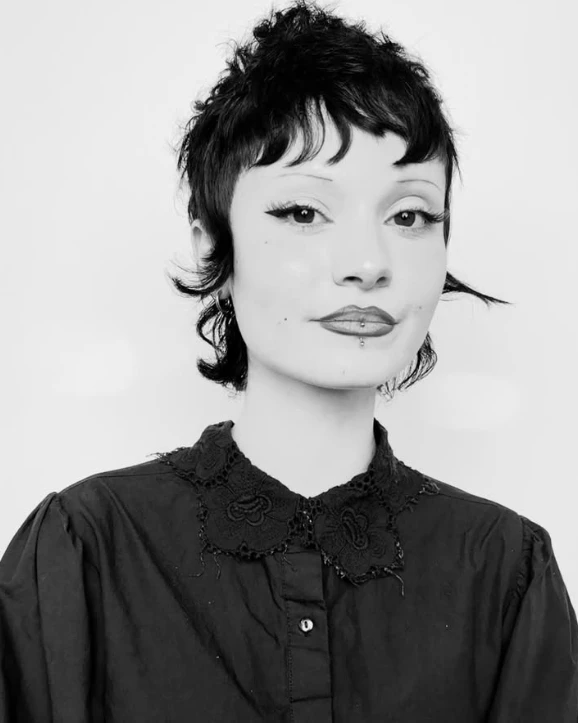
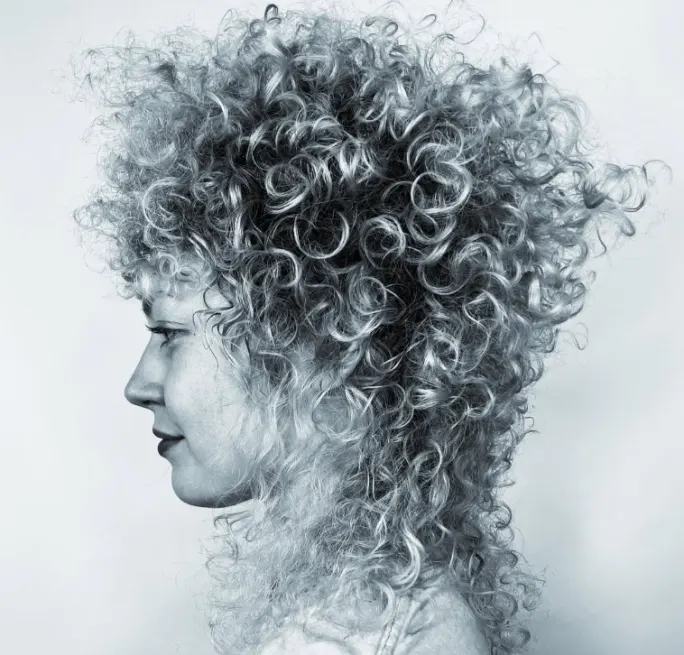
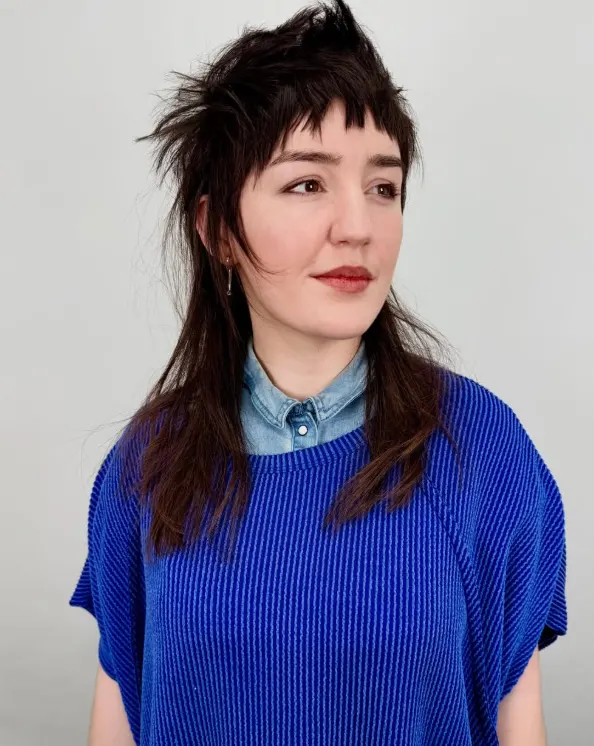
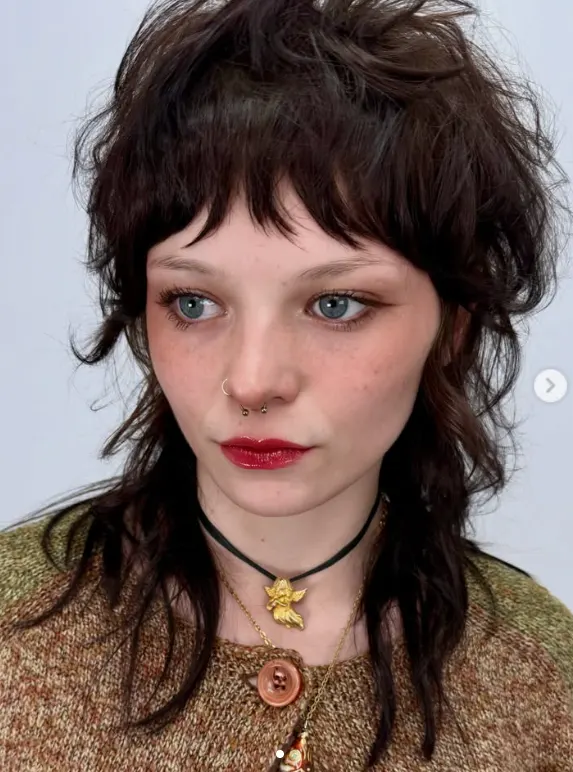
NEWTON: The big one I will always challenge—and it can be controversial—is suitability.
There are rudimentary rules people try to impose: If someone has a round face, don’t create a round shape. If they have a heart-shaped face, don’t do this or that.
My response is that personality will always supersede bone structure and conventional ideas of suitability. If you have the attitude, you can carry anything.
Every stylist has probably experienced a longtime client ending up in somebody else’s chair. The other hairdresser does something completely different from what you would have done, and the client looks amazing. That’s a gut punch—but if you receive it in the right way, it’s also an incredible opportunity to learn.
Ad Loading...
Muscle memory isn’t limited to our hands. We also hold it in our minds, and it can prevent us from being curious. I try to use those experiences, good and bad, to get better.
MODERN SALON: What advice would you give a stylist who feels stuck or believes their career has plateaued?
Credit:
Stan Newton Hair
NEWTON: Social media has encouraged many hairdressers to identify as very narrow specialists, perhaps in one curl type, one cutting method or one kind of color.
When I entered the industry, we did choose between working with chemicals as a technician or cutting and styling hair. I have never been a colorist. I learned the rudimentary fundamentals, but I have cut hair throughout my career. At the same time, I was taught to cut every conceivable hair texture.
My work needs to function across different textures and platforms, without defining one as separate from another. That has kept my life interesting and challenging.
Ad Loading...
Today, I think some people distill what they do so narrowly that boredom becomes inevitable. There are fewer hairdressers challenging themselves through cutting, and many rely more heavily on styling or color.
Take yourself out of the salon environment. Find a model, choose something you’ve seen that inspires you and give yourself enough time to work through it. If you haven’t taken a cutting course recently, study with someone whose work is completely different from yours but whose work brings you joy or represents something you’d like to see in your own book.
You have to give yourself the time to try. If you don’t, you will remain stuck.
MODERN SALON: How would you describe MODE Education and what you want hairdressers to gain from it?
Credit:
Stan Newton Hair
NEWTON: A mode can be a form, a technique or a way of being. The way I educate is first and foremost about empowerment.
Ad Loading...
I’m not teaching haircuts. A haircut is the result—the thing we ultimately achieve. What matters is the process of getting there.
It begins with how we look at someone. From there, we decide how to cherry-pick and combine different techniques and tools. Tools have changed enormously over the years. I didn’t begin using a razor on people until relatively late in my career. I initially used razors to cut wigs for editorial photo shoots.
Because of those experiences, I can explain why I would choose a particular tool in one situation but not another. Fashion can make certain tools or approaches more popular, but following fashion too closely can sometimes lead people down the wrong path. We need to know when not to participate in a trend.
I want hairdressers to understand why a technique remains relevant to contemporary fashion, even when it doesn’t involve the fashionable tool everyone else is using.
I’m still behind the chair at Local Honey in Nashville, and when I’m not working with clients or teaching, I’m creating something—making a video, taking pictures or collaborating on a photo shoot. I’m constantly asking myself, “What can I create that will feed me?”
Ad Loading...
More than 40 years into my career, I’m as curious and excited as I was at the beginning—perhaps even more so. Curiosity is what makes that possible.
HUSH Pro USA addresses an overlooked Issue: the stress of loud clippers and trimmers. Inspired by the need for more accessible and comfortable grooming experiences, the company develops clippers and trimmers engineered for control, precision, and reduced noise.
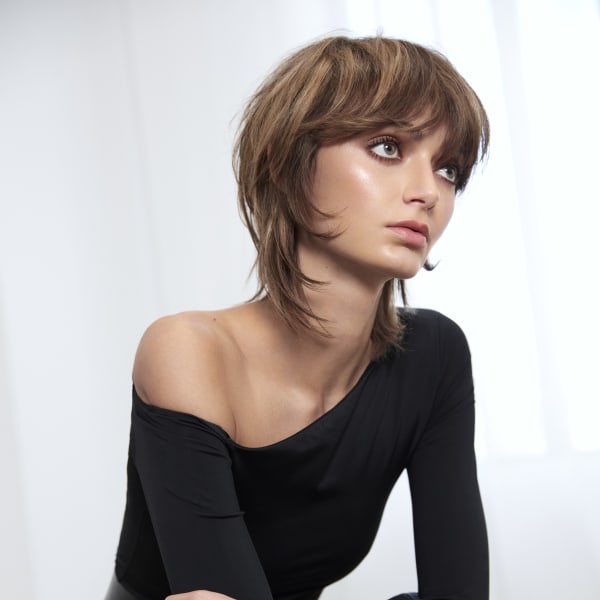
Get the steps to create this look, New Muse, which is a "couture cut," that perfectly accentuates the client’s face shape and haircolor. Straight lines build structure, while soft, jagged, diffused lines showcase a delicate beauty.
“We are some of the luckiest creatives on the planet. As hairdressers, we get to shape more than hair—we shape identity. We create for our clients, inspire fellow artists, and are continuously inspired by each other. That exchange of artistry is at the heart of this story and at the heart of this haircut."
This collection of color formulas is your recipe box for luscious finishes with the ingredients, tested techniques, and step-by-step guidance to satisfy your color cravings. And just like in any great kitchen, the real magic happens when the chef adds a personal twist.
Discover the Cascade Cut, a trending haircut technique from Lloyd Court, creative director and co-owner of seanhanna salons in Wimbledon. This disconnection-based layering method can be customized for any hair type, especially fine hair in need of volume.
Learn how to cut the perfect pixie haircut with expert advice from Sam Villa Team Member Adrian Sandoval. Step-by-step techniques and pro tools included.
The disconnected cheekbone-grazing layers, and the heavy fringe, are the hallmarks of the hime or princess cut, also sometimes known as the jellyfish cut.
Great Clips keeps stylists’ skills sharp with advanced techniques and trends training. Meet The Alex, a hairstyle inspired by a stylist's child and a desire to create gender-neutral looks.