One of clients’ biggest worries is how to make their fine, thin hair look fuller. So if you have tricks up your sleeve, you’ll save the day. Here are valuable tips for expanding those skinny strands, guaranteed to make you a hair hero.
The Best Cuts and Those to Avoid
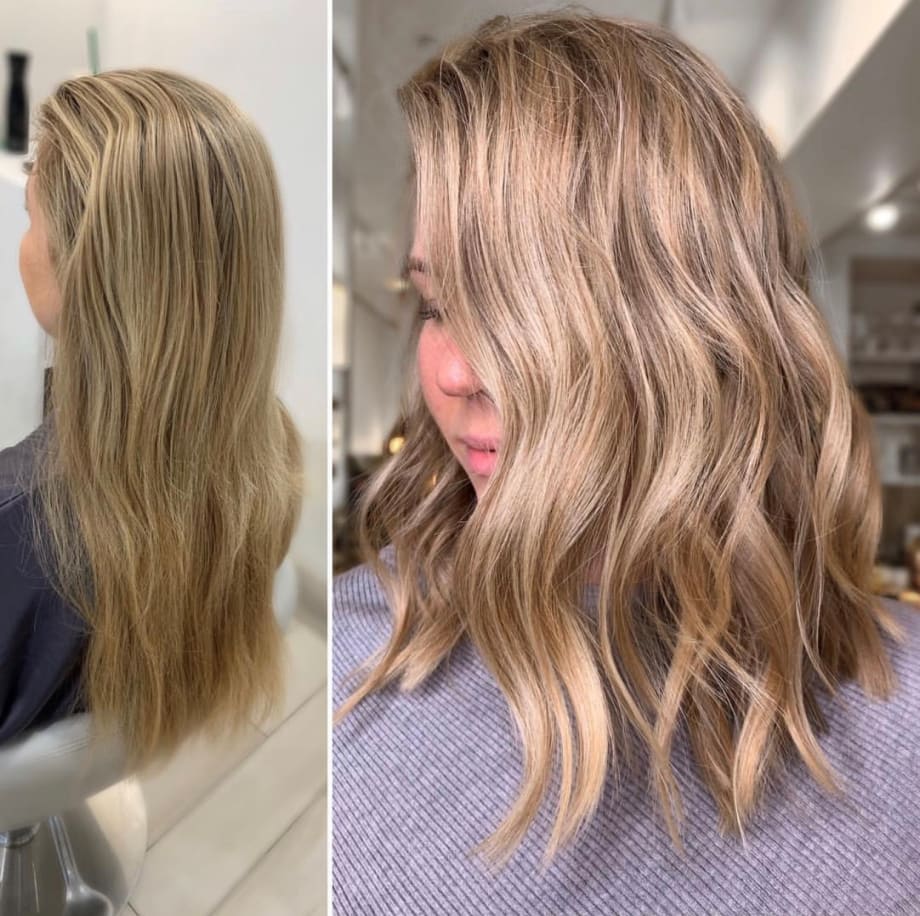
“The more weight in a hair cut for fine hair, the flatter it will be,” says Jess Dworniczak @jessdeehair of Horsham, PA. “That’s why shorter styles are almost always best for fine hair.” Cutting expert Luis Miller @lulustylesnyc of Fabio Scalia Salon in New York City’s SOHO neighborhood, agrees. “I always suggest keeping the hair at a mid-length,” he says. “No more than four inches below the collarbone. Lobs, bobs and even pixies are ideal. Anything longer and I feel you lose fullness.” If a client insists on long hair, Dworniczak recommends minimal layering. “Keep the density as consistent as possible from roots to ends with a blunt cut,” she advises. “And if you do layer the hair, use convex layering to create lift without removing too much volume.”
Cutting Hacks for Maximum Fullness
The more you cut fine hair, the better, says Miller. That’s because when fine hair splits at the ends, it causes it to look even finer. “I recommend a ‘dusting’ at least every 8 to 10 weeks,” Miller says. “And I like to cut the hair dry so I can clearly see where the ends are splitting.”
Point cutting is an ideal technique for removing weight in thicker hair, but for fine hair, not so much. “Whether I’m doing inverted, square or combination layering from above the occipital, or over-directing from the front of the ears to a radial parting, I blunt cut rather than point cut,” Miller says. “I might go back and fine tune later—removing weight only where needed, if at all.”
Tackling Flat Crowns
“One of my favorite tricks is to create some well-placed texture with my favorite texturizing shears through the crown,” Dworniczak says. “If you don’t go overboard and if you cut with intention, the shorter hair amid the longer hair gives the crown a little extra fluff!”
“My little trick to boost the crown is to ever so gently point cut 1- and 1-1/2-inch sections into the root area,” Miller says. “It’s like that new trend of cutting along a part with thinning shears. But be careful not to overdo it—you’ll find yourself facing a big ‘oops’ if you do!”
Blow Dry Secrets
“I like to apply a bit of mousse or volumizing spray where I need lift, work it into the roots and then brush it in,” Miller says. “Then I have my client flip her hair over so I can create lift with a pre-dry. I also like to direct the crown section forward using a lower speed setting, and then cool blast each section before removing my brush. This really helps maintain volume.”
“If you’re not using the cold-shot button, you’re doing yourself a disservice!” Dworniczak says. “Heat shapes the hair and cool air sets it. So take the extra second when blow drying and hit each section with that Cold shot to lock in that volume.”
And remember, with fine hair, it’s best to limit the heat. “Fine hair is the opposite of coarse hair when styling,” Dworniczak explains. “With coarse hair, you want as much heat as possible. But with fine hair, too much heat will over-work the section, making it fall flat. So when blow drying fine hair, work quickly, get it dry and move on!”
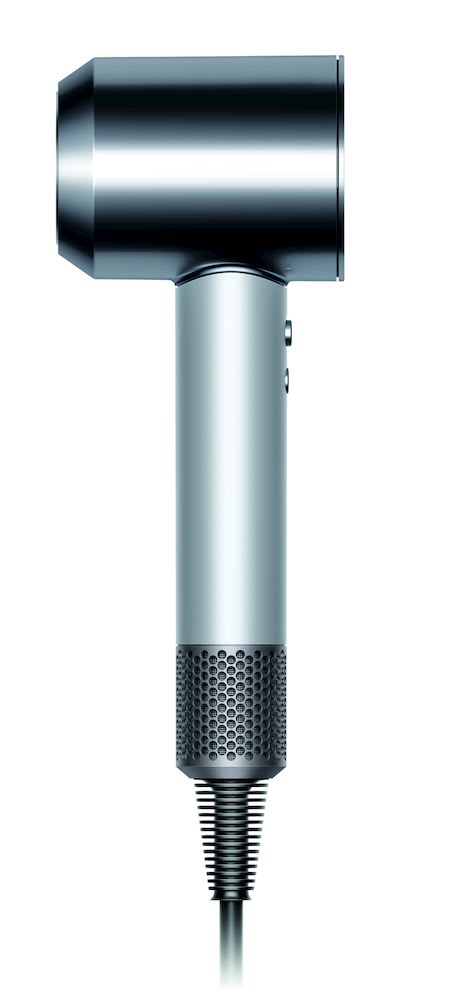
Heat control is why Dyson National Education ManagerTodd Tinnel loves his Dyson Supersonic™ hair dryer Professional edition for drying fine hair. “It offers intelligent heat control,” he explains. “There’s a brain inside that makes the heat output more precise. You choose your heat setting and the dryer feeds information back to a microchip inside the machine. So if anything occurs to cause a temperature spike—say the dryer’s been running or airflow has been restricted—the machine self-adjusts. Controlling temperature spikes prevents heat damage, which is especially undesirable for fine hair. Plus, there’s a Gentle air attachment, available on dyson.com, that diffuses the air so it’s gentler on hair and scalp for clients with finer textures.”
Learn more about the Dyson Supersonic.