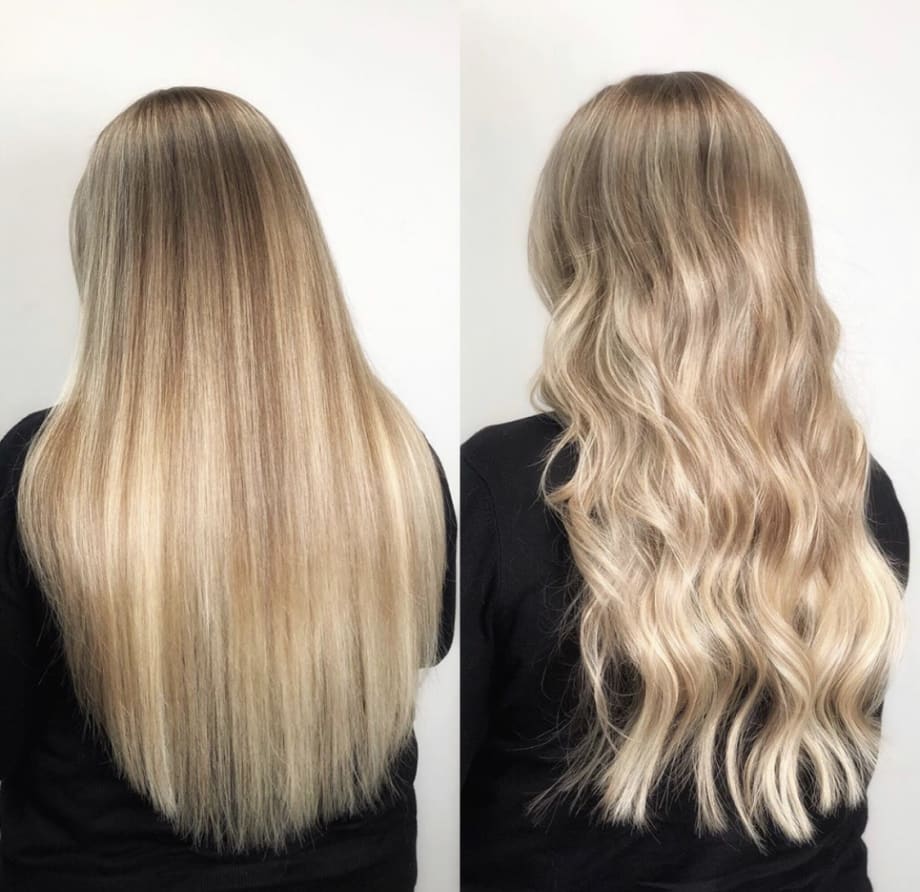
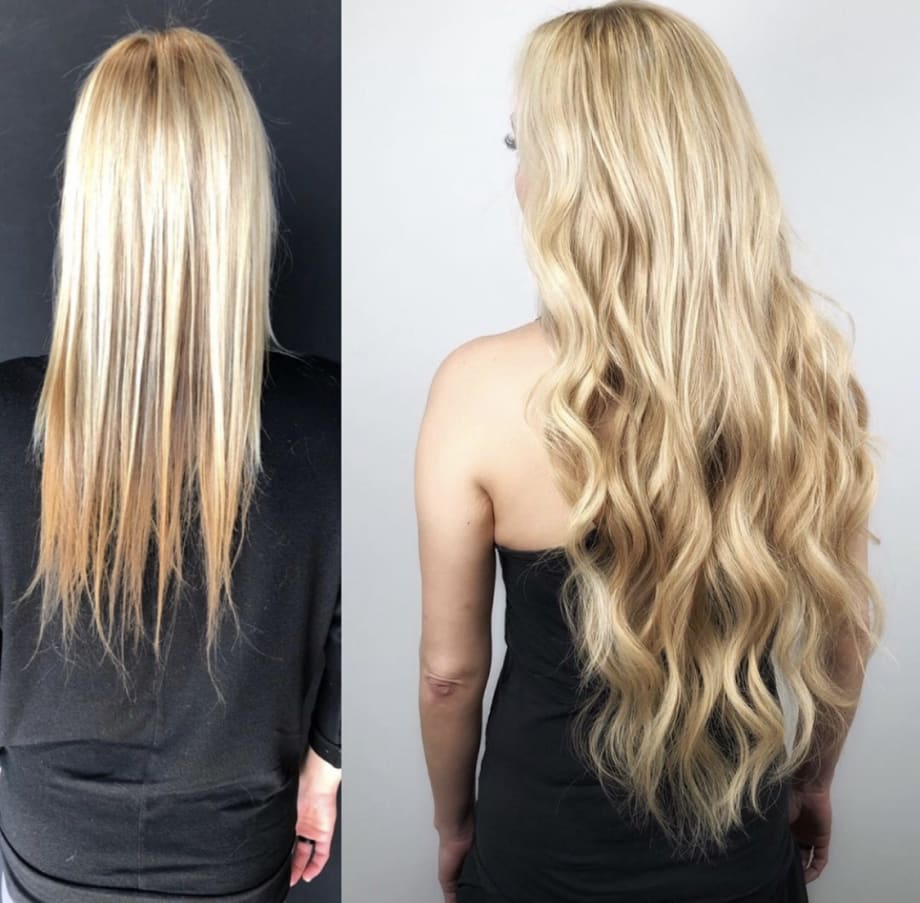
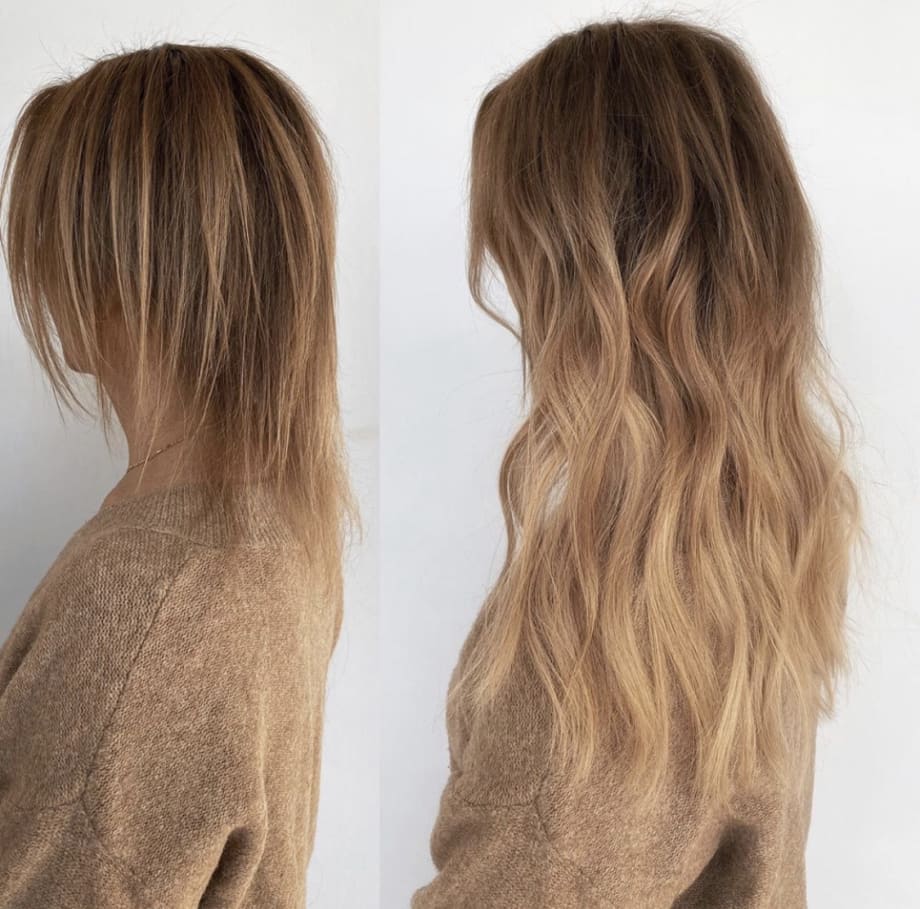
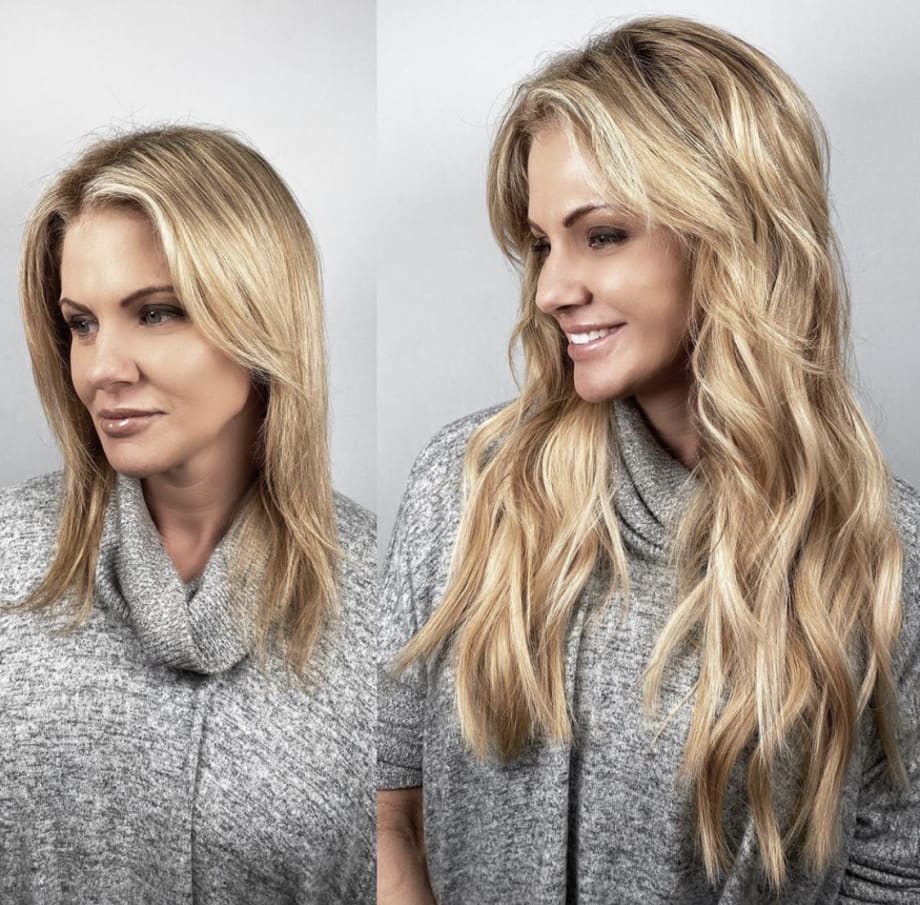
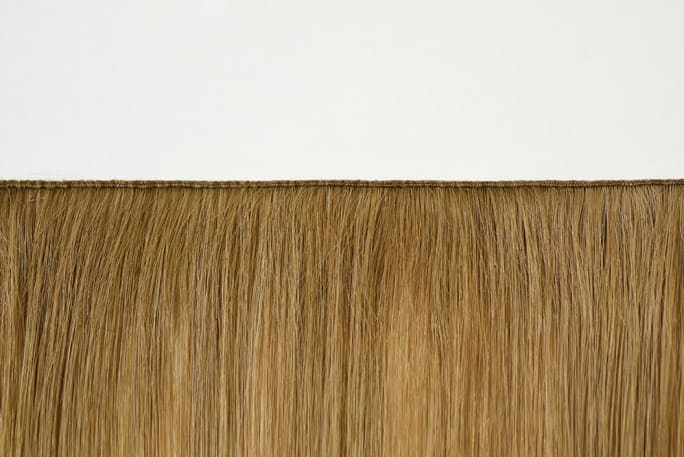
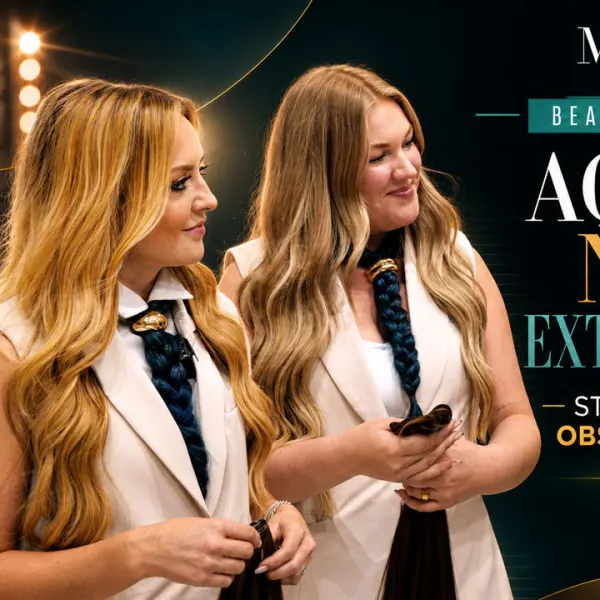
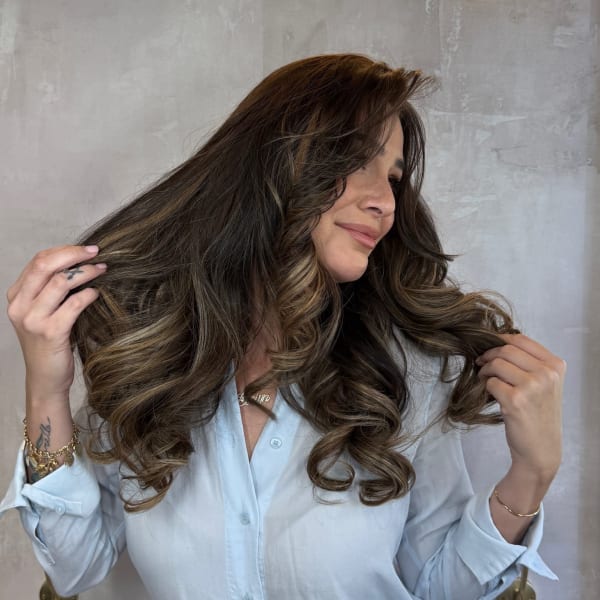
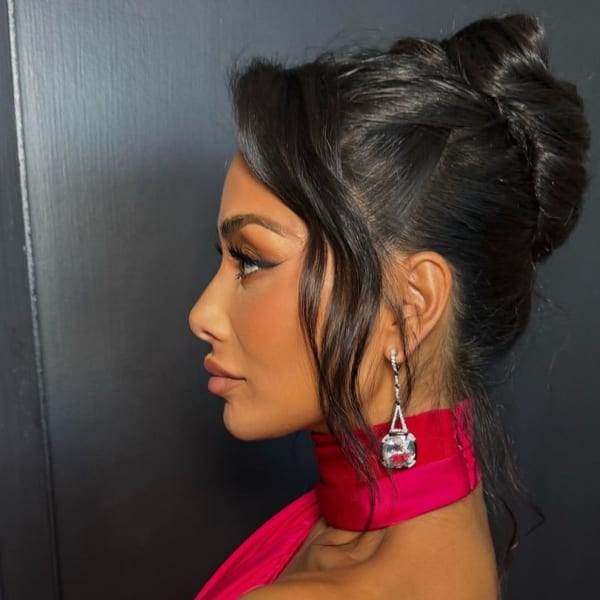
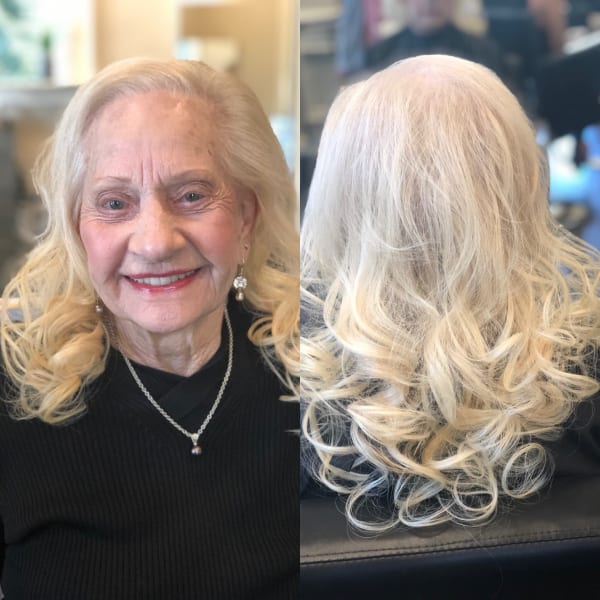
"We added 1 row of #handtiedextensions to achieve length and fullness. Blend is on point so she can wear them curly or straight," Tellor writes.
@katietellorhair
1/4
In partnership with
7 min to read
Hairtalk has been in the hair extension business for more than a decade—available in 40+ countries, the brand is best known for tape-in extensions offered in a variety of shades, lengths, widths, trends and more.
Social media has served as a powerful tool for brands and industry leaders to identify areas of opportunity, like gaps in education and product solutions, and Hairtalk has had its eyes on the buzz that weft extensions were getting via Instagram, thanks to stunning before-and-after transformations shared by independent artists, stylists and educators.
Ad Loading...
“More than a year ago, hand-tied weft extensions really started picking up in popularity—but on an industry-wide level, everyone was scratching their heads wondering 'how is this different from traditional sew-ins?'" says Esther Schoonover, brand director for Hairtalk extensions. “As the months unfolded and the buzz grew, we had salons and stylists asking us for hand-tied extensions to offer their clients, yet we didn’t have a solution.”
“Clients that request hand-tied extensions are doing so because they are looking for either one of two things—a beautiful look they’ve seen on social, or an extension method that matches their lifestyle,” Schoonover says. "For those that are seeing incredible hair with a hashtag, they don’t always know that those same results are achievable via tape-ins. However, when it comes to a specific type of lifestyle, there are perks to weft that you won’t find in tape-in, and vice versa.”
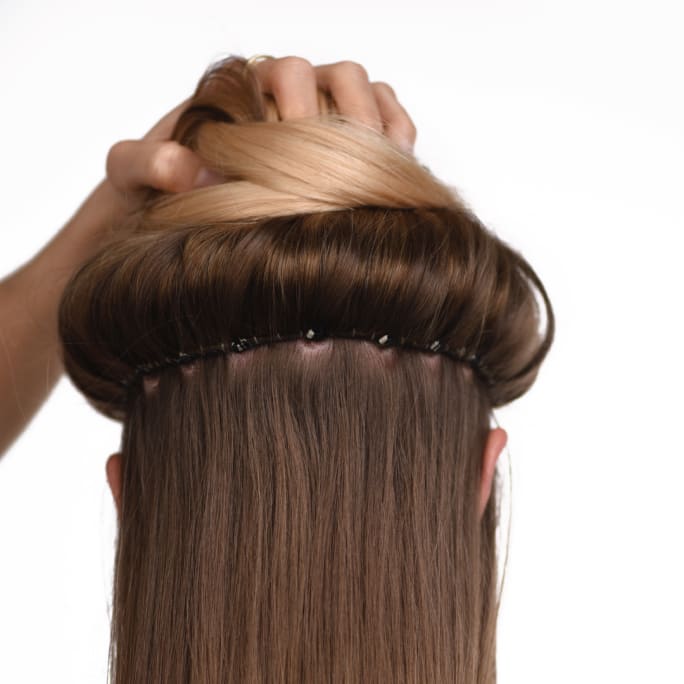
“Wefts have been around forever, and traditionally applied in with a braided sew-in attachment site,” Schoonover says. “But a braided row doesn’t work for everyone: Clients with less-dense, less coarse hair need a different attachment method, and hair that can blend seamlessly into their own. That’s where the beaded track came into play and really helped bring weft extension options to all clients.”
Ad Loading...
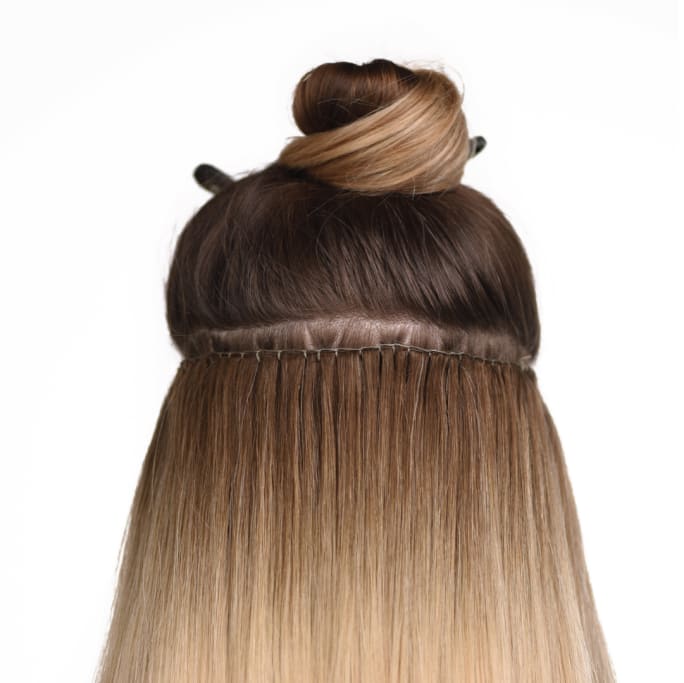
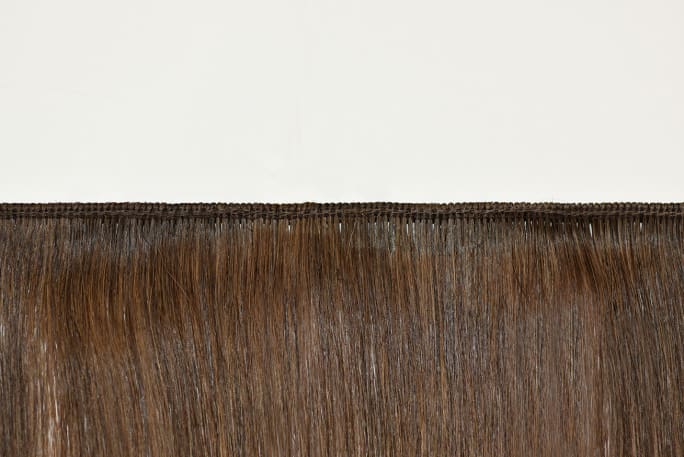
A common misconception among clients that request hand-tied extensions is that the physical application or sewing of the weft to the client’s head is what defines the phrase ‘hand-tied’—it’s not. The actual hand-tied extension refers to the way the product itself is made—the way the hair is hand-knotted onto the seam on the weft.
“The perfect client for a weft is someone who wears their hair up all the time or is more athletic, doing hot yoga, steam rooms, etc, and tape-ins might not have worked for them because their hair is always wet,” says Victoria Casciola, who has worked with and educated for Hairtalk tape-in extensions for more than a decade.
“The tape-in method is simple, it’s seamless and it’s easy on the hair,” Casciola says. “But the weft system is another system I can bring to the table, that doesn’t use any adhesive, and I’m all about not having to turn away my client who’s asking for weft. So the more that I know, the more that I grow as a stylist. It’s important to have as much knowledge under your belt so you don’t turn away any prospective clients.”
Schoonover agrees.
“For a client that is really low-maintenance, or who works out all the time, tape-ins can require more upkeep,” she says. “With weft, there’s no adhesive at the attachment that needs to be cared for.”
Ad Loading...
Another bonus? A predictable reapplication—it’s simple: remove the weft, reapply the weft.
“Alternatively, tapes can be more customizable because you can get into spots of the head that wefts can’t—like the front of the head, filling in a bang or a face-frame,” Casciola says.
Weft Density
“As we did our research, we saw a lot of inconsistencies with what was on the market,” Schoonover says. “Some wefts were sold in packs of 6, some 8, 10, or 12 and there were a lot of weight differences. When we compared other wefts, an 18-inch weft and a 22-inch weft, we were seeing that they had the same amount of grams—meaning the longer the weft, the less dense it is with straggly ends.
"When we launched our wefts, we wanted to not only provide more density than a typical hand-tied weft, but to also guarantee consistent grams of hair. At Hairtalk, an 18-inch weft will always have more grams than a 14-inch—you will always get more grams of hair as you go longer.”
Ad Loading...
Hand-Tied by Hairtalk: Points of Difference
“We had to find a stylist to guide us through this, so we looked to educator Katie Tellor, a weft expert, salon owner and long-time Hairtalk customer who was finding success offering weft extensions in her salon in Frisco, Texas.
“Hand-tied extensions look very natural when they’re on someone’s head,” Tellor says. “The attachment site isn’t as visible as it can be with a tape-in. I love to post photos of the weft sewn in on my Instagram because it’s so seamless.”
Traditional hand-tied wefts are strategically thin—it is the norm for an extensionist to stack multiple hand-tied wefts on top of each other to bulk up the amount of hair on the attachment section.
“We wanted to enhance what existed in the handtied market and make it even better,” Schoonover says. “We knew everyone loved the super seamless results and lightweight weft, but the density wasn’t there. Hairtalk’s Hand Tied Extensions are double hand-tied, meaning they deliver double the density of hair than traditional hand-tied wefts, yet provide the same weft-seam thinness. This allows stylists to use fewer wefts per row, making the application process easier and often faster.”
Ad Loading...
VIDEO: See Schoonover showcase the Hairtalk double-density difference.
Traditionally, hand-tied wefts can’t be trimmed for width without risking the rest of the hair unravelling off the seam, since it’s physically hand-knotted onto the seam of the weft.
“If a client had a smaller or bigger head, many extensionists were trimming the weft and using nail glue to glue the ends weft to keep the hair from unraveling,” Schoonover says. “But that creates a hard ball and we knew there had to be a better way.”
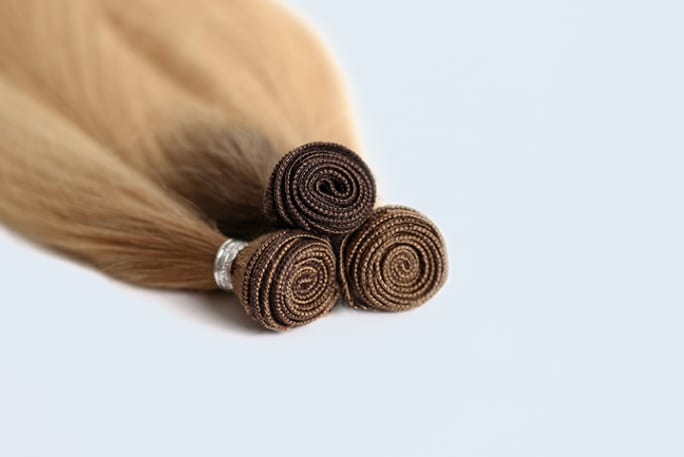
To stick with Hairtalk’s mission of being totally customizable (on their tape-ins the brand offers multiple width options, including Originals, Petites and Minis) they launched two widths for stylists to select—11-inch or 5.5-inch.
“With Hairtalk, if you want to apply a hand-tied weft on the nape, you don’t have to cut it and use nail glue on the ends,” Schoonover says. “This secondary width option—either 11-inch or 5.5-inch—allows for ultimate customization, perfect for all parts of the head, including the nape and closer to the hairline or pairing the widths together where the client needs the bulk.”
Ad Loading...
Machine Weft
Once Hairtalk amped up its expertise on hand-tied wefts, it only made sense that they introduce a machine weft, too, in an effort to address all client needs.
Hairtalk’s Machine Weft Extensions are single wefts attached to a seam to provide maximum density. Machine Wefts are sold in a 30”-wide weft and are available in three lengths—14-inch, 18-inch and 22-inch.
Machine Wefts are a more cost-effective option, compared to hand-tied, and for a client who needs additional customization, these can be trimmed and customized to fit every head shape and size.
Machine wefts have more grams per weft than a standard hand-tied option, and feel heavier than hand-tied, but are still less seamless at the attachment site than a tape-in.
Ad Loading...
Color Options
With the launch of Hairtalk’s Weft Collection, the brand is introducing new color options—24 to be exact—featuring a combination of naturals, rooted and balayage options.
“Offering all the needed tools was extremely important to us since we found that stylists were purchasing different tools from different places,” Schoonover says. “We wanted to make sure we were stylists’ one-stop shop for all things weft.”
Ad Loading...
Certification
The brand has introduced its Weft Extensions Certification throughout the country, in locations including Houston, Denver, Los Angeles, New York, Chicago and Miami. Learn the evolution of Hairtalk Extensions and how to expand your service menu through offering this luxury hair enhancement service.
Hairtalk’s Education Kit includes practice hair, the Weft Collection color ring, Educational Manual, Silicone Lined Beads, Nylon Thread, and the new Weft Tools Case that houses Claw Nose Pliers, Spring Loaded Nippers, Bead Looping Tool, Needle Nose Pliers and 2” C-Needles.
RÜTE Wash introduces a shower cap designed specifically for crown washing, helping clients with hair extensions cleanse the scalp while protecting the lengths from water.
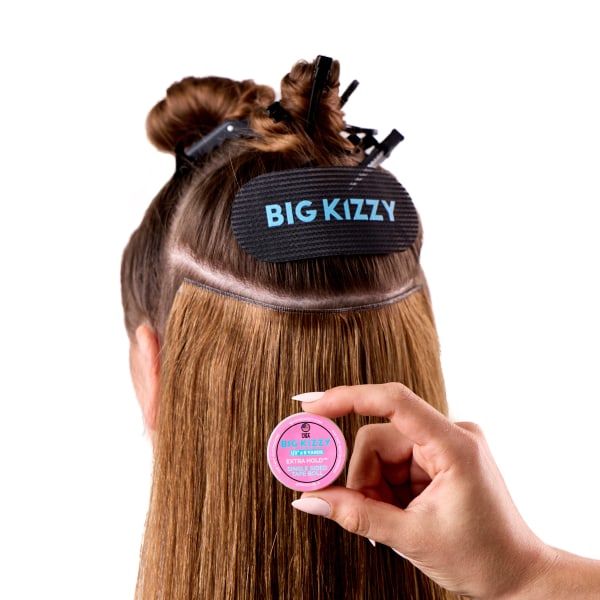
Thinning hair concerns are on the rise. Big Kizzy created the answer. Meet the Extra Hold Single Sided Hair Extension Tape Roll, the revolutionary hair extension tape made for tape weft stylists with fine or thin hair clients that allows for less weight on fragile strands and ultimate customization.
Mastering your chosen extension method is the key to delivering seamless, comfortable, and long-lasting results. See the step-by-step techniques that Donna Bella Ambassadors Olivia Thompson and Lo Wheeler Davis use to get the perfect install every single time.
A stylist who felt she needed to build what she couldn't find in other hair extensions, in five years Terra Harvell has grown Harper Ellis into a $10 million business.
Celebrity hairstylist Renato Campora graced Selena Gomez with a timeless and elegant Hollywood bob for the 2025 Golden Globes, using Great Lengths Tape-In Extensions.
Celebrity hairstylist Marc Mena shares exclusively with MODERN how he used the new Essenza and Aria Great Lengths Tape-Ins to style Karla Sofía Gascón for the 2025 Golden Globes.
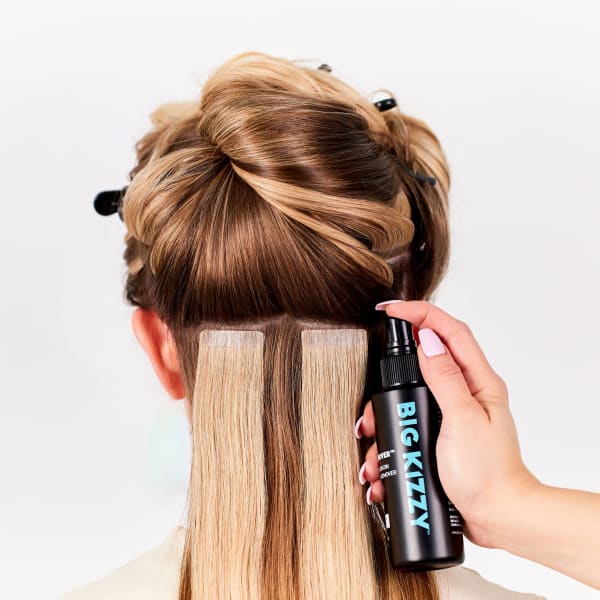
Meet Big Kizzy, known for their 3-step tape in hair extension remover system. Founded by an extension hair pro, they now offer everything for extensions!
Celebrity Nicole Scherzinger's soft updo was created by celebrity hairstylist Dimitris Giannetos, using new The Coveted Tape hair extensions by Covet & Mane.
If you are prepared with the right techniques, the right questions, and the right products, you will be ready to create a beautiful result for your hair extension client. And when you've done that, you have a client for life. Here are my proven methods for building a solid hair extension career and business.
In this exclusive video interview, Great Lengths educator Kristina Noto explains how to use the brand's extension offerings for clients with hair loss.
For clients who want to address volume on the top of their heads, but don't want the commitment of wearing and caring for a topper, this unique service provides a solution. Micro Point Links fill in thinning areas by knotting individual hairs onto existing hairs. It's a service that is a win-win, offering clients an answer to sparse, bare areas and providing stylists with a valuable addition to their service menu.