






Wella Announces the Finalists of Wella Trend Vision Awards
This year’s awards centered around the Monochromatic trend, which is rooted in minimalism and intentional by design.
by Anne Moratto
 MENU
MENU SEARCH
In any one day, a successful salon/spa owner plays multiple roles. He or she is a host, a visionary, a mentor, a cheerleader, a marketer, a negotiator, an artist, an accountant, a mediator and a community supporter. Individually, each role is ...

In any one day, a successful salon/spa owner plays multiple roles. He or she is a host, a visionary, a mentor, a cheerleader, a marketer, a negotiator, an artist, an accountant, a mediator and a community supporter. Individually, each role is vital, and packaged together they create a LEADER.
There’s no question it’s a tough job, and it requires the mastery of a diverse set of best business practices. No other industry competition examines, evaluates and shares what it takes to be a successful salon/spa leader quite like the Salon Today 200.
Over the past 19 years, the Salon Today 200 itself has shouldered many roles. It’s a competition that recognizes and celebrates the best and brightest salon owners for the managerial and leadership skills. It’s a barometer revealing important statistical data that salons of all sizes can use to measure their own growth.
It’s a forum that encourages salon and spa owners to share their success strategies and inspire all owners. And it’s a club through which like-minded owners have formed long-lasting relationships and support one other.
As we all plan for a new year, we’re excited to gift the wisdom of this information to the professional beauty industry, and we’re thrilled to present the 2016 class of the Salon Today 200.
The ST200 Landscape
By examining the collective data gathered from all the honorees, we are able to sketch a portrait of a successful salon or spa business.
The average SALON TODAY 200 salon/spa:
• Opened its doors in 2005. More than half of the ST200 salons opened in 2005 or later, with a majority of them (68%) opening after 2000. The longer a salon has been in business, the greater the likelihood of achieving higher revenues. Salons who opened in 1998 or earlier were more likely to eclipse total sales of $2 million.
• Is a solo location. At 76%, a majority of the ST200 have only one location. Salons with gross revenues of $2 million or more are significantly more likely to operate multiple locations. Of those salons that do have more than one location, on average they operate three salon/spa sites.
• Leases real estate. A majority—79%—lease their space. Salons in the West are much more likely to lease than salons in the Northeast, Midwest or Southern regions.
• Occupies 4,585 square feet of space. This average is down 12% from last year. As a salon’s space increases, so do its revenues. The average square footage for a salon grossing $2 million or more is 9,223 square feet. Salons/spas grossing less than $500,000 in annual sales come in around 1,915 square feet.
• Is a salon and spa. At 97%, the majority of the ST200 honorees consider themselves to be a salon and spa.
• Seeks help. Half the ST 200 reported consulting a salon or business coach in the past three years.
• Stays connected. Two-thirds—64%—belong to one or more industry associations. Popular choices include the Professional Beauty Association, Intercoiffure, Cosmetologists Chicago, the National Cosmetology Association and the 2 to 10 Network.
• Huddles with their teams. At 99% percent, almost all the ST200 honorees hold regular staff meetings, usually monthly. Salons with revenues between $500,000 to $999,999 are more likely than other salons to hold weekly meeting.
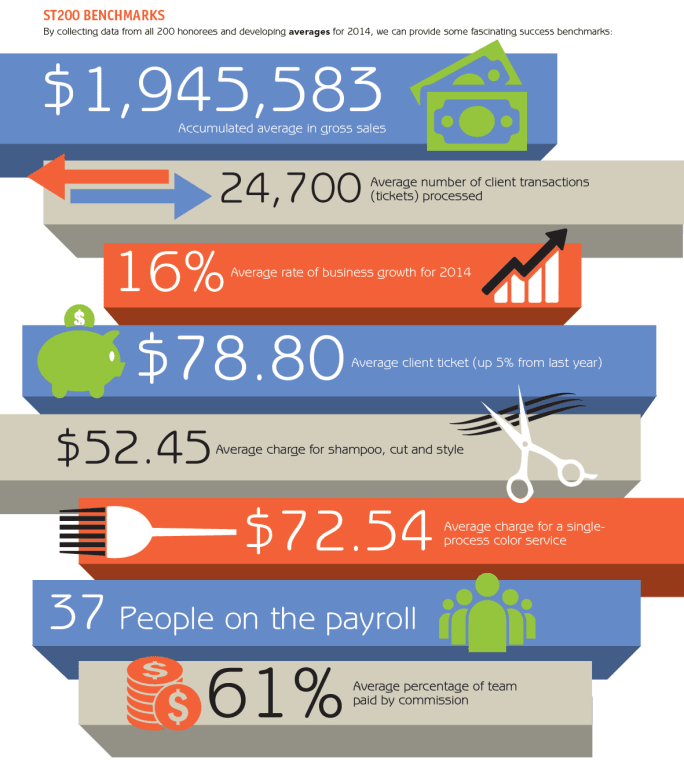
• Is upselling. Although the average number of client transactions decreased slightly over last year’s numbers, the average total per ticket increased to almost $79.
• Protects its assets. At 52%, more than half of the ST200 owners have non-compete agreements with their team members. This has been on a steady increase over the past four years, with an average of 41% for 2013 honorees, 44% for the 2014 crowd and 48% for the class of 2015.
The Big Picture
By studying the composite data over the past several years, we are able to paint a broader picture of national trends for the professional beauty industry. At $1,945,583, the average gross revenue reported from the ST200 salons for 2014 dipped a bit from the $2-million mark last year’s class of salons posted. Although the average growth rate at 16% is still lower than pre-recession rate of 21%, the average growth rate ticked upward from last year.
Salon prices have continued their slow and steady increase. This year’s average price of $52.45 for a shampoo, cut and style was up nearly two dollars from last year’s average of $50.68. In all, the average price for this service has risen $3.70 since 2010.
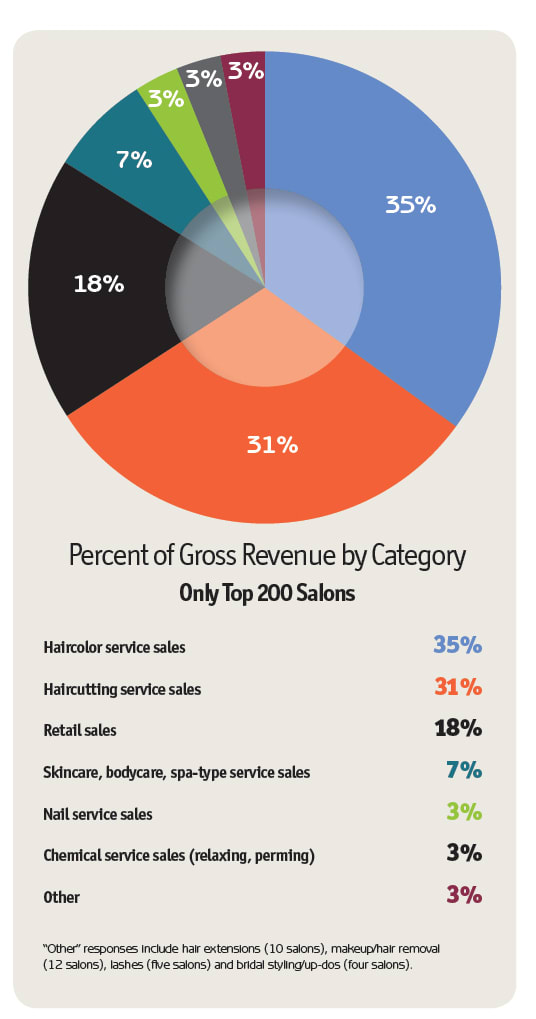
When you look at what contributes to the gross sales revenues of the ST200, haircolor service sales top the list at 35%, closely followed by haircutting service sales at 31%. Rounding out the income generators are retail sales at 18%, skin care/spa services at 7% and nail and chemical services at 3% each.
For the past five years, the percentages for expenditures for the ST200 have remained virtually unchanged. The largest continues to be labor costs (48%), followed by supply costs at 11%, rent or mortgage at 7% and taxes at 6%. Rent or mortgage expenses continue to be a higher percentage of total expense for salons in the West than in other regions.
The ST200 Owner: Introspection
Although the data collected from the ST200 reflects on the best business practices of the professional beauty industry, it also provides interesting insight into the people who own those salons.
Among the ST200, 67% of owners perform client services in addition to their leadership responsibilities. Of those who perform services, they spend an average of 25 hours per week with clients. Owners of lower-revenue salons spend more time performing client services than do higher-revenue salon owners, at an average of 27 hours versus 22 hours.
As a group, the ST200 owners examine a number of key performance indicators to measure and track their salon business. Productivity—or percentage of time booked—topped the list at 23%, followed by average ticket (total sales/client count) at 19% and client counts at 13%. Rounding out the key performance indicators were existing client retention, pre-booking rates, new client retention, retail per client ticket, percentage of service clients purchasing retail and frequency of visit.
We asked owners what business issues keep them awake at night. Throughout the past three years, this has remained steady, with inability to reduce expenses and keeping staff busy as top concerns. On a positive note, owners have become less concerned about the economy over the past three years.
The topics of concern vary, though, by the size of the salon operation. Owners of high-revenue grossing salons ($2 million or more) are more likely to be concerned about keeping their staff busy, threats of a walkout and dealing with competing salons. Salons with annual revenues less than $500,000 are more likely to be worried about how to improve their profitability and find financing for expansion. Of all their business costs, these owners feel they have the least control over inventory, service supplies (including backbar and shrinkage.)
Click on the links below to discover the honorees in each category:
This year’s awards centered around the Monochromatic trend, which is rooted in minimalism and intentional by design.

Haircare brand The Doux has launched “My Salon Empire,” a free-to-play salon management game on Roblox, helping the next generation celebrate the diversity of textured hair and explore salon entrepreneurship.
The show reported 30% attendance growth. It felt that way. This event for the southwest professional beauty community had heart, spice, and something for everyone.
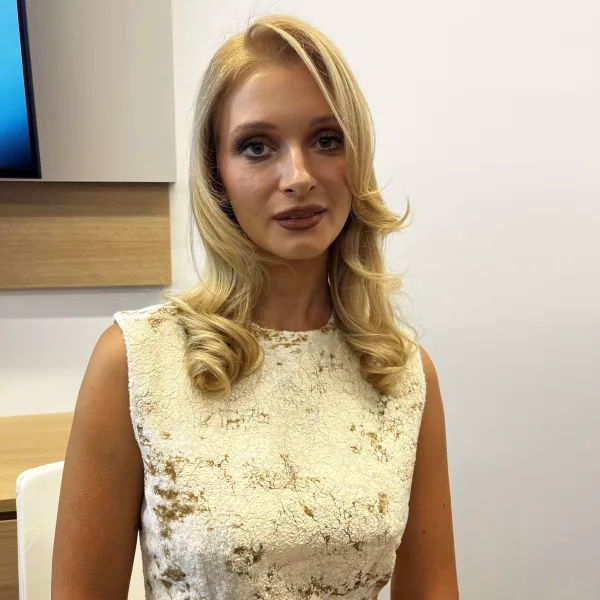
Wella artists presented the Monochromatic trend movement, introduced new Pure Perfection color and Sebastian styling innovations, while the Wella team created interactive fun throughout Wella Studio in Los Angeles.

Dominique LyVar, an influential educator and artist, is remembered by those who loved him for his significant impact on the industry and contributions to the community.
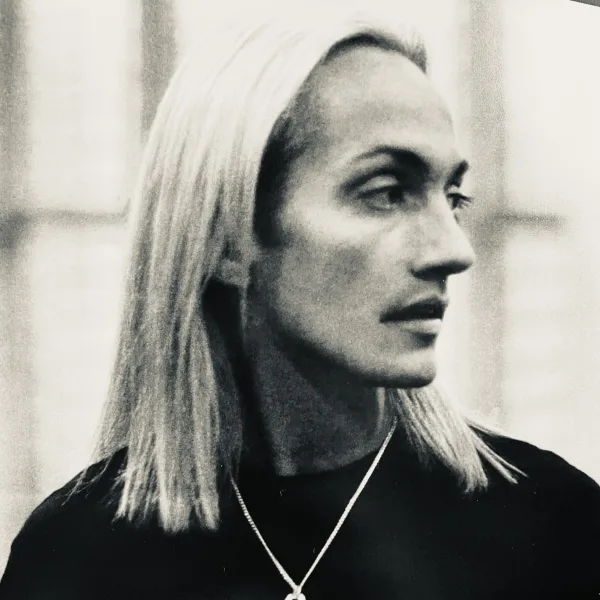
Known for his buttery blondes and a technique for highlighting hair with more precision that he called chunking, Brad Johns died on August 27. His friend and fellow colorist, David Stanko, shares thoughts on his talented colleague and close friend.

As technology evolves at an accelerated rate, you want to make sure you have the best in your business toolkit to help you grow sales, motivate your team, communicate with your current and future clientele, and streamline your managerial tasks. The 2026 SALON TODAY Technology Solutions Guide is designed to help you navigate today's growing landscape of salon and spa technology. In this guide, you'll find a curated look at more than 50 of the latest software platforms, digital solutions, and innovative features to help you compare options and identify the best fit for your business.
The Davines Edit reflects the brand’s passion for people and planet.
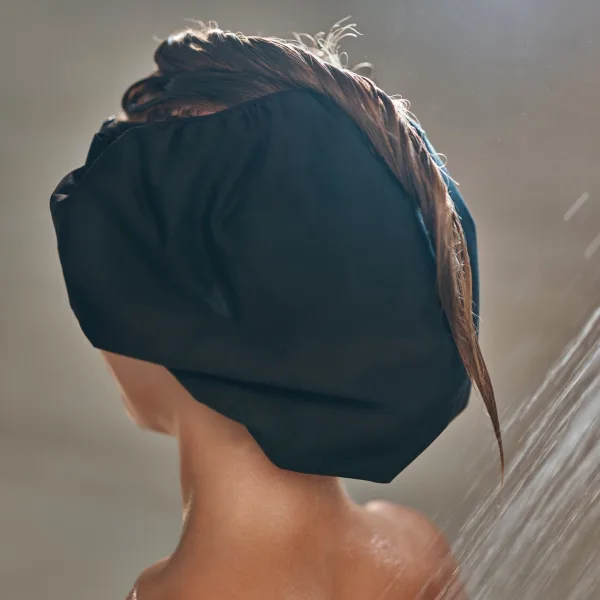
RÜTE Wash introduces a shower cap designed specifically for crown washing, helping clients with hair extensions cleanse the scalp while protecting the lengths from water.
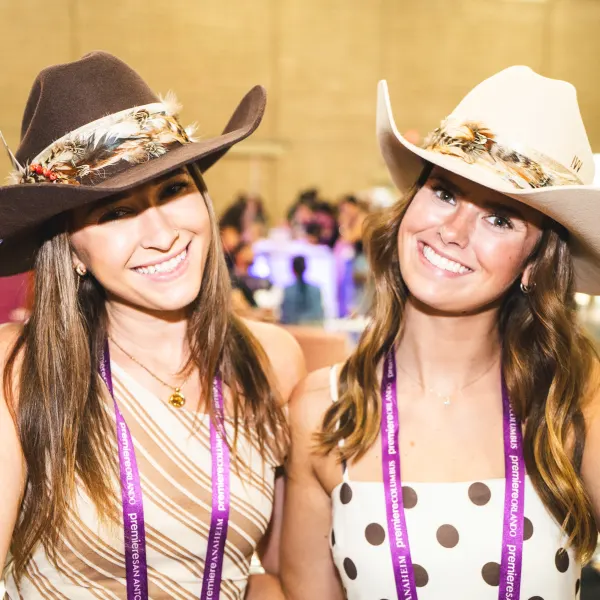
Premiere San Antonio Presented by SalonCentric returns for its fourth edition August 30-31 at the Henry B. González Convention Center, delivering its biggest and boldest event to date.

One-Day Personal and Professional Development Education Event for Beauty Professionals Set for October 25, 2026, at the Hilton Philadelphia City Avenue.
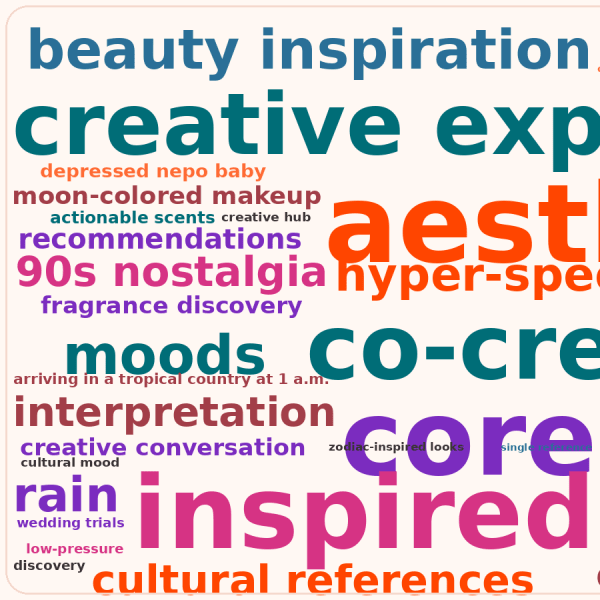
According to the report, people are moving away from copy-paste trends and toward community, using real experiences to develop a sense of taste and beauty that reflects who they are.

Hairstylists and barbers can showcase their creative and technical vision in two global categories with cash prizes and a chance to represent in Portugal.

The BBR Beauty Show featured a prominent speaker lineup including Lacy Redway, Karrueche Tran, Danessa Myricks, Chelley B., Sabrina Elba, Jessica Harris-Dupart, and more.

The Professional Beauty Association and Pivot Point team up to develop an ongoing study that measures the confidence of salon owners, stylists, school owners, and students.
This shared recognition celebrates the strength of industry collaboration in advancing professional mobility.
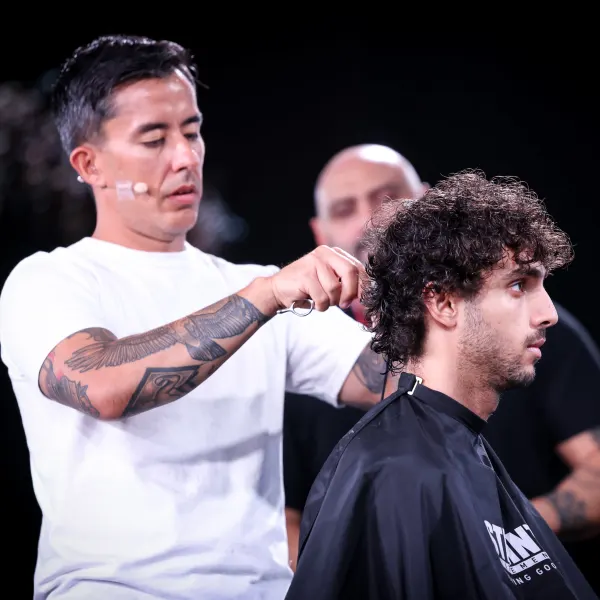
In Dubai, a salon visit isn’t an appointment. It’s a weekly routine, and clients can spend $800 to $1,400 a month on it, according to Gaurav Tripathi of MADI International. On October 6-8, 2026, the market behind those numbers opens its doors as Beautyworld Dubai marks its 30th edition at the Dubai World Trade Centre, bringing together distributors, brands, stylists and salon owners from all over the world.
Sponsored by BeautyWorld Dubai