"The mistake people make is treating AI like a vending machine instead of a personal assistant." Digital marketing expert Scott Moon shares how beauty professionals can use AI while staying authentic
Editor's Note from ChatGPT: Hi, everyone. Chat here. Before we begin, a quick reassurance: I helped Anne organize this interview into article form, but the questions, insights, and perspective are still hers—and Scott's answers are his. Think of me as the transcriptionist who brought coffee and straightened up the notes afterward.
Using AI for the Salon Pro
As artificial intelligence becomes more common in marketing, beauty professionals are wrestling with a big question: Can AI help us create content without making us sound like everyone else?
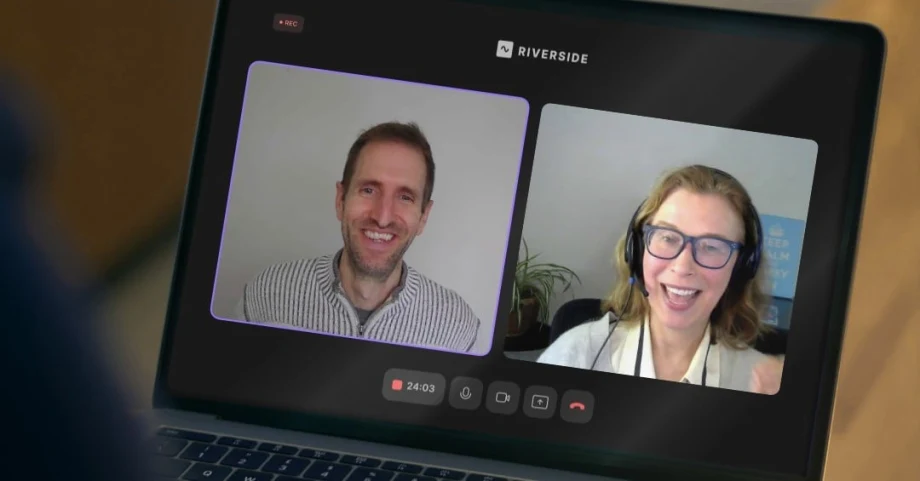
Anne Moratto recently sat down with digital marketing expert Scott Moon to talk about AI, brand voice, websites, social media, and how beauty professionals can use new technology without losing what makes them unique.
Q: One concern I have about AI-generated content is that everyone seems to be starting to sound the same. Are you seeing that, and can beauty professionals use AI without losing their unique voice?
Scott Moon: I absolutely see that. It comes back to the old "garbage in, garbage out" principle. If thousands of stylists are typing the same generic prompt into ChatGPT—something like, "Write me a social media post about blonde balayage"—they'll get very similar results.
The mistake people make is treating AI like a vending machine instead of a personal assistant.
If you hired a human assistant, you wouldn't expect them to show up on day one and perfectly represent your brand. You'd spend time teaching them about your culture, your audience, your communication style, and your business goals. AI works the same way.
You need to train it. Feed it information about your brand identity, your voice, your audience, and your goals. Give it examples of newsletters, social posts, emails, and content you've already created. The more context you provide, the more personalized the output becomes.
There's even an entire profession now called prompt engineering. The quality of what you get back depends heavily on how specific and detailed your instructions are.
And don't be afraid to push back. If the AI gives you something generic, tell it so. Ask it to make the content more personal, more humorous, more conversational, or more aligned with your brand. The best results come from that back-and-forth collaboration.
Q: For years we've told salon owners and beauty professionals not to rely solely on social media platforms they don't own. Why is it still so important to diversify your digital presence?
SM: I completely agree with that advice.
At its core, marketing is about delivering a consistent message across multiple touchpoints. The challenge today is that consumers are harder to reach because they're consuming content in so many different places.
Thirty years ago, marketers focused on television, magazines, radio, direct mail, and billboards. Today, consumers might spend time on Instagram, Facebook, TikTok, LinkedIn, Pinterest, email, Google searches, websites, and more—all from the same phone.
If you're relying on only one platform, you're limiting your opportunities to connect with people.
That's why I always come back to the website as the foundation of a marketing strategy. A website is the one platform you truly own. You control the design, the messaging, the customer experience, and how your brand is presented.
Social platforms are important, but they can change overnight. We saw concerns around TikTok's future. We saw major changes when Elon Musk acquired Twitter. Platforms evolve, ownership changes, algorithms shift.
Your website remains the digital home base that belongs to you.
The goal isn't to abandon social media. It's to make sure your message is consistent across multiple channels while maintaining ownership of your most important digital asset.
Q: For beauty professionals who are just starting to experiment with AI, do you have a favorite platform?
SM: The platform I use most is ChatGPT. It was one of the first tools I adopted, and I've spent years working with it.
That said, I encourage people to experiment.
Take the same project or prompt and run it through two or three different platforms. Compare the results. You'll quickly discover which tool works best for the type of task you're trying to accomplish.
Lately there's been a lot of attention on Claude from Anthropic. More and more people are talking about it, and I've been experimenting with it myself.
I've also found that different tools have different strengths. For example, when it comes to research and finding information from the internet, Google's Gemini often performs very well because of its connection to Google's ecosystem.
For writing tasks—emails, social captions, content creation—I still find ChatGPT to be particularly strong.
The best approach is to test a few options and determine which one delivers the results you prefer.
Q: What's the biggest takeaway for beauty professionals who want to use AI effectively?
SM: Don't expect AI to do all the work for you.
The people getting the best results aren't using AI to replace their voice. They're using AI to amplify it.
The more effort you put into teaching AI who you are, what your business stands for, and how you communicate, the more useful it becomes.
At the end of the day, your personality, experience, perspective, and expertise are still what make you different. AI can help you communicate those things more efficiently—but it can't create them for you.