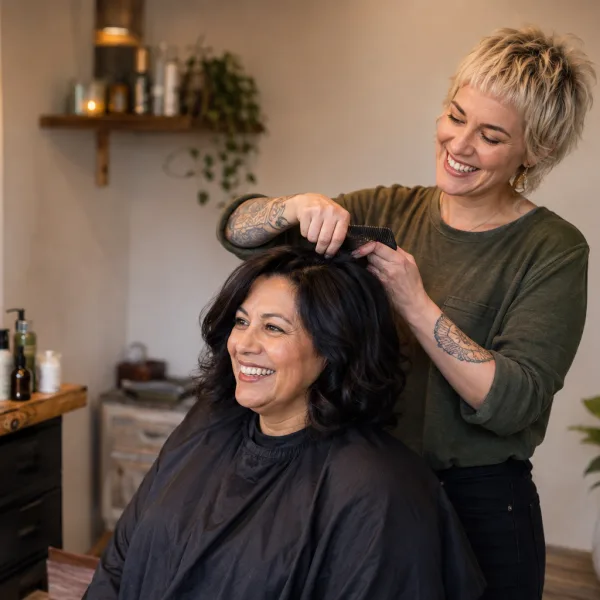
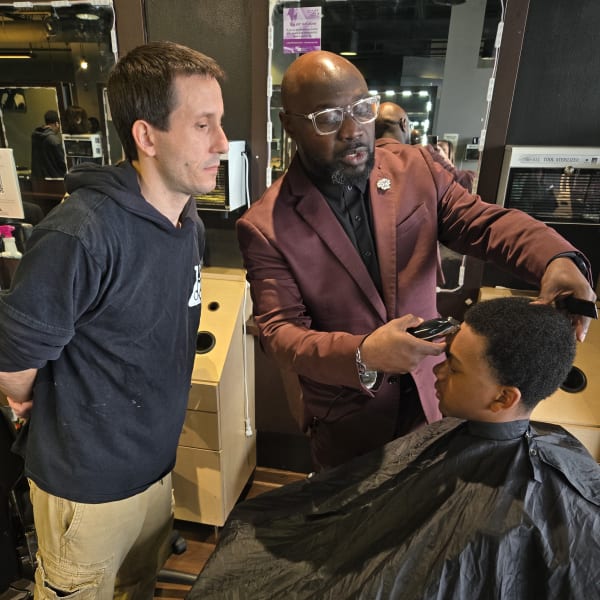
Whether clients ask you for help controlling dandruff or you notice the white stuff as you do their hair, as the professional it's your job to help find solutions. While dry scalp can cause some scaling, true dandruff is commonly caused by the naturally occurring, microscopic fungus Malassezia.
These ten guidelines for talking about dandruff are suggestions from Clairol's parent company, P&G Beauty.
1. Begin the conversation during the consultation. When you meet a new client, examine the scalp carefully and check the shoulders for signs of flaking. Follow up by asking clients whether they notice flaking every day.
2. Ask about itching. Itching is another signal that the dandruff-causing fungus is at work. At this point, you can suggest a shampoo specially formulated to control it.
3. Ask about dryness and tightness. If a client reports that her scalp feels dry or tight, explain that dandruff can be the cause there, too. Suggest a hair style that does not aggravate the condition of a tight scalp.
4. Learn to recognize dermatitis. An extremely red scalp may actually be a severe inflammation and indicate seborrheic dermatitis. If a dandruff shampoo does not correct this, refer the client to a dermatologist.
5. Learn to recognize psoriasis. Thick, crusty patches of red, irritated scalp indicate the more serious condition of psoriasis, an autoimmune disease of the skin. Refer those clients to a dermatologist.
6. Teens need info. With hormonal changes caused by puberty, teens as young as 13 can be dealing with dandruff. Although they may be sensitive about the subject, they'd probably rather discuss it with you than with a non-professional who doesn't know the facts.
7. Learn about the shampoos. Check labels. The most effective dandruff-fighting ingredients are pyrithione zinc, selenium disulfide and ketoconazole. Most of today's formulas are gentle enough even for color-treated hair. For clients with scalp tightness, suggest a shampoo that's extra-moisturizing.
8. Explain the benefits of a regimen. Continuing treatment at home, using the products you've prescribed, is the best way to keep dandruff from returning.
9. Advise against scratching. Scratching a scalp with any medical condition can lead to damaging the hair cuticle and ruin the look of the client's hair style.
10. Stay professional. You're the expert! Knowing the symptoms and solutions for dandruff will heighten your image and strengthen the trust your clients place in your advice.