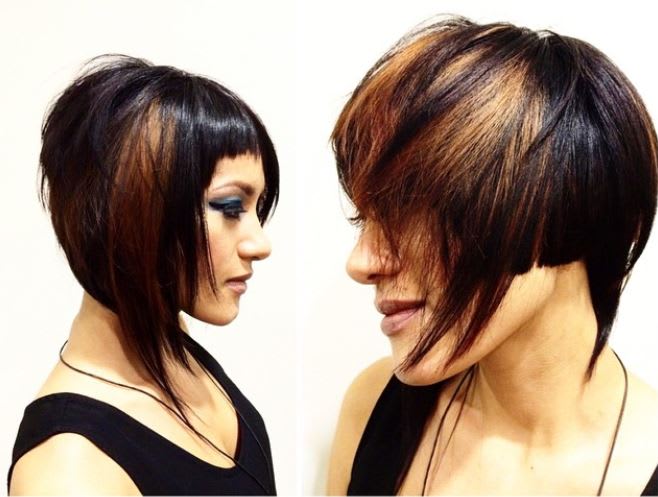
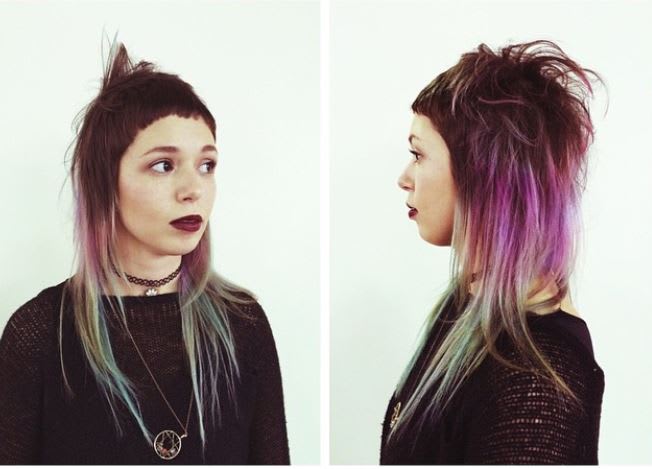
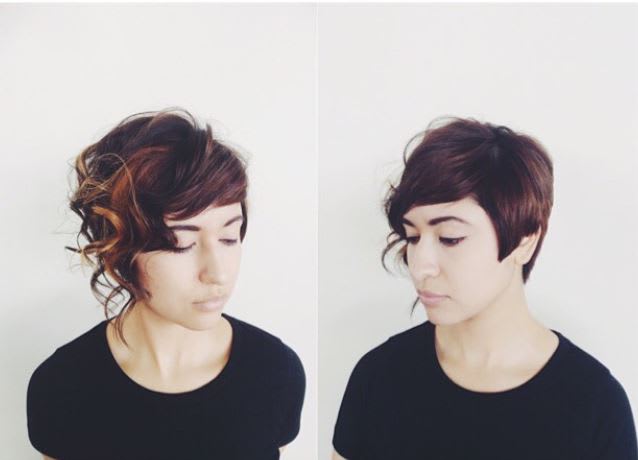
Creating a geometric haircut takes time, dedication, precision and attention to detail.
Paul Mitchell Guest Artist Casandra Cutter (@casandracutter) has created a number of geometric cuts on her Instagram page so MODERN asked her to provide us with some tips on the topic.
"Realize that sometimes you'll produce ugly work. And that's ok," says Cutter. "Over the entire course of your career, you'll produce a massive amount. Not all of it will be good. Maybe 70% or 80% will be awesome, but that other 20% will not be great. If it didn't turn out well, that's an opportunity to assess what happened and make adjustments for next time. But don't stop doing something just because it wasn't great the first time..or the first several times. As Dalí said, 'Never strive for perfection because you will never achieve it.'"
Here, Cutter provides five tips for geometric haircuts:
Consider bone structure, facial features and hair type: "Choosing where to keep or remove weight, where to add strength or softness, which way to push hair on what part of the head...it's a lot to think about. When we cut hair, we are acting as organic architects. We already have a predetermined foundation to work on and the choices we make can enhance or detract from specific areas. Taking the time to really asses the guest's bone structure, hairline, and facial features can create a blueprint for you. Factors such as texture, density, and formation can also help you to determine the suitability of certain design choices for your guest."
Focus on artistic balance: "When you're working with disconnection and asymmetry, visual balance and design flow are paramount. Remember asymmetry, or drama, can be created in a haircut not just through changes in length, but also contrast in strong and soft lines, opposite weight distributions, and different textures in the finish. So for example, I may choose to make the shorter side of my haircut softer if it lives on the heavier side of the parting. I could make that same side stronger if it lives on the lighter side of the part. Additionally, if a disconnection is set in front right side of my haircut and I'm choosing to add a second disconnection, I may choose to place it in the back on the left to balance the overall design. Again, all of this will depend on your individual guests bone structure, features, and hair type."
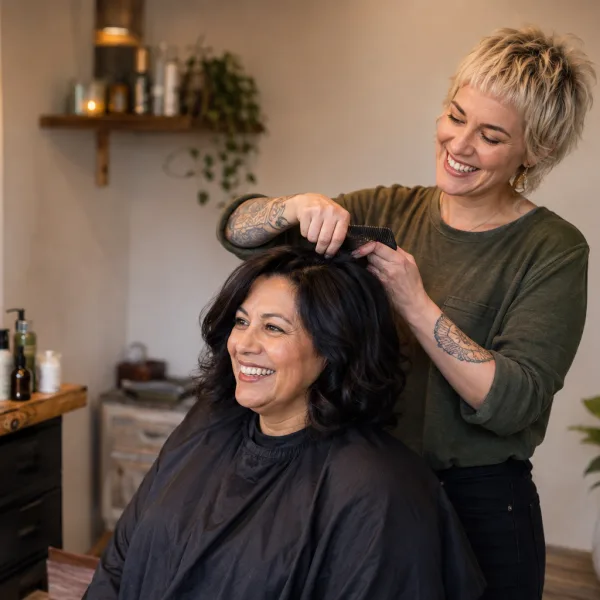
Have a plan: "Panel your haircut and isolate areas of disconnection. Setting yourself up with a roadmap can help keep you on track. This process also allows you to take a critical look at length and density in specific areas as you section and clip it out of the way. It's almost as if you have the chance to cut the hair in your mind before actually jumping into it. Taking a more paced and planned approach helps avoid unfortunate discoveries during, such as finding out there isn't enough hair in an area to support your intended weight distribution."
Be deliberate: "Let each part of your composition be done with purpose. If you are going to create asymmetry in length, make sure you've left enough difference that it's obviously intentional. A half-inch difference just looks like a crooked haircut. Take controlled sections, comb cleanly, and don't move on to another panel until the one you're working on is what you want. Being in control of their hair the entire time will make the whole process feel less stressful, especially if these sorts of haircuts push you outside of your comfort zone."
Be flexible: "If you've ever had that one piece of hair that just wouldn't curl for an up-style, then you know that sometimes the hair has its own ideas about what it wants to do. That has to be ok. Sometimes we get so attached to one specific design idea that we try to force the hair to do things it doesn't lend itself to. This inevitably leads to frustration and instills fear about ever trying to create that result again. Having a less rigid idea of what you are trying to achieve helps you feel more comfortable with needing to make adjustments as you go."