Hairdressers can feel stuck in the haircuts they are most comfortable with. What keeps them stuck is the fear of an unfavorable outcome when stepping outside of those few haircuts. Ironically, the way to move past that fear and unlock creativity ...
Hairdressers can feel stuck in the haircuts they are most comfortable with. What keeps them stuck is the fear of an unfavorable outcome when stepping outside of those few haircuts. Ironically, the way to move past that fear and unlock creativity is actually going back to basics, says Andrew Carruthers, Director of Education for Sam Villa.
"Elevation, over direction and finger angle are all concepts covered in beauty school, but how many stylists really understand what they mean and how they affect the end result of a haircut?" he says. Here, Carruthers reviews these haircutting foundations in a 3-part video series, starting with elevation.
Ad Loading...
THE FUNDAMENTALS OF ELEVATION:
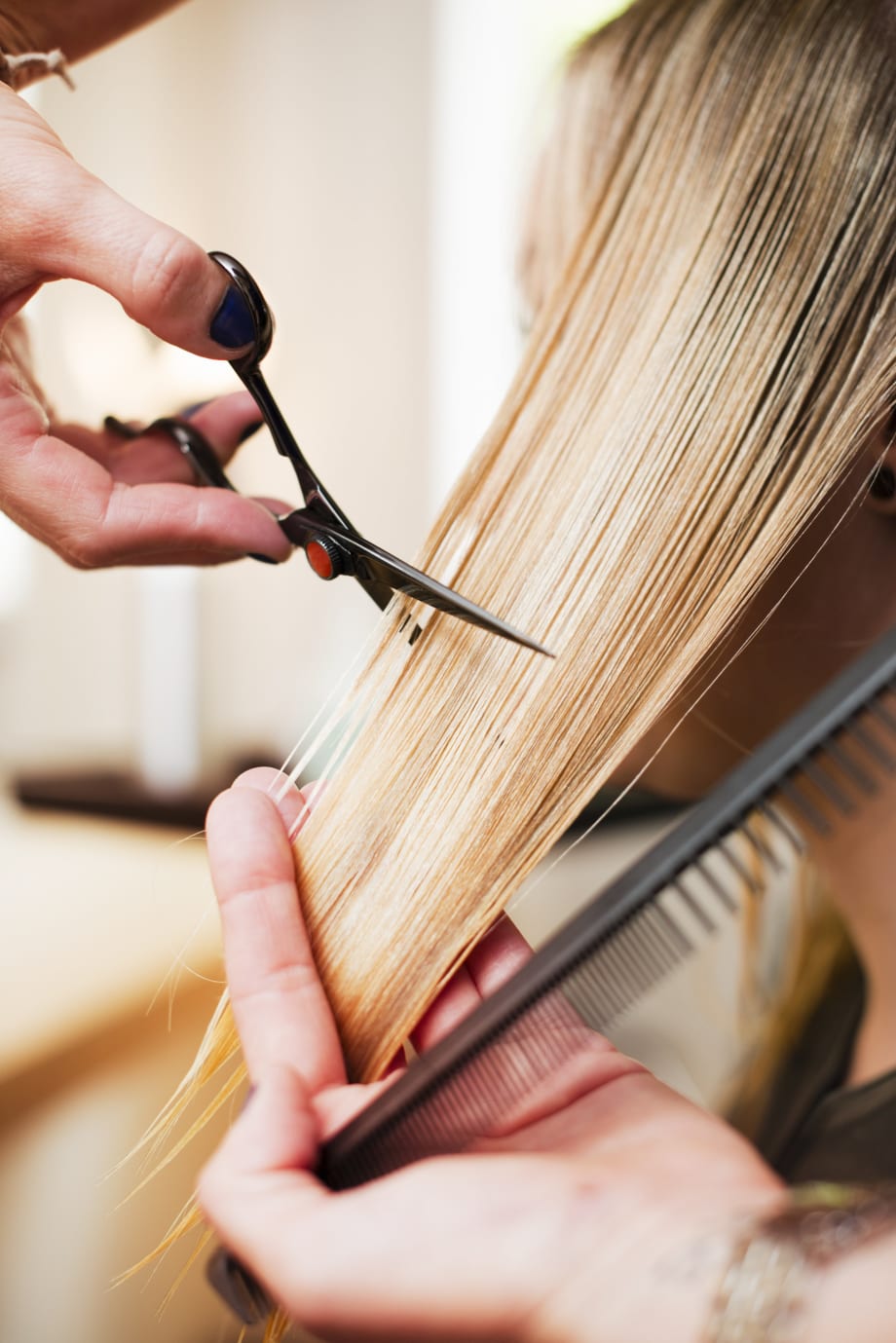
Elevation is the up and down (vertical) movement of hair. Whether a section is taken horizontally, vertically or diagonally, the hair within the sections must always travel up or down to control elevation.
Elevation changes the silhouette vertically. For example: To collapse the bottom and leave weight up top, or remove weight from the top and leave weight at the bottom, it is all controlled through the elevation of sections.
If hair is combed into natural fall and cut without any elevation (haven’t lifted the hair at all away from the head) the maximum amount of weight and density is created at the perimeter. This happens because all of the hair cut is sitting at the same point.
In order to build density up and away from the head, elevate hair vertically from natural fall. When hair is lifted or elevated in-between natural fall and 90° from the head shape, it takes weight away from the bottom and builds weight up and away from the head shape.
When hair is elevated above 90° from the head shape, more length and weight is kept through the perimeter while removing length and weight from the upper surface. As the degree of elevation is increased, more weight will be left towards the perimeter and weight removal will be focused higher in the silhouette.
Swelling graduation is the most extreme form of elevation. Hair is elevated from one side of the head up and across to the other side of the head where it is cut. Since hair is elevated as far as possible from natural fall, the result is maximum movement on the upper surface while allowing for the maximum amount of density to be preserved through the ends.
Anny VanDriel, owner of Be Rosie Salon and creator of Pricing Isn’t Personal, volunteered to share a pricing presentation to beauty school students a year ago, and ended up learning more than she expected.
From the launch of the Ulta BeautyArtist Collective to the evolution of Trendspiration, celebrating stylists is what The Salon at Ulta Beauty does best.
With more than four decades in the industry, hairdresser and MODE Education founder Stan Newton has built a career around the art and discipline of cutting hair, learning the rules so he can break them.
Beauty professionals should evaluate each service based on its popularity, profitability, and alignment with current trends. Conducting client surveys and analyzing booking data can provide insights into which services are in demand and which might be phased out.
LifeSpa leader Ali Yanez explains why strong mentorship, predictable income, meaningful recognition and the right work environment help beauty professionals build careers that last.
Whether a beauty professional chooses a commission salon, booth rental, salon suite or salon ownership, the common thread is having more choices than ever before.
Sport Clips Haircuts will host its inaugural "Level Up Live," a first-of-its-kind virtual event that combines live haircutting education, career inspiration, product knowledge, and employment opportunities for licensed stylists and cosmetology students nationwide.
Orthopedic PT reveals three daily exercises plus ergonomic advice that can help salon professionals avoid the aches and injuries caused by standing, bending and repetitive overhead work.
Salon suite pioneer Karen Kaminski argues that the next evolution of independent beauty businesses won't be defined by beautiful spaces alone, it will be driven by smarter systems that help professionals spend less time on administrative work and more time serving clients.
At a time when many LGBTQ+ people felt compelled to hide parts of themselves, Carlos Valenzuela found a career in beauty and a community that offered opportunity based on what you could do and how well you could do it.
Whether it's social media, fashion, film, art, or culture, Chaz Dean advises stylists to stay aware of what's inspiring people. Take the elements that make sense for you in these five lessons learned through a life in beauty.
For Jessica Domoney, building a successful career isn't about saying yes to every opportunity, it's about protecting your time, investing in yourself and creating an experience clients won't forget.
"The mistake people make is treating AI like a vending machine instead of a personal assistant." Digital marketing expert Scott Moon shares how beauty professionals can use AI while staying authentic
Real-world advice on creativity, consultations, color, burnout, business, boundaries, inclusivity, client care, and career growth from educators and industry experts.
Real-world advice on creativity, consultations, color, burnout, business, boundaries, inclusivity, client care, and career growth from educators and industry experts.