






Why Salon Work Makes Your Body Ache & What You Can Do to Feel Better
We learn some simple moves and strategies to keep the blood pumping through the muscles and limit posture problems from The Balanced Beauty Pro
by Anne Moratto
 MENU
MENU SEARCH
With Employee Retention Credit (ERC) audits set to rise, are you ready if the IRS comes knocking? Legal professionals Claudia Vasquez and Tina Azarvand help you prepare what you need.

While it may not be as glamorous as a balayage or as captivating as a sleek blowout, retaining the proper documentation to substantiate your Employee Retention Credit (ERC) claim is crucial for salon owners and independent stylists. With ERC audits set to rise, maintaining financial wellness depends on substantiating these claims.
Imagine sorting through business mail when you spot an IRS letter - your ERC claims are under audit, with an extensive Information Document Request (IDR). Your first instinct may be panic, but instead, you vividly recall this guide unraveling the mystery of how to substantiate ERC claims, one strand at a time.
An IDR, formally known as Form 4564, from the IRS is a formal inquiry sent to taxpayers during the course of an audit or examination. It is the IRS's way of asking for specific documentation, records, or other information during a tax audit. These requests can vary widely depending on the complexity of the audit and the issues under review.
Typically, an IDR will outline the specific documents or information the IRS is seeking, along with a deadline for the taxpayer to provide the requested materials. The IRS uses IDRs to gather evidence and substantiate the accuracy of a taxpayer's reported income, deductions, credits, or other tax-related items.
Responding to an IDR is a crucial part of the audit process, as failure to provide requested documentation in a timely manner can lead to your ERC claims being disallowed. Therefore, taxpayers should carefully review each IDR they receive and work with a tax professional experienced with ERC to gather and submit the requested information accurately and promptly.
While each IDR may vary depending on the complexity of the audit and the specifics of your business, the following list includes what most individuals or businesses will need to provide (where applicable):
Q2 2020 - Q4 2021 Payroll Tax Returns (i.e. 941, 941-X, etc.)
2020 - 2021 Federal Income Tax Returns;
Forms 2020 and 2021 Forms W-2;
941/941-X Worksheet 1 used to compute the ERC;
If your business is part of an aggregated or affiliated group, the above mentioned forms for each member of the group.
2020 - 2021 Quarterly breakdown of wages paid, broken down per employee (where applicable);
2019 - 2021 Quarterly Profit & Loss or Income Statements;
Name of majority owner and blood relatives and/or spouse;
Names of employees who were paid wages for which the ERC was claimed;
Breakdown of how wages were allocated between the ERC and PPP loans;
PPP Loan Forgiveness Application (Form 3508);
List of employees paid sick and/or family leave, the dates employees were on leave, and the amounts paid to each employee while on leave;
Qualified health plan expenses (if applicable);
Calculation of average full-time employee count;
For employers with more than 100 full-time employees in 2019 who claimed ERC for 2020 quarters, documentation showing ERC was claimed solely for wages paid to employees who were not performing services;
For employers with more than 500 full-time employees in 2019 who claimed ERC for 2021 quarters, documentation showing ERC was claimed solely for wages paid to employees who were not performing services.
Orders from appropriate governmental authority limiting commerce, travel, or group meetings due to COVID-19 resulting in full or partial suspension of operations
Just like achieving perfect highlights, ERC substantiation requires precise timing, detail, and finesse. If your business claimed ERC, retaining supporting documentation is paramount - even if not audited. Currently, the ERC audit statute of limitations is three or five years, depending on the quarter at issue. However, the Tax Relief for American Families and Workers Act of 2024 has proposed increasing the ERC audit statute of limitations to six years for all applicable periods. Thus, business owners should plan to retain their ERC records for a period of no less than six years from the time the return(s) process.
Not sure where to start? Contact Azarvand Tax Law at (410) 698-4005 or book a free consultation online at AzarvandTaxLaw.com.
Originally posted on Salon Today
We learn some simple moves and strategies to keep the blood pumping through the muscles and limit posture problems from The Balanced Beauty Pro

Anny VanDriel, owner of Be Rosie Salon and creator of Pricing Isn’t Personal, volunteered to share a pricing presentation to beauty school students a year ago, and ended up learning more than she expected.

From the launch of the Ulta BeautyArtist Collective to the evolution of Trendspiration, celebrating stylists is what The Salon at Ulta Beauty does best.
Sponsored by Ulta Beauty

With more than four decades in the industry, hairdresser and MODE Education founder Stan Newton has built a career around the art and discipline of cutting hair, learning the rules so he can break them.

Beauty professionals should evaluate each service based on its popularity, profitability, and alignment with current trends. Conducting client surveys and analyzing booking data can provide insights into which services are in demand and which might be phased out.

LifeSpa leader Ali Yanez explains why strong mentorship, predictable income, meaningful recognition and the right work environment help beauty professionals build careers that last.

Whether a beauty professional chooses a commission salon, booth rental, salon suite or salon ownership, the common thread is having more choices than ever before.

Sport Clips Haircuts will host its inaugural "Level Up Live," a first-of-its-kind virtual event that combines live haircutting education, career inspiration, product knowledge, and employment opportunities for licensed stylists and cosmetology students nationwide.

Orthopedic PT reveals three daily exercises plus ergonomic advice that can help salon professionals avoid the aches and injuries caused by standing, bending and repetitive overhead work.

Four publications for beauty industry professionals to enhance their leadership skills, financial awareness, professional growth, and joy!

Salon suite pioneer Karen Kaminski argues that the next evolution of independent beauty businesses won't be defined by beautiful spaces alone, it will be driven by smarter systems that help professionals spend less time on administrative work and more time serving clients.

At a time when many LGBTQ+ people felt compelled to hide parts of themselves, Carlos Valenzuela found a career in beauty and a community that offered opportunity based on what you could do and how well you could do it.

Whether it's social media, fashion, film, art, or culture, Chaz Dean advises stylists to stay aware of what's inspiring people. Take the elements that make sense for you in these five lessons learned through a life in beauty.

For Jessica Domoney, building a successful career isn't about saying yes to every opportunity, it's about protecting your time, investing in yourself and creating an experience clients won't forget.
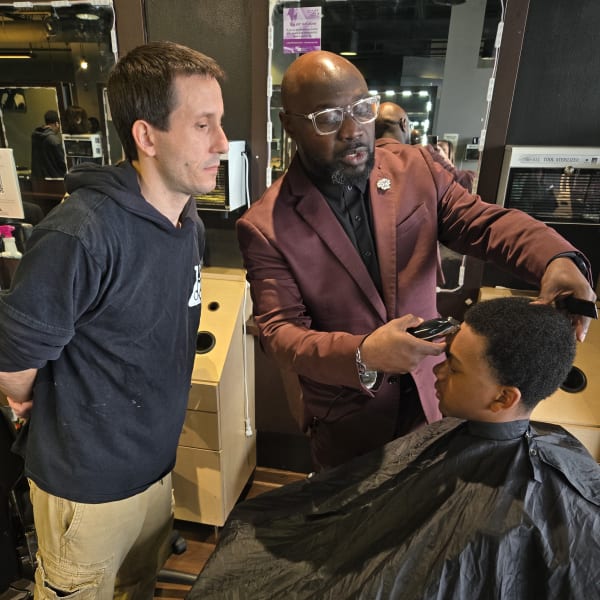
MODERN SALON sat down with Samuels to discuss the book, beauty education, mentorship and the habits that help beauty professionals thrive.

"The mistake people make is treating AI like a vending machine instead of a personal assistant." Digital marketing expert Scott Moon shares how beauty professionals can use AI while staying authentic

Real-world advice on creativity, consultations, color, burnout, business, boundaries, inclusivity, client care, and career growth from educators and industry experts.