Beware the air! If you’re wheezing and sneezing, it could be the salon environment. How do you clean a “surface” you can’t see?
It was 2008 when Los Angeles hairdresser Jordana Lorraine decided to increase her knowledge about the air around her. Lorraine had good reason to be concerned about breathing in chemical vapors, sprays and dust. Hairdressing falls fourth on WebMD’s list of “risky jobs for your lungs,” and a study published in Respiratory Care Journal four years ago concluded, “Hairdressing work is associated with a high frequency of work-exposure-related respiratory symptoms and, to a lesser extent, allergic symptoms.” Hairdressers in this study exhibited lower lung function when compared with the general population, which can be an early sign of COPD (chronic obstructive pulmonary disease).
Ad Loading...
Photography: Sam Edwards for Getty Images
Clearing the air
“One of the biggest challenges facing the professional beauty industry is the lack of ventilation,” observes scientist Doug Schoon, president of Schoon Scientific and a regular consultant to the beauty industry. “If you build out your salon from a travel agency, you’ll have different ventilation needs from the previous business, but that’s often overlooked. Any irritation of the eyes, nose or throat—called ‘sensory irritation’—indicates a ventilation problem.”
Schoon cautions owners and technicians from taking a cavalier approach. DO NOT think you can just:
Open a window. “That’s circulation, not ventilation,” Schoon explains. Although some fresh air does come in, it would take a very strong wind to partly replace the air that’s already there.
Rely on your nose. Dust, as well as many harmful vapors, have no odor, and a fragrant hair spray can do as much damage as a foul-smelling odor. Schoon further cautions against purchasing any ventilation system that touts an “ozone” solution, which he says covers up the odor but does not eliminate it. “Ozone is a powerful lung irritant,” Schoon adds. “So you’re potentially putting harmful ozone into the air just to get rid of odors.”
Get “used to it.” In the morning, you may notice an odor that’s been hovering all night long, but after you’ve been in the salon for a while you no longer smell it. Schoon says that’s called “olfactory fatigue.” The nose is forgiving—you no longer notice the odor, but it’s still there.
Joke about it. “When a client complains about an odor, that’s a signal that your ventilation isn’t good,” Schoon says. “Don’t respond, ‘Smells like money to me!’ Take it seriously.” You never know when a client might even sue you for causing a respiratory condition.
Jordana Lorraine
Jordana Lorraine
Jordana Lorraine didn’t joke; she researched. An engineer friend told her to look for “chemical source capture ventilation,” so the Googling began, leading Lorraine to Aerovex Systems.
Ad Loading...
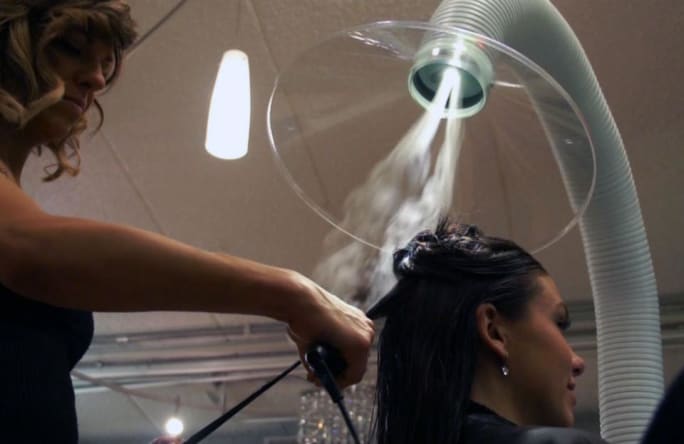
“I didn’t know what I was looking for, but when I saw it I knew that’s what I needed,” Lorraine says. “Aerovex was way ahead of me. They’d already adapted this concept to the salon environment. The equipment hangs right over the head and absorbs the chemical vapors and fumes.”
She persuaded the owner of her salon to purchase one unit that all of the stylists shared. When she left to become an independent contractor, she purchased a newer model on her own, and she markets the clean air as one of the salon’s benefits.
While OSHA requires salons to provide a safe environment for everyone on the premises, the government does not employ enough inspectors to monitor compliance.
“It’s up to the owner and stylists to read OSHA’s Safety Data Sheets to learn more about the products you’re using,” says Shoon, who consults with Aerovex in product development. Overall, manufacturers have been responsible, he adds. But responsibility does not end with the manufacturer.
“The problem is that stylists fail to follow manufacturers’ instructions, or they dismiss warnings that are on the label,” Schoon says. “Those instructions and warnings are there for a reason. ‘Apply sparingly’ means that you can’t predict the consequences if you use more than recommended.”
Ad Loading...
Lorraine is confident that, in addition to protecting herself and her assistant, she’s addressing an important customer service issue.
“Clients notice that their eyes aren’t burning,” she reports. “They tell friends, ‘At this salon, chemical services are a completely different experience!’ A construction worker wears a hard hat; that’s how I feel about this system. I’m not messing around. I want a safe environment.”
The Aerovex System
Healthy Air Chemical Source Capture System by Aerovex Systems
Chemical Source Capture System
“It used to be that as long as you had enough fresh air coming in, you could open a salon,” says Jeff Cardarella, president of Aerovex Systems and a founding member of the Keratin Smoothing Council. “But now there are regulations.”
After first adapting “source capture” technology to nail stations, Aerovex expanded six years ago to providing source capture units for hair stations as well. This technology removes potentially harmful chemicals right where they’re applied, before they have a chance to mix with the air and filter throughout the salon.
Ad Loading...
“It’s all about protecting the breathing zone,” Cardarella says. “It’s appropriate for all chemical services and for biological pathogens, too. If someone sneezes, that gets pulled away from the stylist’s space and destroyed.”
The company’s most advanced source capture systems, called Healthy Air, are quieter and easier to maintain with “plug-and-play” cartridges” than earlier models. Cardarella says that a salon can achieve maximum protection by covering three zones—source capture for the breathing zone, air purification for the rest of the air in the salon and a heating, ventilation and air-conditioning (HVAC) system equipped with a filter designed to remove salon vapors and dust. Salons that address all three zones receive a certification seal from Aerovex that they can place in the window.
“Protecting yourself also involves work practices and protocol,” Cardarella adds. “Use a low- to medium-heat blow dryer setting for keratin treatments, don’t place the dryer right on the head, apply only as much product as recommended, use a fine-tooth comb to remove excess product and wear nitrile gloves and glasses.”
(This is a version of an article published in the Healthy Hairdresser section of the March 2014 issue of MODERN SALON.)
Anny VanDriel, owner of Be Rosie Salon and creator of Pricing Isn’t Personal, volunteered to share a pricing presentation to beauty school students a year ago, and ended up learning more than she expected.
From the launch of the Ulta BeautyArtist Collective to the evolution of Trendspiration, celebrating stylists is what The Salon at Ulta Beauty does best.
With more than four decades in the industry, hairdresser and MODE Education founder Stan Newton has built a career around the art and discipline of cutting hair, learning the rules so he can break them.
Beauty professionals should evaluate each service based on its popularity, profitability, and alignment with current trends. Conducting client surveys and analyzing booking data can provide insights into which services are in demand and which might be phased out.
LifeSpa leader Ali Yanez explains why strong mentorship, predictable income, meaningful recognition and the right work environment help beauty professionals build careers that last.
Whether a beauty professional chooses a commission salon, booth rental, salon suite or salon ownership, the common thread is having more choices than ever before.
Sport Clips Haircuts will host its inaugural "Level Up Live," a first-of-its-kind virtual event that combines live haircutting education, career inspiration, product knowledge, and employment opportunities for licensed stylists and cosmetology students nationwide.
Orthopedic PT reveals three daily exercises plus ergonomic advice that can help salon professionals avoid the aches and injuries caused by standing, bending and repetitive overhead work.
Salon suite pioneer Karen Kaminski argues that the next evolution of independent beauty businesses won't be defined by beautiful spaces alone, it will be driven by smarter systems that help professionals spend less time on administrative work and more time serving clients.
At a time when many LGBTQ+ people felt compelled to hide parts of themselves, Carlos Valenzuela found a career in beauty and a community that offered opportunity based on what you could do and how well you could do it.
Whether it's social media, fashion, film, art, or culture, Chaz Dean advises stylists to stay aware of what's inspiring people. Take the elements that make sense for you in these five lessons learned through a life in beauty.
For Jessica Domoney, building a successful career isn't about saying yes to every opportunity, it's about protecting your time, investing in yourself and creating an experience clients won't forget.
"The mistake people make is treating AI like a vending machine instead of a personal assistant." Digital marketing expert Scott Moon shares how beauty professionals can use AI while staying authentic
Real-world advice on creativity, consultations, color, burnout, business, boundaries, inclusivity, client care, and career growth from educators and industry experts.
Real-world advice on creativity, consultations, color, burnout, business, boundaries, inclusivity, client care, and career growth from educators and industry experts.