Man Candy or More to Men than Meets the Eye?
The man’s role in society has been changing for over 40 years, so why is it garnering so much attention now? Perhaps it’s because for the first time ever, we have a woman running for the top spot in the White House. Maybe it’s because we’re seeing traditional gender roles becoming flimsy as men assume grocery shopping and soccer practice duties while their wives are tapping on the glass ceiling. Whatever the reason, the professional beauty industry is quickly and astutely taking note.
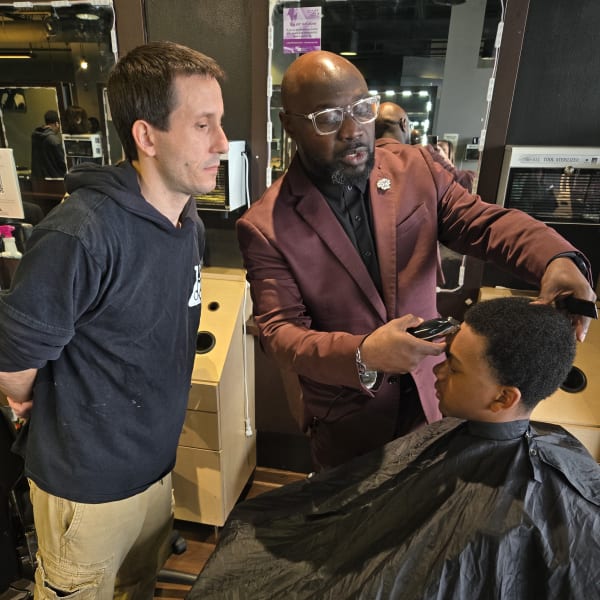
And the industry notices it’s no longer just a haircut anymore. Barbers and stylists are performing services other than fades and blends on their clients. We see it in the jump of cosmetologists returning to school for barbering licenses and we see it in new course curriculums like “Cosmetology/Barbering Cross Over.” And just in time, I might add. According to Google, in late 2015, for the first time ever, the search engine registered more interest in men's hair care than in women's — about 6 percent more, to be specific. That’s a lot of pomade.
I think the new male persona has a great deal to do with it, too. Let’s look at his evolution.
Not Your Dad’s Ozzie
In the black and white television of the 1950s, Ozzie and Harriet slept in separate beds; women vacuumed in dresses and pearls. Men were considered Head of the Household with clearly defined roles and responsibilities in society: they made the financial decisions, leisure activities were gender specific and they made up 70% of the workforce. The ideal family model meant Mom stayed home, kept house and cared for the kids; Dads were just the disciplinarians. Male grooming echoed the period: High and tight to the scalp and skin, and formal in an effort to present oneself as put together and strong.
Fast forward to The 1970s, the first big shift in males’ role in society as more women were graduating from college and entering the workplace as full timers. Many of the jobs they took were previously and primarily held by men. With women in the workplace full-time and out-earning their husbands by 4%, men began helping with housework. The 1970s also saw an end to the military draft, which ushered in the era and rise of extreme sports. Why? Men no longer had to defend their country to show their bravado so they found other ways to do it, like bungee jumping off the side of a bridge. Beards and long hair became the norm as they “rebelled” against establishment norms. Tee shirts and jeans replaced formal attire and grooming routines were reduced to a bar of soap and swipe of deodorant. But as these outward changes affected their appearance, deeper changes were occurring inside men as they began playing an active role in caring for their children.
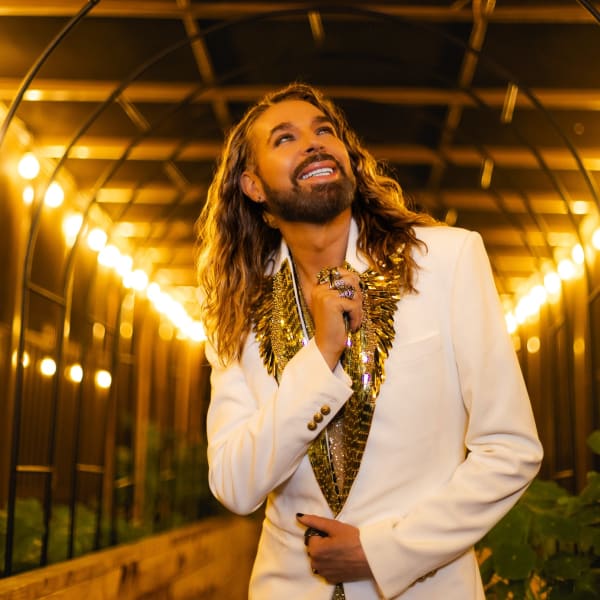
Emily Cover photography
Today’s Mankind
The male role in society today is varied and complex; roles aren’t clearly defined and many are shared. Men are equally as comfortable jumping a truck as kissing a boo-boo. Today’s men believe involvement in their children’s lives, and affection towards them, is essential. Men share in the cleaning, the Target runs and childcare. They work from home or are cool with the “Stay-at-home-Dad” tag when Mom is the breadwinner. In 1989, only 1.1 million men claimed that title; by 2012 it was already at 2 million.
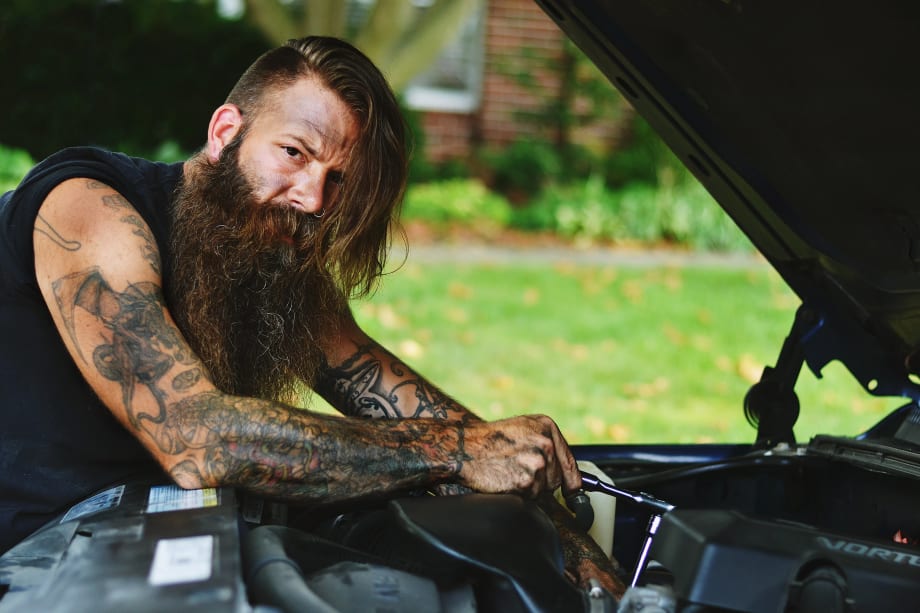
While men assume more responsibilities normally seen as feminine, the pendulum swings harder in the opposite direction with regards to grooming and protecting their manhood. Today’s men care about their looks and guard their individuality fiercely. Like the 1970s, they boast more facial hair, but this time around, it’s sweet smelling, conditioned and coiffed. Long hair, don’t care: Tie it up in a man bun or Viking braid. High and tighters remain true but throw a tribal emblem into the mix. And to avoid white washing their manhood, men demand more gender specific products that they don’t have to share with their female partners.
Men also gravitate toward more man-specific fragrances that aren’t gender neutral (no pine needles and lemon furniture polish). And while multitasking products aren’t new to women, they are to men; guys pushed the development of 2-In-1 or 3-In-1 products that now dot their shower shelves.
These societal changes have spurred the growth of hip, young men’s grooming companies in our industry. Beard, hair and tattoo oils line the stations of stylists and barbers everywhere, while beard, hair and body washes stand proud at the back bar. It’s a whole new world of products in our industry as a plethora of brands have hit the horizon. Again, just in time, our industry is giving Man-Kind a whole new meaning.
Donna Federici has brought her intuitive branding and marketing savvy to the beauty industry’s biggest names for over three decades. Her think tank, Intawishin Consulting Group, Inc., cultivates progressive young brands from conception to market. She currently has a crush on the men’s grooming industry.