With product lines and entire salon brands increasingly targeting men’s distinct hair needs, communication style and buying habits, the male market is growing, and new stylists aren’t the only ones playing catch-up.
With product lines and entire salon brands increasingly targeting men’s distinct hair needs, communication style and buying habits, the male market is growing, and new stylists aren’t the only ones playing catch-up.
Specialized Training
“When I graduated cosmetology school, I felt like I hadn’t learned enough in men’s cutting or styling,” says Bill Kochanski, brand manager at Woody’s Quality Grooming. “My skills were not good enough to meet the demands of the current male market.”
Ad Loading...
Kochanski bridged his skills gap with advanced education. Taking classes at the Sassoon Academy in San Francisco and the Redken Academy in Northern California gave him the confidence to promote his services to the 50 percent of the population he’d shied away from. “When you take additional classes, it will only make you more prepared,” he says. “I found that if I got just one great idea out of a class, it was worth 1,000.”
For a student who wants to pursue a career in the men’s market, they need to master their detail work.
men-feature-web-03
Stephanie Kocielski, vice president of education for John Paul Mitchell Systems, advises stylists who feel unprepared to choose just three men’s cuts you can sell. “Work on family members and friends,” she says. “Get your hands on every mannequin head to make sure your skill set can attack those looks.”
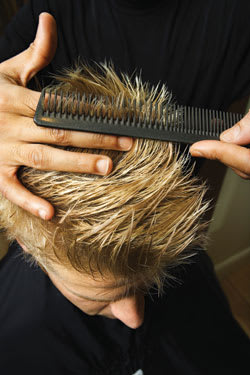
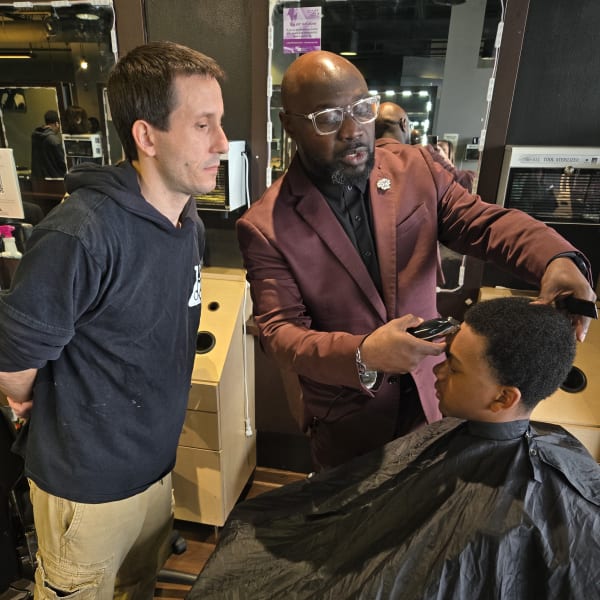
Like any client with short hair, men appreciate clean lines. “Work around their ears and neck,” recommends Eufora for Men Global Team Educator Jay Fata. “That’s what stands out. And know your tools. Get really good at clipper cutting, and learn how to use a razor with impeccable skill.”
Attracting Male Clients
men-feature-web-02
The foundation of recruiting and maintaining a male clientele is anchored in familiar cornerstones: delivering a quality service and establishing a great relationship. Accomplish that, and it may start raining men in your chair.
Ad Loading...
“Guys look at other guys’ hair cuts,” says Greg Myers, an American Crew All-Star. “My clients are essentially my marketing department. Your clientele base will grow by word of mouth because of your reputation.”
But while classes and lots of practice can help you consistently create quality work, the relationship piece can be challenging. Study men’s behavior and you will find:
• They don’t plan. “Make sure that you are ready for walk-in visits,” Fata recommends.
• Your time is their money. Fata adds, “You don’t want to hurry, but work quickly and efficiently.”
• Masculine touches reassure them. Relatively minor adjustments—images portraying men’s styles, a few issues of GQ and Golf Digest at your station or a designated retail area for men’s products—can make guys feel comfortable in the salon.
Ad Loading...
Kocielski recommends getting business cards that say “Men’s Specialist” on them. “Look around for men who could use some work, and then market yourself,” she says. “Men need the extra nudge with modern products and technology. Put a little work into five or six clients, and then when they come back have them recommend other clients to you. If you do your job right, you won’t have to keep starting all over from scratch.”
Don’t overlook your female clients as a link to reaching out to men. Notes Kocielski, “There are women in every man’s life—his mother, sister, girlfriend or wife. Tell your existing female clients that you are a men’s specialist.”
Man Talk: Consultation and Conversation
Male or female, all clients want to feel they belong at your salon. “When clients enter the salon, greet them and make them feel at home,” says Fata, “but don’t treat a man like a woman. You need to know the type of client you are working with and be able to handle yourself in a conversation.”
That conversation can be brief—the experts caution against overwhelming male clients with technical terms and too much information—but you cannot make assumptions about a client without asking questions and listening. Does he play sports? Work in an office? How much time does he spend on grooming? Does he enjoy working with his hair or does he want something basic?
Salon stylists can learn from barbershops, where guys are used to getting a full shave, hot-towel wrap and total pampering. Furthermore, barbers know how to interact with different male clients. Kocielski explains, “There’s one guy who needs you to go over the details, and then there’s the other guy who already looks good and just needs a conversation.” And don’t be afraid to say, “Hey, can I make a recommendation?”
Ad Loading...
Choose language that resonates with men. For styles that show some scalp exposure, use a term like “aggressively short,” recommend TowelDry educators. For styles that have more scalp coverage, say “moderate scalp exposure.” Try using masculine terms, like those used in architecture or construction— angles, curves, sharp.
Kocielski draws upon car analogies as a call to action and references male-friendly pop culture to create a mental picture. She suggests saying: “Hey Tim, after we’re through detailing your hair today, you’re going to have to come back in three weeks to get your hair detailed again.” Instead of mentioning highlights, Kocielski might say, “I’m going to Hawaii Five-O you.”
Or use your visuals. “Rather than talking about a clipper with a #2 guard,” says David Guerin, Global Artistic Director for Oster clippers, “show the client a picture and describe the look visually.”
men-feature-web
Upsell, Retail, Retain
Men don’t shop—they buy. When you’re trying to sell a product to a male client, remember that it’s up to you to know all of the products your salon offers inside and out, and especially how they work on the hair. “Pick a brand to be loyal to—one that allows you to be versatile,” says Kocielski. “Find some talking points and allow people to see how excited you are about it. Give men a great shampoo and a reason to take that shampoo home.”
Write out scripts about the products you love, and be sure to start the product discussion during the consultation. “It’s about addressing the needs of your client, and you should know where you stand on all points,” says Fata. “Once you make one recommendation that sticks, a guy will buy that product for life.”
Ad Loading...
Men look for convenience and reject anything too complicated. “Guys don’t want an entire product regimen,” Kochanski notes. “If you talk to them about their lifestyle, you can weave products into the conversation. This will become easier with experience.”
Never be afraid to introduce change, but do it slowly. “It can be really hard to upsell to a guy,” Kocielski says. “Generally guys don’t have a lot of time.
“The best option is to plant the seed—describe additional service opportunities that he might be interested in doing next time.” You’ll have a good chance with a service suggestion such as gray blending or a product recommendation to help battle thinning hair. Offer the client a beverage, and as he enjoys it you can talk about what your salon can provide for him.
“Men go home and decide for themselves,” says Guerin, who advises presenting all product information right up front. “Get ready to hear ‘no’ or ‘I’ll think about it.’ But when it becomes their idea, they will pick it up. Suggest and give options, but never tell them what they have to do.”
Value every client. “Retention is about knowing that your client is more than just an appointment,” says Myers. “That client is a person with needs, and you are taking care of those needs.”
Ad Loading...
Men are prized in the salon for their incredible loyalty, which intensifies as they become more invested in the experience. “If you just cut a guy’s hair, he will be loyal to you for two to three visits,” says Kocielski. “If you sell him product, he will be loyal for one to two years. If you sell him an experience, he will be your client for life.”
What makes salon content worth a pause? Hairstylists Janelle Eyre, Sean Crutcher and Luis Rodriguez share how they show their work, earn guests’ trust and make posting feel manageable. You can get MORE from these artists in our upcoming webinar!
What makes salon content worth a pause? Hairstylists Janelle Eyre, Sean Crutcher and Luis Rodriguez share how they show their work, earn guests’ trust and make posting feel manageable. You can get MORE from these artists in our upcoming webinar!
Anny VanDriel, owner of Be Rosie Salon and creator of Pricing Isn’t Personal, volunteered to share a pricing presentation to beauty school students a year ago, and ended up learning more than she expected.
From the launch of the Ulta BeautyArtist Collective to the evolution of Trendspiration, celebrating stylists is what The Salon at Ulta Beauty does best.
With more than four decades in the industry, hairdresser and MODE Education founder Stan Newton has built a career around the art and discipline of cutting hair, learning the rules so he can break them.
Beauty professionals should evaluate each service based on its popularity, profitability, and alignment with current trends. Conducting client surveys and analyzing booking data can provide insights into which services are in demand and which might be phased out.
LifeSpa leader Ali Yanez explains why strong mentorship, predictable income, meaningful recognition and the right work environment help beauty professionals build careers that last.
Whether a beauty professional chooses a commission salon, booth rental, salon suite or salon ownership, the common thread is having more choices than ever before.
Sport Clips Haircuts will host its inaugural "Level Up Live," a first-of-its-kind virtual event that combines live haircutting education, career inspiration, product knowledge, and employment opportunities for licensed stylists and cosmetology students nationwide.
Orthopedic PT reveals three daily exercises plus ergonomic advice that can help salon professionals avoid the aches and injuries caused by standing, bending and repetitive overhead work.
Salon suite pioneer Karen Kaminski argues that the next evolution of independent beauty businesses won't be defined by beautiful spaces alone, it will be driven by smarter systems that help professionals spend less time on administrative work and more time serving clients.
At a time when many LGBTQ+ people felt compelled to hide parts of themselves, Carlos Valenzuela found a career in beauty and a community that offered opportunity based on what you could do and how well you could do it.
Whether it's social media, fashion, film, art, or culture, Chaz Dean advises stylists to stay aware of what's inspiring people. Take the elements that make sense for you in these five lessons learned through a life in beauty.
For Jessica Domoney, building a successful career isn't about saying yes to every opportunity, it's about protecting your time, investing in yourself and creating an experience clients won't forget.