From Student to Pro: How to Upgrade from School Shears
Choosing your own shears after graduating from cosmetology school can be tricky - and a big investment. Sam Villa ArTeam Member Jesse Linares shares his tips on picking the right shears for your needs.
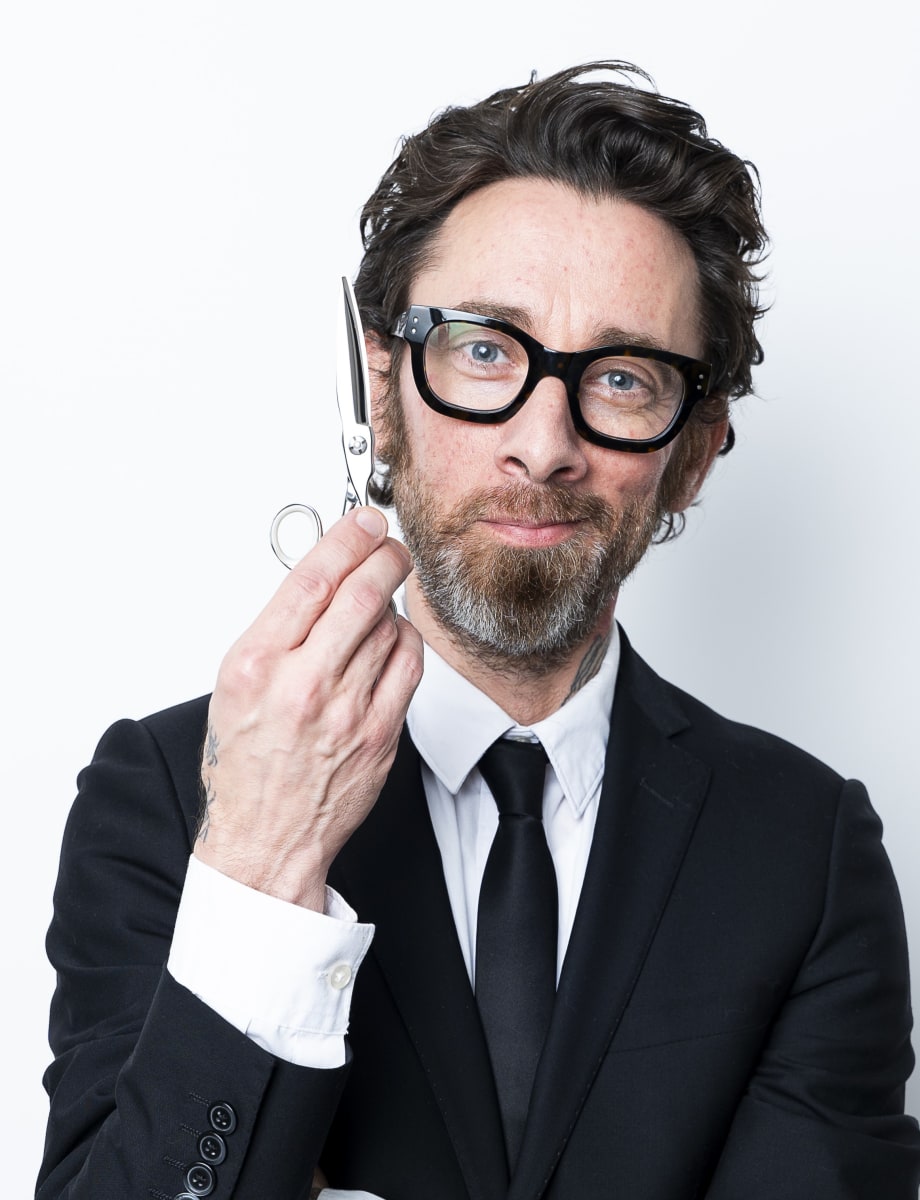
by Jesse Linares, Sam Villa ArTeam Member
February 4, 2025
Jesse Linares, Sam Villa ArTeam Member
Photographer: Todd White
6 min to read
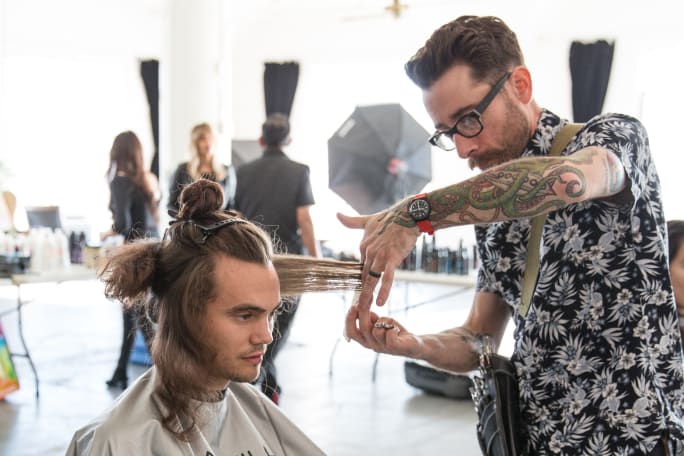
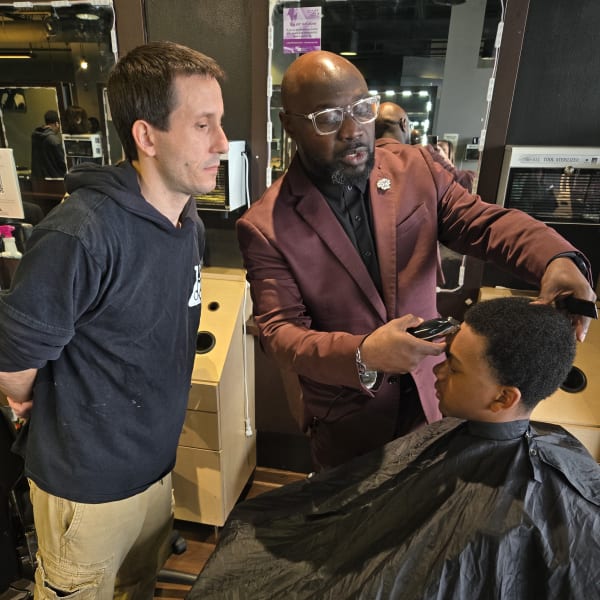
Jesse Linares cuts a model's hair.
image courtesy of Sam Villa
One of the most exciting moments for a new cosmetologist or barber is purchasing their first set of upgraded professional shears. However, overwhelming choices stacked up with all the advice and warnings we've received can make it hard to decide what to get!
In this article, we'll examine some key elements to consider and what choices may be best.
Ad Loading...
Steel
Japanese steel has become the industry standard in professional haircutting scissors. It is known for its peerless purity and hardness. It is rare to find a professional haircutting scissor made with anything else. However, steel is very much like cake flour - it is an essential component, but it's not the only ingredient in the cake. Each respective manufacturer manipulates the steel using their own methods to create their own unique results. Steel type alone is not the absolute criterion.
For the working haircutter, it may be more practical to focus on hardness, specifically the Rockwell Hardness Scale - an industrial rating system for metals. Most professional scissors will advertise their Rockwell Hardness rating - the better metals start around 58HRC, with the highest quality rating around 63HRC. These harder alloys stay sharper longer, sharpen more easily, and resist corrosion better. For example, the Sam Villa Essential Series Shear has a hardness rating of 58-60HRC, while their premium shear, The Artist Series Shear, rates at 60-61HRC.
Handle Configuration & Blade Length
There is loads of advice out there about what length of blade is best for our individual hand, and we've all been confused by the myriads of methods to measure our palms and relate that to scissors somehow. Ultimately it comes down to how the scissor is designed and how it feels in our hand. Not every shear is for everyone.
Handle configuration is probably the most important element to consider first. How the thumb ring and opposing finger ring are oriented can make or break our love for a scissor.
Symmetrical Thumb: Very traditional design. The thumb and finger rings are set equally. Originally, haircutters would use their thumb and middle finger when holding this design.
Offset Thumb: There are many variations of this design: semi-offset, off-set, crane, etc. Essentially the thumb ring is set forward from the finger ring to some degree, reducing strain on the hand.
Forward-Set Thumb: The most ergonomic design, setting the thumb ring forward to align the thumb's movement with the index finger - dramatically reducing hand and wrist strain. This design is very helpful when working with longer blades, as it provides an exceptionally balanced grip.
Ad Loading...
Additionally, wise use of ring spacers will customize the "fit" of our shear to our hand. Often, without these spacers, the rings are too big for our fingers. This causes us to unknowingly grip the shear improperly, which adds strain to our hands as well as the scissor.
If the handle feels comfortable and fits correctly, blade length becomes a functional decision. Shorter blades are nimbler and often favored by haircutters who work with very disciplined sectioning. Longer blades can be helpful in shear-over-comb techniques or when cutting large, condensed sections of hair. Again, it is a matter of personal taste.
Blade Types and Shapes
Today’s professional haircutting shears usually feature hollow-ground blades - also called “convex”. Metal is removed from the inside of the blade, isolating the contact area to the edge (ride line). This method lightens the weight of the scissor and reduces metal-on-metal contact between the blades.
The “convex” blade is now considered the professional standard for haircutting scissors - the previous being a beveled blade, which are today found in basic scissors such as traditional barber scissors, household scissors, fabric shears, etc.
Wet-Cutting Blades - Wet hair is less resistant to being cut. Ergo, ALL professional haircutting shears can be called “wet-cutting” scissors. As this is obvious, most manufacturers do not feel the need to advertise it. Most modern scissors are hard enough to cut wet or dry hair. Occasionally a scissor may be labeled specifically for wet cutting - if so, be sure to check the Rockwell rating as it might be a softer metal designed only for wet hair. A softer blade will lose its edge faster if used for dry cutting, which requires more force. As a rule, however, most professional shears can be safely and effectively used on wet and dry hair.
Dry-Cutting Blades - Dry-cutting shears are often labeled so because they are specially designed with features to increase the strength of the shear - allowing it to move more efficiently through wet hair, resistant dry hair, and work with larger sections. They generally feature broader, beefier blades, occasionally with a harder Rockwell rating. Some feature specialized blade designs, such as the “sword” blade, to add even more rigidity and strength, like the Sam Villa Signature Series Dry Cutting Shear.
Slide-Cutting Blades - Not ideal for general-purpose cutting, these blades are highly specific and are designed to curve away from each other as they close. This results in a slight “push” as the blades come together, which allows some hair to escape the cut. This “soft cut” makes them ideal for texturizing techniques which work from the interior of the hair, such as slide-cutting, channel-cutting, and any time softer ends are desired. Although often labeled as “dry-cutting” shears, slide-cutting scissors may be used on wet and dry hair.
Blending Shears/Texturizing Shears - These types of shears come in an overwhelming amount of choice and variation! Instead of two straight blades, these shears feature one cutting blade and a toothed blade. These shears are designed to remove a percentage of the hair, which makes them ideal for taking out unwanted bulk from a section or to blend away weight lines.
“Blending” shears usually will feature 23-40 fine teeth with narrow spacing between. They produce softer results in the hair and are ideal for everyday work. Generally, the more teeth the blending shear has, the more hair it will remove, the Sam Villa Signature Series Reversible Blending Shear is a good example, it has 42 teeth.
“Texturizing” shears create bolder results and are designed to leave noticeable negative space within a section. They have less teeth (typically between 5 and 20) and they are spaced farther apart. The teeth themselves are usually broader, with grooves or serrations on the tips to capture the hair when it gets cut. The wide spacing between the teeth results in “channels” or grooves being cut into the section, sometimes called “The Castle Wall Effect.”
Choosing the best tools is often a journey, as our cutting style and taste will evolve over time. However, having a better understanding of scissors will help us make the best decisions. That first major upgrade is so exciting, and with so many choices to make…due diligence pays off!
Jesse Linares, Sam Villa ArTeam Member and stylist at Structured Hair, has worked full-time in the salon for nearly two decades. He’s a veteran educator of over 15 years, obsessed with the unique challenges and educational needs of the working hairdresser.
Linares has taught hundreds of classes from coast to coast in every situation and venue imaginable. He is known for his real-world demeanor and for teaching in language that is down-to-earth, humorous, and easy to understand. He has trained extensively in all disciplines of hair, working alongside some of the industry's best with the intent and purpose of bringing that knowledge to the salon professional.
In addition, Linares leads monthly online classes for Sam Villa Partner Schools. Each SkillsUP Student Training course focuses on the skills students crave beyond the daily licensure curriculum.
Anny VanDriel, owner of Be Rosie Salon and creator of Pricing Isn’t Personal, volunteered to share a pricing presentation to beauty school students a year ago, and ended up learning more than she expected.
From the launch of the Ulta BeautyArtist Collective to the evolution of Trendspiration, celebrating stylists is what The Salon at Ulta Beauty does best.
With more than four decades in the industry, hairdresser and MODE Education founder Stan Newton has built a career around the art and discipline of cutting hair, learning the rules so he can break them.
Beauty professionals should evaluate each service based on its popularity, profitability, and alignment with current trends. Conducting client surveys and analyzing booking data can provide insights into which services are in demand and which might be phased out.
LifeSpa leader Ali Yanez explains why strong mentorship, predictable income, meaningful recognition and the right work environment help beauty professionals build careers that last.
Whether a beauty professional chooses a commission salon, booth rental, salon suite or salon ownership, the common thread is having more choices than ever before.
Sport Clips Haircuts will host its inaugural "Level Up Live," a first-of-its-kind virtual event that combines live haircutting education, career inspiration, product knowledge, and employment opportunities for licensed stylists and cosmetology students nationwide.
Orthopedic PT reveals three daily exercises plus ergonomic advice that can help salon professionals avoid the aches and injuries caused by standing, bending and repetitive overhead work.
Salon suite pioneer Karen Kaminski argues that the next evolution of independent beauty businesses won't be defined by beautiful spaces alone, it will be driven by smarter systems that help professionals spend less time on administrative work and more time serving clients.
At a time when many LGBTQ+ people felt compelled to hide parts of themselves, Carlos Valenzuela found a career in beauty and a community that offered opportunity based on what you could do and how well you could do it.
Whether it's social media, fashion, film, art, or culture, Chaz Dean advises stylists to stay aware of what's inspiring people. Take the elements that make sense for you in these five lessons learned through a life in beauty.
For Jessica Domoney, building a successful career isn't about saying yes to every opportunity, it's about protecting your time, investing in yourself and creating an experience clients won't forget.
"The mistake people make is treating AI like a vending machine instead of a personal assistant." Digital marketing expert Scott Moon shares how beauty professionals can use AI while staying authentic
Real-world advice on creativity, consultations, color, burnout, business, boundaries, inclusivity, client care, and career growth from educators and industry experts.
Real-world advice on creativity, consultations, color, burnout, business, boundaries, inclusivity, client care, and career growth from educators and industry experts.