







Why Salon Work Makes Your Body Ache & What You Can Do to Feel Better
We learn some simple moves and strategies to keep the blood pumping through the muscles and limit posture problems from The Balanced Beauty Pro
by Anne Moratto
 MENU
MENU SEARCH
Beauty professionals should evaluate each service based on its popularity, profitability, and alignment with current trends. Conducting client surveys and analyzing booking data can provide insights into which services are in demand and which might be phased out.

This image was AI-generated using ChatGPT. Refer to our Terms of Use.
*Summarized by AI
Sometimes change doesn't need to mean a complete overhaul of your current situation. In a salon suite, an independent business owner might look at tweaks, updates, and additions to a service menu that are small changes that can translate to big value.
Kelly McCarthy-Westbrook, vice president of member development at My Salon Suite, is a seasoned leader in the beauty industry with over three decades of experience. She is dedicated to empowering students of the beauty, health and wellness industries and independent beauty entrepreneurs through strategic guidance, education, and operational support.
With her diversity of experiences--as a stylist, an educator, working with manufacturers, and now with My Salon Suite, she is an advocate and cheerleader for the artists who call My Salon Suite home.

"Start with the research you have already done. It can reveal services that may be missing from your menu, as well as services you already perform exceptionally well and could promote more heavily."--Kelly Westbrook
Kelly Westbrook: Start by reviewing your service menu and highlighting the services you love performing. Then identify the services you like but do not love. Set that list aside for a moment.
Next, review your actual business data. Although you can look at the first six months of the year, I recommend using a trailing 12-month period—for example, July 1 to July 1. Winter and spring alone do not necessarily predict what will happen in late summer and fall, so a full year gives you a more reliable picture.
Rank your services from highest to lowest based on how often they were performed. Identify your core services—the tried-and-true appointments clients book every four to eight weeks—as well as your least-booked services and any services that were not booked at all. Then ask whether the unused services still need to be on your menu.
Finally, compare the rankings with your “love” and “like” lists.
You may discover that the services you like are among your top performers, while the ones you love are not. This shows whether your current service menu truly aligns with the work you most enjoy.
Kelly: Begin with questions such as:
If a distinctive service ranks highly and few competitors offer it, that may be an opportunity to market it more intentionally. The goal is not to compare yourself emotionally with others, but to gather useful information and plan the rest of the year—or the following year—with clarity.
Set aside dedicated business time for this review. It should not happen between clients or at the end of an exhausting workday. At minimum, evaluate the menu every six months using trailing 12-month data. I recommend spending about 10% of your working hours working on the business instead of in it. For a 40-hour workweek, that means approximately four hours.
Kelly: Start with the research you have already done. It can reveal services that may be missing from your menu, as well as services you already perform exceptionally well and could promote more heavily.
Then go directly to your clients. What are they asking about? Clients frequently mention something they saw online or heard about from a friend or family member—perhaps an evening style, a type of nail art, an overlay, sugaring instead of waxing, or another treatment you do not currently offer.
Ask clients what they have been seeing and whether anything interests them. Begin with the needs of your own clientele rather than copying what other professionals are doing online. A popular service elsewhere does not necessarily fit your local market. Once you identify genuine client interest, you can build a strategy for learning, testing, and introducing the service.
Kelly: Three categories stand out across beauty, health, and wellness:
Another opportunity is a lower-commitment “test drive.” Instead of asking a client to invest immediately in a full head of extensions, offer a smaller application in an area needing volume. Consider temporary smoothing treatments before permanent options, or demi-permanent color before permanent color. These trial services can make a larger service feel more approachable and help build demand.
Kelly: Do not stop at the cost of the class or training. Ask how you will earn that investment back after you make it. If a class costs $1,200, determine how many paid services you must perform to recover the expense—for example, perhaps six appointments.
You will need to introduce the service, become comfortable performing it, and book it regularly. But the return is not limited to immediate service revenue. Education increases your value to clients, expands your professional knowledge, strengthens loyalty, and supports a more sustainable business.
Build education into the business budget. If you have never done that, start small—perhaps by setting aside 3% of annual earnings in an education account. Beauty professionals give their time, expertise, and care to clients; continuing education is one way to reinvest in themselves and refill that bucket.
Kelly: Start with a proof of concept among your existing clients. Even after investing in a service, you may discover that you like it but do not love it. If you are not enthusiastic about it, selling it authentically will be difficult.
If clients helped inspire the idea, tell them what you are learning and invite interested clients to be among the first to try it. Focus on your paying clientele rather than defaulting to friends and family. Your clients can provide honest feedback, help validate demand, and become your strongest advocates.
With permission, document the new service from beginning to end. Capture supporting footage, before-and-after material, and spoken or written testimonials. You can then use that content on social media, in email or text marketing, and during in-person conversations.
Not every client will want to participate, and that is fine. Focus on the clients who are interested and enthusiastic. As my mentor and former boss Winn Claybaugh taught me, “People support what they help to create.” When clients are part of the process, they are more likely to support the launch, recommend it to others, and help you grow without a large marketing investment.
We learn some simple moves and strategies to keep the blood pumping through the muscles and limit posture problems from The Balanced Beauty Pro

Anny VanDriel, owner of Be Rosie Salon and creator of Pricing Isn’t Personal, volunteered to share a pricing presentation to beauty school students a year ago, and ended up learning more than she expected.

From the launch of the Ulta BeautyArtist Collective to the evolution of Trendspiration, celebrating stylists is what The Salon at Ulta Beauty does best.
Sponsored by Ulta Beauty

With more than four decades in the industry, hairdresser and MODE Education founder Stan Newton has built a career around the art and discipline of cutting hair, learning the rules so he can break them.

LifeSpa leader Ali Yanez explains why strong mentorship, predictable income, meaningful recognition and the right work environment help beauty professionals build careers that last.

Whether a beauty professional chooses a commission salon, booth rental, salon suite or salon ownership, the common thread is having more choices than ever before.

Sport Clips Haircuts will host its inaugural "Level Up Live," a first-of-its-kind virtual event that combines live haircutting education, career inspiration, product knowledge, and employment opportunities for licensed stylists and cosmetology students nationwide.

Orthopedic PT reveals three daily exercises plus ergonomic advice that can help salon professionals avoid the aches and injuries caused by standing, bending and repetitive overhead work.

Four publications for beauty industry professionals to enhance their leadership skills, financial awareness, professional growth, and joy!

Salon suite pioneer Karen Kaminski argues that the next evolution of independent beauty businesses won't be defined by beautiful spaces alone, it will be driven by smarter systems that help professionals spend less time on administrative work and more time serving clients.

At a time when many LGBTQ+ people felt compelled to hide parts of themselves, Carlos Valenzuela found a career in beauty and a community that offered opportunity based on what you could do and how well you could do it.

Whether it's social media, fashion, film, art, or culture, Chaz Dean advises stylists to stay aware of what's inspiring people. Take the elements that make sense for you in these five lessons learned through a life in beauty.

For Jessica Domoney, building a successful career isn't about saying yes to every opportunity, it's about protecting your time, investing in yourself and creating an experience clients won't forget.
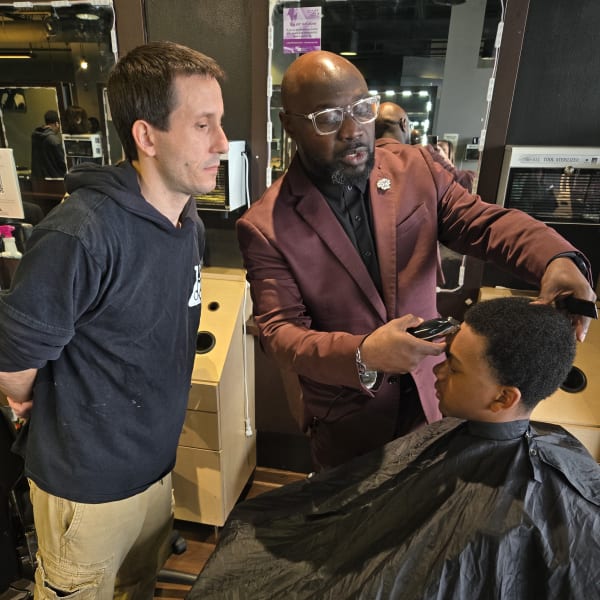
MODERN SALON sat down with Samuels to discuss the book, beauty education, mentorship and the habits that help beauty professionals thrive.

"The mistake people make is treating AI like a vending machine instead of a personal assistant." Digital marketing expert Scott Moon shares how beauty professionals can use AI while staying authentic

Real-world advice on creativity, consultations, color, burnout, business, boundaries, inclusivity, client care, and career growth from educators and industry experts.

Real-world advice on creativity, consultations, color, burnout, business, boundaries, inclusivity, client care, and career growth from educators and industry experts.