Paying It Forward: What I Wish I’d Learned in Beauty School
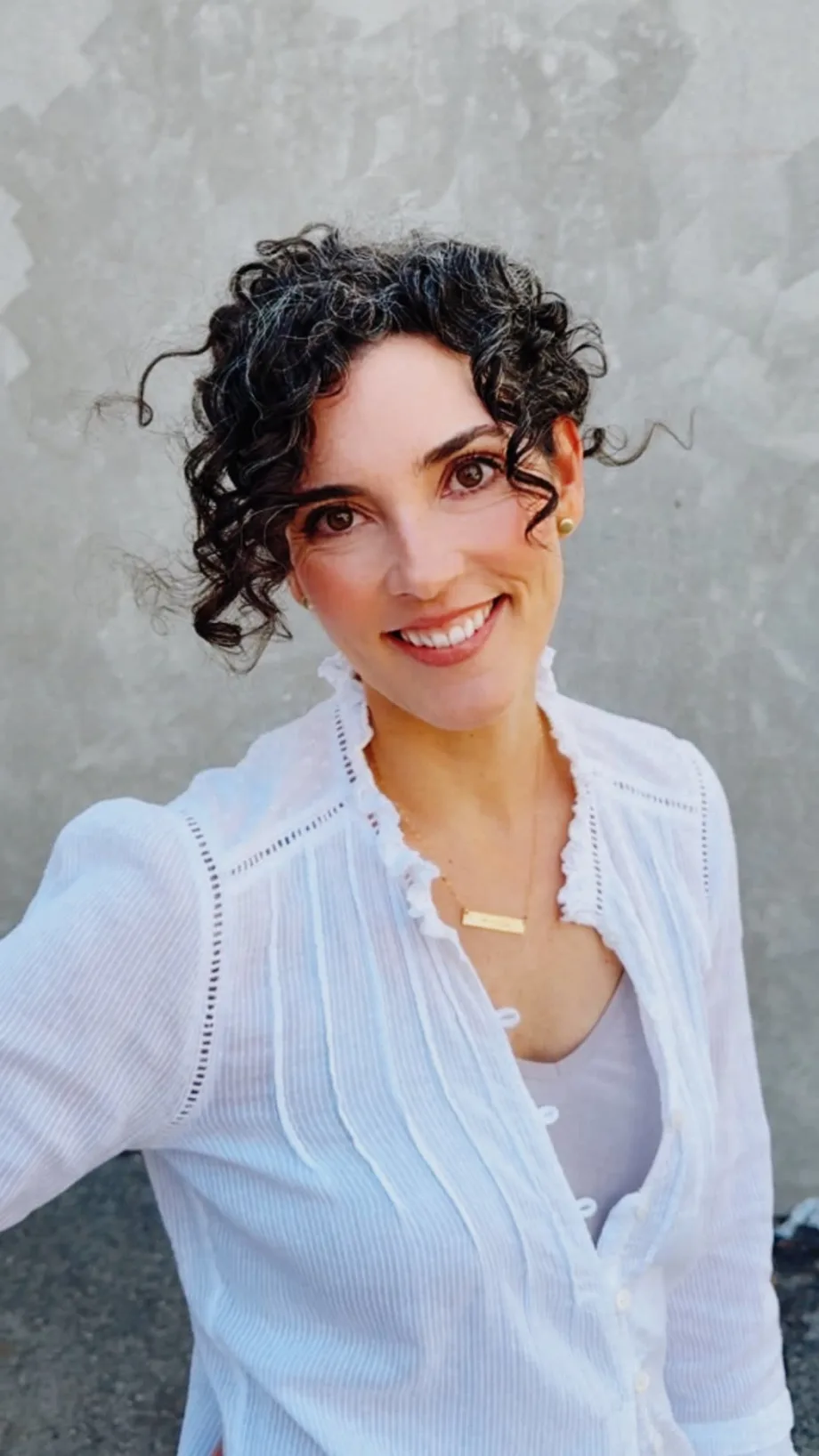
Anny VanDriel, owner of Be Rosie Salon and creator of Pricing Isn’t Personal, volunteered to share a pricing presentation to beauty school students a year ago, and ended up learning more than she expected.
Anne Moratto・Director of Brand Content Strategy, MODERN SALON and NAILS
Anny Van Driel is a lifelong hairdresser and describes herself as a "self appointed hairdresser mentor."
5 min to read
Editor's Note:
Many people leave their post-high school training (trade school, college, cosmetology school, junior college) with an increased understanding of the skills they hope to apply in their chosen field--barbering, hairstyling, cooking, phlebotomy--but the skills that support their success moving forward still need to be acquired. Among those are how to value your services, how to budget, how to practice good time management, and other necessary must-know tools as they climb the "adulting" ladder.
When Anny Van Driel, a stylist, owner, and educator, started to visit beauty schools, she recognized two things: one, she had something valuable to give, and two, that schools were doing the best they could and the wider industry has a responsibility to step up and fill the gaps.
Ad Loading...
VanDriel created Pricing Isn’t Personal, an education platform that helps hairstylists take the emotion and uncertainty out of setting service prices. Her framework teaches professionals to calculate profit per hour, align each service with their income goals, introduce price increases confidently and build businesses that support their desired time and lifestyle. She says the approach helped her increase her income over a decade while retaining clients and reducing her hours behind the chair.
The following is a blog from Van Driel on what she discovered when she went back to school...
"I volunteered to share a pricing presentation to beauty school students a year ago, and ended up learning more than I expected. Being back inside the school reminded me how limited the beauty school curriculum is, which makes sense, as it’s state mandated. I was reminded how much support I needed when I graduated in 1997, and how much opportunity there is for experienced hairdressers to pay it forward in our industry."--Anny Van Driel
After creating a pricing system for hairdressers, Pricing Isn’t Personal, I thought the beauty school would be a great place to test out my new material. So I asked if they wanted a presentation and they said yes. I’ve now been circulating through their campuses for a year, teaching a class per month. What I thought would be a one-time presentation has turned into a regular volunteer gig. And I love it.
Why I Teach
I teach pricing classes to hairdressers because I’ve seen so many (including myself) struggle with pricing. Sure, there are the confident few who have figured it out and are thriving, but what about the rest of us?
In an industry of predominantly women, sharing business knowledge and real systems to grow profit is necessary. It’s the first step in valuing our career, and therefore ourselves. Helping hairdressers make more money, take more time off, have more of the life they want was not something I intended to teach, but it’s what I’ve learned and therefore what I share.
Ad Loading...
In 1997, beauty school taught me basic hair services and how to avoid spreading a communicable disease, but it left me ill-equipped for many other career challenges. I relied on strong mentors to model professionalism and boundaries. I was never taught a pricing system, and was eventually forced to figure it out when I decided to open a salon.
We’re Not Prepared for This
It appears that this gap in education, teaching the business side of doing hair, still exists today. There’s not much time dedicated to teaching students the reality of having a business. Not to mention a highly personal, human to human business.
As hairdressers, we are tossed into a career where we are dealing with human emotions head on. We’re quickly confronted with managing interpersonal relationships while maintaining professional boundaries. When things are good and our clients are pleased, we love our jobs. But when a client complains or has unrealistic expectations or is pushing against our boundaries? We’re not taught how to deal with that, then or now.
When I first opened my salon in 2018, I hired new, inexperienced stylists. We worked through tears, feelings of inadequacy, developing client boundaries, learning how to say “no”, learning when to have a price increase and how to communicate with our clients. These are foundational pieces of a successful career.
At the beauty schools, I always begin my presentation by asking the students what they hope for their career. What are their goals and where do they see themselves working in the future? Overwhelmingly they want to work for themselves. They want to rent chairs, have studio suites, own salons.
Ad Loading...
Unfortunately, there is not much in the beauty school curriculum that prepares hairdressers for any of this. And because of what they see on social media, many believe building a business might be easy. That if they rent a space and post some reels, clients will come. Maybe that will work for some, but for most it’s a career death spiral.
We’re Trying Our Best
As an industry, we’ve never had real business guidance unless we’ve sought it ourselves. We graduate beauty school without a core understanding of boundaries, human interaction, and professionalism. This was true in 1997 and from what I see, it’s still true today.
The schools are not to blame. Their resources are limited and their curriculum is mandated by the state. I see instructors genuinely caring, and working hard to support the students. Part of that support is allowing educators like me inside to help fill in gaps and provide real world expertise to the students.
There’s More We Can Do
I believe our industry matters, that being a hairdresser matters. And through my experience volunteering at the beauty schools, I now believe that there is room for all of us vets to pay it forward. If you have something to share, especially something that is not a part of the standard curriculum, I encourage you to reach out to your local beauty school and volunteer a class.
Are you skilled in using social media for client building?
Ad Loading...
Are you excellent at photography and figured out how to use photos to attract new clients?
Do you know the steps of setting up a business in your state, the costs, the structure and the expectations?
Do you have excellent client consultation skills and a framework for client communication?
These are just a few examples of topics I believe the schools and students would be eager to learn more about. Whatever you’re able to share, know that ultimately you are playing a part in helping another hairdresser, another woman, strengthen her career.
What makes salon content worth a pause? Hairstylists Janelle Eyre, Sean Crutcher and Luis Rodriguez share how they show their work, earn guests’ trust and make posting feel manageable. You can get MORE from these artists in our upcoming webinar!
From the launch of the Ulta BeautyArtist Collective to the evolution of Trendspiration, celebrating stylists is what The Salon at Ulta Beauty does best.
With more than four decades in the industry, hairdresser and MODE Education founder Stan Newton has built a career around the art and discipline of cutting hair, learning the rules so he can break them.
Beauty professionals should evaluate each service based on its popularity, profitability, and alignment with current trends. Conducting client surveys and analyzing booking data can provide insights into which services are in demand and which might be phased out.
LifeSpa leader Ali Yanez explains why strong mentorship, predictable income, meaningful recognition and the right work environment help beauty professionals build careers that last.
Whether a beauty professional chooses a commission salon, booth rental, salon suite or salon ownership, the common thread is having more choices than ever before.
Sport Clips Haircuts will host its inaugural "Level Up Live," a first-of-its-kind virtual event that combines live haircutting education, career inspiration, product knowledge, and employment opportunities for licensed stylists and cosmetology students nationwide.
Orthopedic PT reveals three daily exercises plus ergonomic advice that can help salon professionals avoid the aches and injuries caused by standing, bending and repetitive overhead work.
Salon suite pioneer Karen Kaminski argues that the next evolution of independent beauty businesses won't be defined by beautiful spaces alone, it will be driven by smarter systems that help professionals spend less time on administrative work and more time serving clients.
At a time when many LGBTQ+ people felt compelled to hide parts of themselves, Carlos Valenzuela found a career in beauty and a community that offered opportunity based on what you could do and how well you could do it.
Whether it's social media, fashion, film, art, or culture, Chaz Dean advises stylists to stay aware of what's inspiring people. Take the elements that make sense for you in these five lessons learned through a life in beauty.
For Jessica Domoney, building a successful career isn't about saying yes to every opportunity, it's about protecting your time, investing in yourself and creating an experience clients won't forget.
"The mistake people make is treating AI like a vending machine instead of a personal assistant." Digital marketing expert Scott Moon shares how beauty professionals can use AI while staying authentic
Real-world advice on creativity, consultations, color, burnout, business, boundaries, inclusivity, client care, and career growth from educators and industry experts.