Non-straight hair is often called “textured,” but there’s a lot more to understand than curl pattern.
Elizabeth Jakaitis・Assistant Editor
May 13, 2015
4 min to read
When you talk hair texture, get your terminology right first, then key-in on what’s different.
“Many people consider curl pattern to be the distinguishing factor between waves, curls and coils, but that is only one aspect of hair type,” says Michelle Breyer, president of TextureMedia Inc. in Austin, Texas. “Porosity, density, width and length greatly impact how hair will react to products, cuts and styles.”
Ad Loading...
How it grows
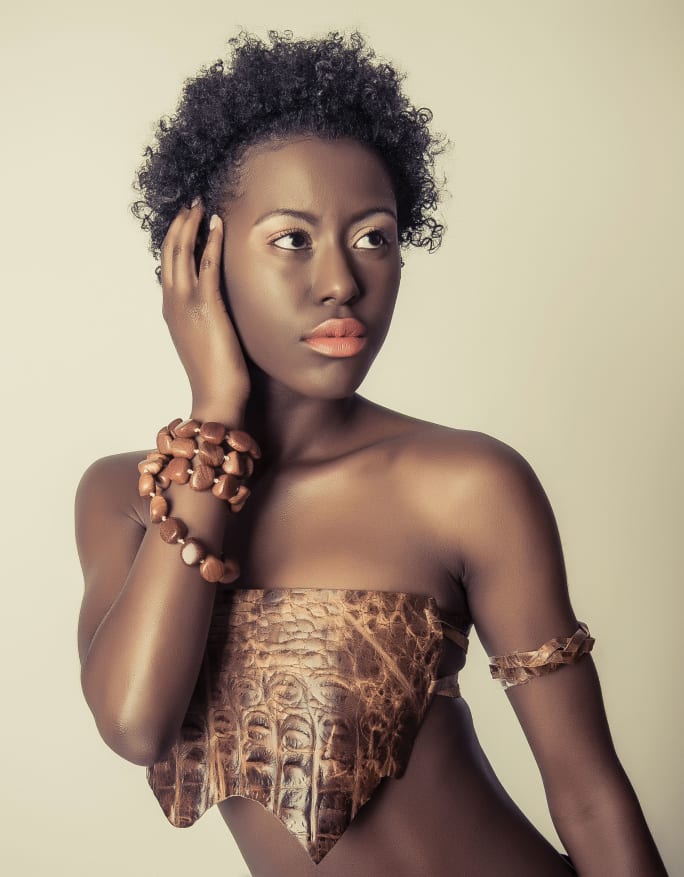
Time for a beauty school brush-up! In lay terms, textured hair is wavy, curly or coily. What determines it: the follicle shape and the angle at which hair grows out of the head.
Image courtesy of Macadamia Professional
The follicle, which molds the hair’s shape, is either close to round (in straight hair), oval or elliptical (wavy and curly hair), or a very flat elliptical (coily hair). Additionally, straight hair grows perpendicular to the scalp, waves and curls can grow on a diagonal or oblique angle, and tight coils grow parallel to the scalp. As the coils grow out, they twist around themselves.
“Imagine a drinking straw; it’s what a cross-section of straight hair looks like under magnification,” says Sam Villa, founding partner of the Sam Villa brand and education artistic director for Redken 5th Avenue. “Now visualize slightly pressing on the sides of the straw to make it more oval shaped. This gives you an idea of what textured hair looks like. The tighter the curl pattern, the flatter the oval becomes. If you look at extremely tight coils, they are almost similar to a thick ribbon.”
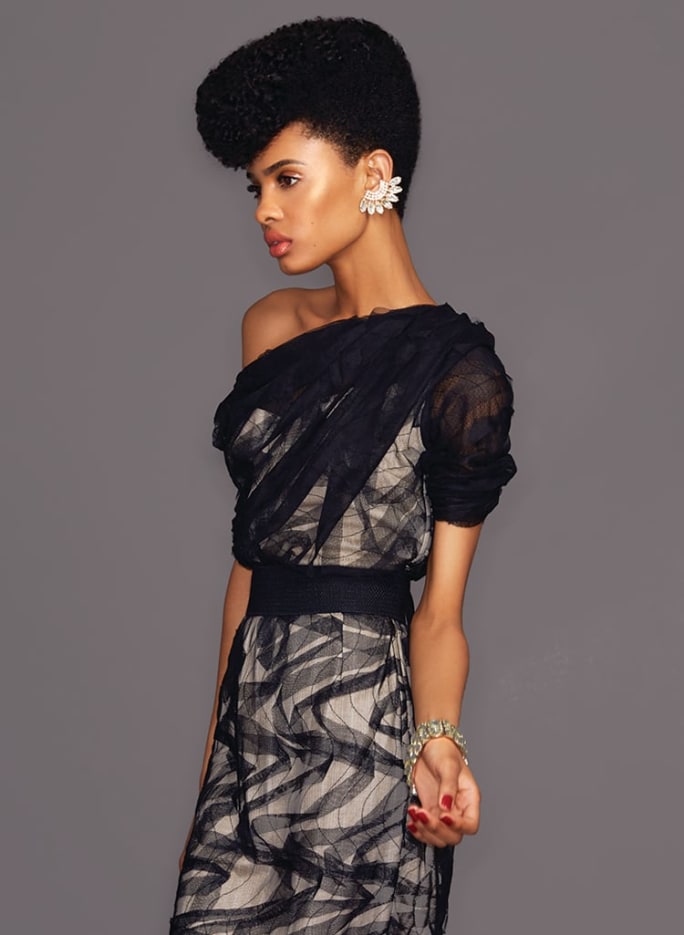
Adds Shari Harbinger, vice-president of education for DevaCurl, “the growth pattern of textured hair—which makes up 65 percent or more of the population—typically follows a horizontal when growing, as opposed to the vertical growth of authentically straight texture. The tighter the texture, the longer it takes to see visually perceived length. Once you elongate or stretch the hair, the actual length is revealed.”
Ad Loading...
Additionally, says Josephine Salvatoriello from The Avenue Salon in Caldwell, New Jersey, it’s a common misconception that curly hair grows slowly—it grows, on average, at the same rate as other textures at about half an inch each month.
“The reason you may not notice the growth is due to hair shrinkage, which tends to cause the hair to grow out or at an angle, causing it to grow big instead of grow down,” says Salvatoriello, who is also a Lasio-certified keratin specialist and educator.
Image courtesy of Mizani
Textured hair vs. hair texture
So, what does texture really refer to? According to Lakeisha Weston, an educator for Empire Beauty Schools in Memphis, Tennessee, “Hair texture is the thickness or diameter of the individual hair strand. A single strand can be coarse, medium or fine. Hair density measures the number of hair strands on one square-inch of scalp. Density is low, medium or high. So, a client might have low-density (thin) hair, but large-diameter strands or a coarse texture. Two people with the same hair texture can also have very different densities.”
Straight, wavy, curly and coily are really hair types. It’s just that wavy, curly and coily are commonly called “textured” types.
Ad Loading...
Any client with a textured hair type can have different curl patterns throughout her hair, or even along a single strand. And a tighter curl pattern doesn’t necessarily mean a coarse hair texture—often it’s the opposite.
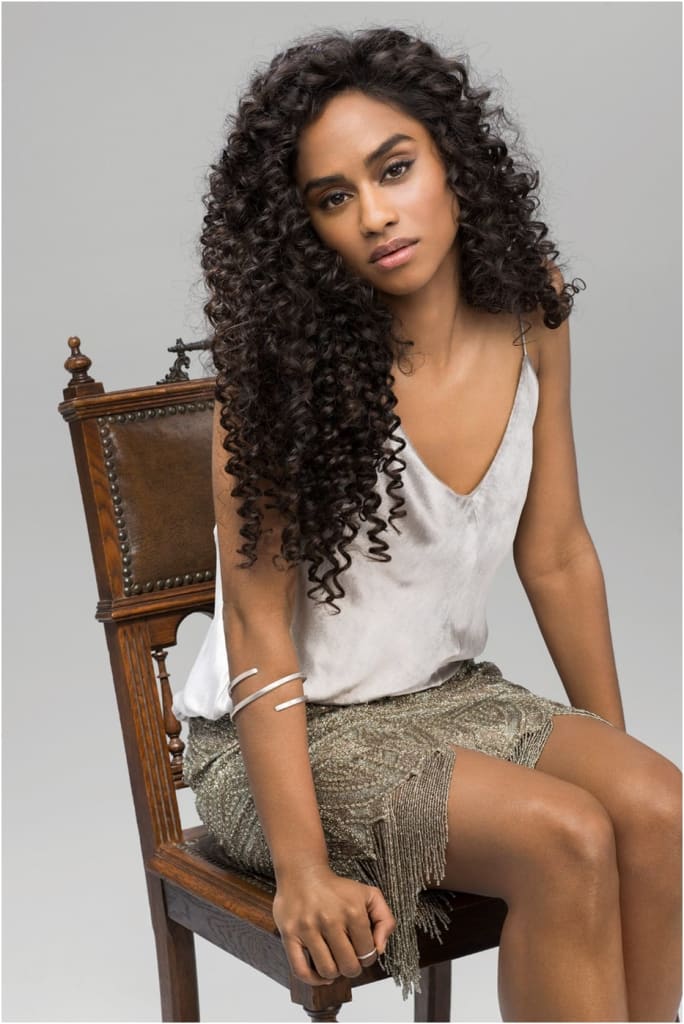
“Hair that waves usually starts getting wavy at the mid-shaft,” says Evie Johnson, a Mizani artist who works at E & E Hair Studio, Upper Marlboro, Maryland. “Curly and coily hair can have very mixed curl patterns throughout the head and on a single strand. Additionally, super curly or coily hair can be fine, fragile and break easily, unlike coarser hair, which has a large diameter.”
Adds Villa, “An easy mistake to make is to assume that tight curl has more density to it. It can appear to because each strand occupies more space due to how close together the pattern is. I’ve had many experiences where a guest comes in with natural curl and it seems like a massive amount of hair, but after blow drying it smooth, I realize that the overall density is quite low or sparse.”
The porosity impact
Image courtesy of Carmela Zampiere for Lasio
The final major player in working with waves, curls and coils is porosity or the ability of the hair to absorb moisture. Porosity is directly related to condition of the cuticle, which ranges from flat or smooth and resistant to overly porous, which is damaged, dry, fragile and brittle.
Ad Loading...
According to Paul Mitchell Schools Advanced Academy member Holli Cadman, porosity is a key factor with textured hair types. The cuticle of straight hair lies flat more easily, allowing for lower porosity, a closed cuticle and shine. As the hair increases in movement, that changes. Wavy, curly and coiled—or tight, compact zigzag formations of the cuticle—make the hair less able to lie flat, because the hair itself isn’t flat.
“The more open the cuticle, the greater the porosity and less light reflection off the cuticle or shine,” Cadman says. “Porosity must be taken into consideration when working with textured hair.”
Anny VanDriel, owner of Be Rosie Salon and creator of Pricing Isn’t Personal, volunteered to share a pricing presentation to beauty school students a year ago, and ended up learning more than she expected.
From the launch of the Ulta BeautyArtist Collective to the evolution of Trendspiration, celebrating stylists is what The Salon at Ulta Beauty does best.
With more than four decades in the industry, hairdresser and MODE Education founder Stan Newton has built a career around the art and discipline of cutting hair, learning the rules so he can break them.
Beauty professionals should evaluate each service based on its popularity, profitability, and alignment with current trends. Conducting client surveys and analyzing booking data can provide insights into which services are in demand and which might be phased out.
LifeSpa leader Ali Yanez explains why strong mentorship, predictable income, meaningful recognition and the right work environment help beauty professionals build careers that last.
Whether a beauty professional chooses a commission salon, booth rental, salon suite or salon ownership, the common thread is having more choices than ever before.
Sport Clips Haircuts will host its inaugural "Level Up Live," a first-of-its-kind virtual event that combines live haircutting education, career inspiration, product knowledge, and employment opportunities for licensed stylists and cosmetology students nationwide.
Orthopedic PT reveals three daily exercises plus ergonomic advice that can help salon professionals avoid the aches and injuries caused by standing, bending and repetitive overhead work.
Salon suite pioneer Karen Kaminski argues that the next evolution of independent beauty businesses won't be defined by beautiful spaces alone, it will be driven by smarter systems that help professionals spend less time on administrative work and more time serving clients.
At a time when many LGBTQ+ people felt compelled to hide parts of themselves, Carlos Valenzuela found a career in beauty and a community that offered opportunity based on what you could do and how well you could do it.
Whether it's social media, fashion, film, art, or culture, Chaz Dean advises stylists to stay aware of what's inspiring people. Take the elements that make sense for you in these five lessons learned through a life in beauty.
For Jessica Domoney, building a successful career isn't about saying yes to every opportunity, it's about protecting your time, investing in yourself and creating an experience clients won't forget.
"The mistake people make is treating AI like a vending machine instead of a personal assistant." Digital marketing expert Scott Moon shares how beauty professionals can use AI while staying authentic
Real-world advice on creativity, consultations, color, burnout, business, boundaries, inclusivity, client care, and career growth from educators and industry experts.
Real-world advice on creativity, consultations, color, burnout, business, boundaries, inclusivity, client care, and career growth from educators and industry experts.