(This is a version of an excerpt from an article published in the Healthy Hairdresser section of the September 2014 issue of MODERN SALON.) Patrick McIvor is grateful to have found a creative career. “I have bipolar mania,” ...
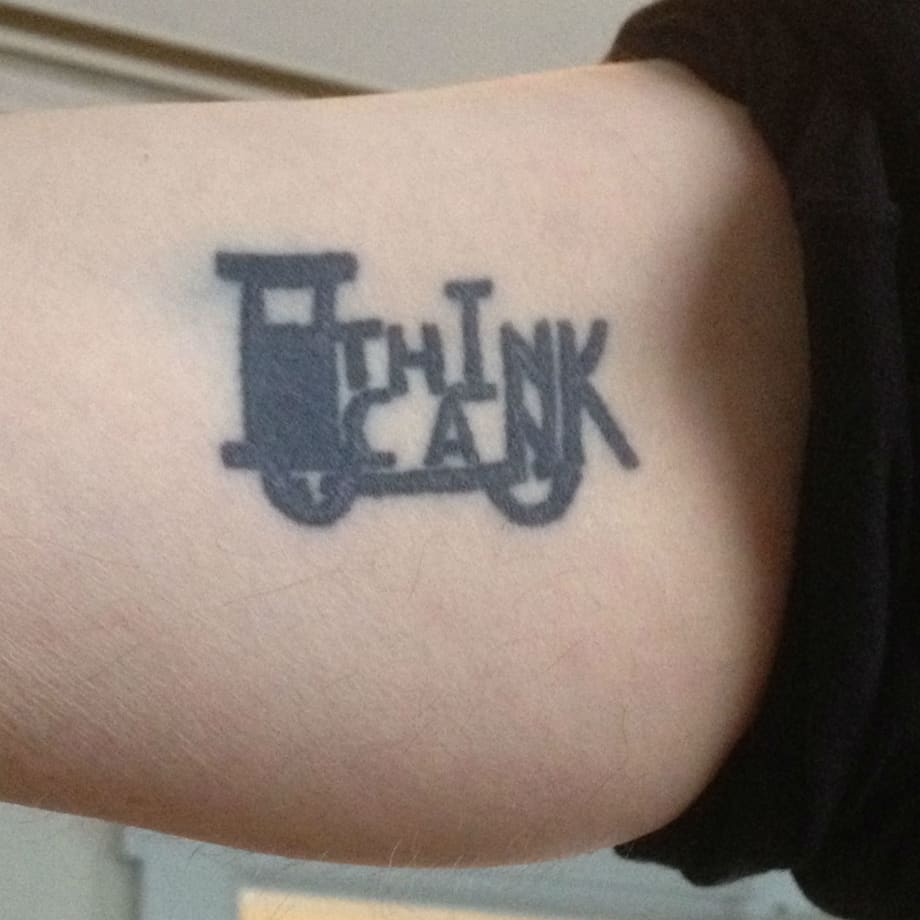
Patrick McIvor keeps a good thought on his arm: “I think I can.”
5 min to read
(This is a version of an excerpt from an article published in the Healthy Hairdresser section of the September 2014 issue of MODERN SALON.)
Patrick McIvor is grateful to have found a creative career.
Ad Loading...
“I have bipolar mania,” says McIvor, artistic and techniculture director for Goldwell. Essentially, he’s “on fire” all of the time, with his mind darting in multiple directions.
“Becoming a hairdresser helped me,” he explains. “Every half hour I have a new guest in my chair. Every hair color correction challenges me to come up with a way to create beauty. If I feel like breaking into song, I can do that—at the salon, people will join in and start singing, too!”
Now 48, McIvor used to think he had Attention Deficit Disorder (ADD)—he was thrown out of school in third grade because he couldn’t sit still—until one day his wife let him in on a little secret: his parents knew that he was manic bipolar but never told him. Armed with this information, McIvor took a fresh look at his life and consulted a psychologist. One thing he decided, against his psychologist’s advice, was not to medicate his condition.
“If I medicated, I thought I would lose the opportunities that my mind gives me,” he notes. “I would be ‘even’ and unable to do what I do on stage When someone asks me a question, my mind jumps in so many directions that I come up with ideas others don’t think of. For me, the biggest mistake would be trying to be ‘normal.’”
Among the many mental health professionals and lay people he spoke to was a performance psychologist who works with elite athletes and taught McIvor strategies for quieting the chaos by choosing a few thoughts to focus on. He now uses these skills to manage his travel schedule of up to 260 days. His habits at home and on the road include:
Ad Loading...
Simple exercise, like taking stairs instead of the elevator and doing pushups.
Doing only active poses in yoga; other poses move too slowly for him.
Beginning and ending his day by meditating in the bathtub with the shower on. Staying in so many hotels, McIvor uses this shower meditation to make his days as consistent as possible. The shower produces a uniform sound and smell and creates a continuity for him.
Accommodating his natural sleep pattern when possible. He sleeps heaviest starting at about 4 a.m.; if sleep doesn’t come earlier, he no longer tries to force it.
Staying organized at the salon by keeping scissors and other tools in a specific place. Beyond that, he lets his wife and other people keep him organized because he knows it will just frustrate him to do it himself.
While McIvor deals with only bipolar’s upswing, he recognizes the dangers lurking in the salon for stylists who experience severe downs. Unlike writers, painters and composers who pursue the creative process alone in a studio, hairdressers work on people. “How much stress do we take on from our guests?” asks McIvor. “We keep their troubles in our thoughts and, with social networking, that becomes 24/7.”
A successful salon owner with a sunny disposition, Cindy Monten thought she had escaped the depression that plagued her dysfunctional family. It wasn’t until menopause that she began to have anxiety attacks that she attributed to the understandable stress of selling her salon. But by fall 2008, she could no longer stay in denial.
“I wasn’t functioning,” she recalls. “I’d shut everyone out of my life, and I ended up in the hospital.”
During the four years that followed, Monten’s search for answers took her through a revolving door of psychiatrists’ offices and medications that made her worse. Originally diagnosed with bipolar disorder, Monten delved into the topic and concluded that her hormones were out of balance. She had that corrected and followed up with acupuncture, yoga, exercise and a three-day Lomi Lomi healing journey, which she described in her 2013 book, The Birth of Wonderment. She seemed to have recovered. But after a missed business opportunity and a move from Arizona to Minnesota, everything once more fell apart.
Ad Loading...
“Again, I couldn’t function, couldn’t have a conversation,” Monten says. “I slept up to 18 hours a day. I lost 30 pounds. Depression makes you feel like a complete loser; you don’t want people around you because you don’t even want to be around yourself. I’d always been the one to say, ‘Pull yourself up by your bootstraps,’ but now I couldn’t even find my boots. And I’d been refused for mental health coverage, so at this time I had none.”
She had to draw from deep inside herself. From her reading she noticed something, she says: “the symptoms for bipolar and for being an adult child of a dysfunctional home are almost identical. And I thought I’d solved the problem by finding the chemical balance, so now I didn’t know what was going on with me.”
She started by forcing herself to walk outside, do some meditation and go back to yoga. Today she’s doing well, but she still isn’t sure that any one diagnosis fits her. Along with her chemical imbalance, there’s some post-traumatic stress syndrome from the combination of a rocky childhood, losing her husband to cancer when her daughter was just four years old and, more recently, losing her younger sister in car accident.
“I don’t think it’s simple,” Monten says now. “I need some medication, and I need physical exercise. I need people. I became a reiki master and learned to do reiki on myself to keep my chakras balanced. I drink no coffee and very little alcohol. I eat healthful foods.”
The salon community also been there for her. “The beauty industry does not chew you up and spit you out,” Monten says. “Many of the friends who have stuck with me are in the industry. SALON TODAY Stacey Soble has been very helpful to me. When I shut down, even hairdressers I didn’t know well would message me on Facebook to tell me they missed the artwork I’d been posting. People in this industry stay connected to each other.”
Ad Loading...
She intends to continue working as a salon professional, just on a smaller scale. “I want to be creative and be of service,” Monten says. “That’s where I shine, and that’s what I love.”
Cindy Monten
Patrick McIvor and Steve Reiss
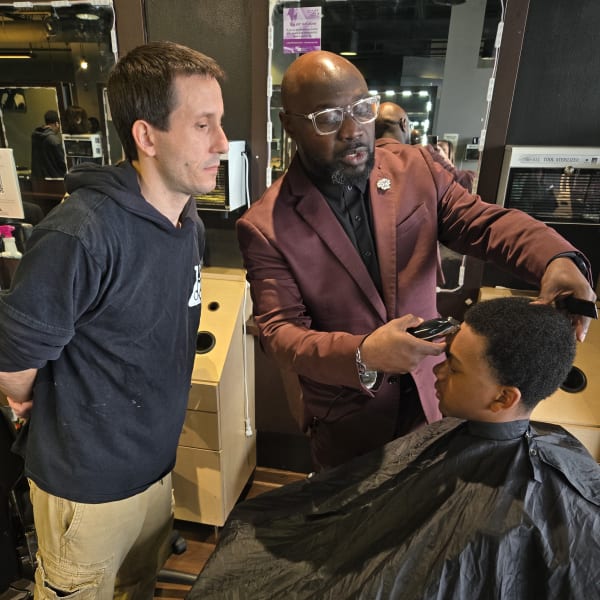
Cindy Monten (top) and MODERN SALON Publisher Steve Reiss clipping Patrick McIvor's hair to donate to Wigs for Kids.
Anny VanDriel, owner of Be Rosie Salon and creator of Pricing Isn’t Personal, volunteered to share a pricing presentation to beauty school students a year ago, and ended up learning more than she expected.
From the launch of the Ulta BeautyArtist Collective to the evolution of Trendspiration, celebrating stylists is what The Salon at Ulta Beauty does best.
With more than four decades in the industry, hairdresser and MODE Education founder Stan Newton has built a career around the art and discipline of cutting hair, learning the rules so he can break them.
Beauty professionals should evaluate each service based on its popularity, profitability, and alignment with current trends. Conducting client surveys and analyzing booking data can provide insights into which services are in demand and which might be phased out.
LifeSpa leader Ali Yanez explains why strong mentorship, predictable income, meaningful recognition and the right work environment help beauty professionals build careers that last.
Whether a beauty professional chooses a commission salon, booth rental, salon suite or salon ownership, the common thread is having more choices than ever before.
Sport Clips Haircuts will host its inaugural "Level Up Live," a first-of-its-kind virtual event that combines live haircutting education, career inspiration, product knowledge, and employment opportunities for licensed stylists and cosmetology students nationwide.
Orthopedic PT reveals three daily exercises plus ergonomic advice that can help salon professionals avoid the aches and injuries caused by standing, bending and repetitive overhead work.
Salon suite pioneer Karen Kaminski argues that the next evolution of independent beauty businesses won't be defined by beautiful spaces alone, it will be driven by smarter systems that help professionals spend less time on administrative work and more time serving clients.
At a time when many LGBTQ+ people felt compelled to hide parts of themselves, Carlos Valenzuela found a career in beauty and a community that offered opportunity based on what you could do and how well you could do it.
Whether it's social media, fashion, film, art, or culture, Chaz Dean advises stylists to stay aware of what's inspiring people. Take the elements that make sense for you in these five lessons learned through a life in beauty.
For Jessica Domoney, building a successful career isn't about saying yes to every opportunity, it's about protecting your time, investing in yourself and creating an experience clients won't forget.
"The mistake people make is treating AI like a vending machine instead of a personal assistant." Digital marketing expert Scott Moon shares how beauty professionals can use AI while staying authentic
Real-world advice on creativity, consultations, color, burnout, business, boundaries, inclusivity, client care, and career growth from educators and industry experts.
Real-world advice on creativity, consultations, color, burnout, business, boundaries, inclusivity, client care, and career growth from educators and industry experts.