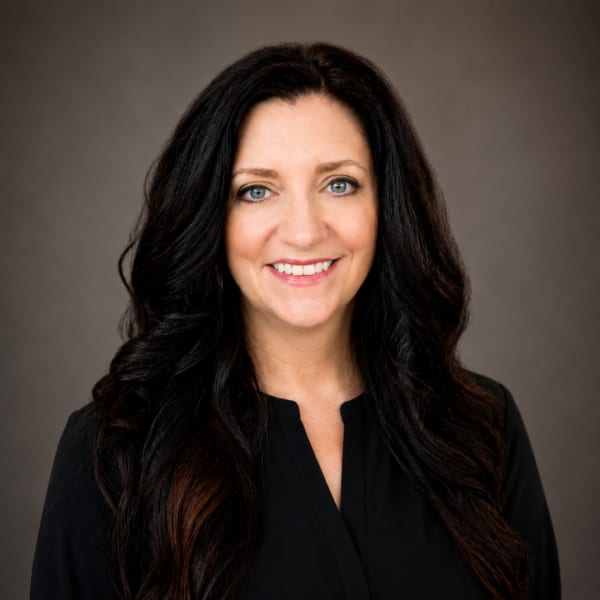
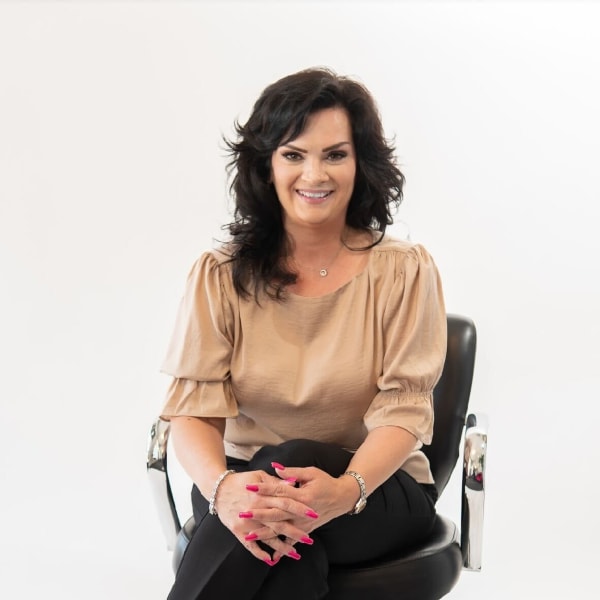
Joyce Hampers has a dual advantage when it comes to keeping her spas out of legal quagmires. As owner of the cutting-edge G2O spa and EMERGE urban resort spa in Boston, she can rely on her past-as an attorney with her own practice and later as the Commissioner of Revenue for her state-to keep her business running right.
Here, Hampers shares the top legal issues salons will face in 2008, as well as peremptory actions you can take to protect your business.
Ad Loading...
Risky Business
Risk management goes beyond wearing gloves during facial extraction. According to Hampers, the most challenging issue facing the industry today is the ability to get liability-insurance, that is.
With salons branching out into everything from microdermabrasion and laser hair removal to medical devices with murky who-can-use regulations, insurance companies are experiencing losses from lawsuits, and the pressure is on spas and salons-even if they don't cross over to medi-stance.
"It's becoming very difficult and expensive for spas to get general and professional liability insurance," says Hampers. "It's similar to what happened to OB/GYNs, who began quitting when their professional liability insurance costs skyrocketed. It's a real threat to the salon and spa industry and particularly to smaller operations."
Mega spas and skittish insurance companies are fueling the fire, as is the fact that states are beginning to require special licenses for certain equipment. For instance, as of January 2007, Oregon's airbrush tanners had to be certified estheticians. The threat goes well beyond the medispa; Hampers says after 14 problem-free years, a pregnant client experienced a rash-like reaction to a pedicure. While the culprit remains unknown, essential oils, salts and seaweed are only a few of the natural remedies that have the potential for adverse reactions.
Ad Loading...
What poses a risk for your business? You might be surprised. For instance, the seemingly harmless steam treatment or the flotation tank that relies on anti-gravity should not be used by anyone who is pregnant or has high blood pressure.
How are you supposed to know who meets that criteria? That information should be in your medical intake form.
"Spas should be using medical intake forms and by law, the completed forms must be under physical lock and key," explains Hampers. "If they are on a computer for the world to see, you've compounded your liability issues."
Hampers advises that even hair salons use the forms because various medications not only affect spa treatments, they can change the outcome of chemical services such as perms and hair color.
Hampers says her spas' general and liability insurance increased by nearly $12,000 in 2007, and that doesn't include other insurance coverage such as casualty, property, workman's compensation and loss of business income. When it comes to those, know what you are paying for and read policies carefully, particularly for exclusions.
Ad Loading...
"We've had floods, a fire and mold; we're waiting for the locusts next," jokes Hampers. Still, it's no laughing matter if a claims adjustor determines the water damage in your bathroom came from a flood or rainstorm that isn't covered in your policy, rather than deciding its source was a drain stoppage inside your salon, which is covered.
What else can you do besides read polices carefully? "If we weed out those not taking proper actions, police ourselves better and set risk-management standards, we may be able to get the discounts that other businesses do when they meet guidelines for avoiding liabilities," says Hampers.
She notes that many insurance companies now insist spas have written manuals on safety and risk-management policies that employees sign off on, indicating they've read the handbooks. Topics should include but not be limited to: where burning candles can be placed in the business and policies on extinguishing them; evacuation procedures; washer and dryer maintenance; storage of sheets and towels exposed to massage oils (many are highly flammable) fire safety and MSDS issues. Once you have a complete risk-management plan and a manual, ask for a liability coverage discount.
Mixing Business and Pleasure
Your business may be your pleasure but you can't use it for your personal pleasure.
Ad Loading...
"When I was practicing law, I defended many business owners who ‘borrowed' withholding money and couldn't re-pay it later," recalls Hampers. "You can't make personal expenditures from your business income, or you get both IRS and risk-management problems."
Case in point: Many business owners write off their personal cars as business expenses-a no-no. Lend that car to an employee who gets in an accident and your coverage goes south because the car wasn't really for business only.
You can't use petty cash from the salon for your lunch; a repair to your garage where you store products is not a deductible business expense and you should never, ever "borrow" withholding monies-aka federal, state and/or city taxes.
A good accountant or payroll service can help keep you clear of these problems. Yet the majority of salons are not profitable, on paper, precisely because they mixed business and pleasure in an actionable way. Just remember, Hampers saved enough money as an attorney defending business owners who crossed the line to buy the fabulous spa that she evolved into her present day operation.
Forgotten, Not Gone
Ad Loading...
You sold $300,000 in gift certificates over the holiday season. Great! Well, maybe. If the recipient forgets about the gift for a year, then another, what happens next? It depends on the state in which you live. When you sell a gift certificate, it becomes a liability-work you must perform. Once it's redeemed, it becomes income on which you pay taxes. If it's never used and expires, it could go into the state's unclaimed property.
But thanks to consumer advocates, it might never expire. Legal issues usually apply to both gift cards and certificates but laws in each individual state aren't always up to speed on gift card sales. Many states are passing laws that disallow any expiration on gift certificates and gift cards.
For instance, California, Florida and Maine do not allow expiration dates; Massachusetts has a seven-year expiration. In Washington State, a gift card or certificate is no longer reportable as unclaimed property but it can't have an expiration date, either. So, when do you pay state and federal taxes on the income?
Ask your accountant or attorney where you stand. The bottom line is that if your state has no expiration date-or a very long one-you had better have the money on hand should an auditor determine you hold unredeemed gift certificates that must be rolled into income. Gift card programs are not simple, and should be carefully structured to comply with local laws.
Tip Your Hand
Ad Loading...
One legal issue that won't go away is tips reporting. Salons must report their employees' tips to the IRS and their state, and pay taxes on that income. The IRS isn't likely to give up this revenue without Congressional intervention.
"This is a big deal," says Hampers. "We're paying taxes on money we never see. The restaurant industry managed to get a federal tax credit for this, but we didn't."
In July of 2007, the Professional Beauty Association, which offers a tips reporting kit, announced that Rep. Shelley Berkley (D-Nev.) and Sen. Blanche Lincoln (D-Ark.)-two very influential members of Congress's tax-writing committee-agreed to champion the Small Business Tax Equalization & Compliance Act (H.R. 3016) on behalf of the professional beauty industry. If adopted, the legislation would give salon and spa owners a dollar-for-dollar tax credit on the 7.65 percent FICA taxes paid on employee tips.
To get involved or be informed of updates, contact Sam Leyvas at 800-468-2274, extension 118, or e-mail him at sam@probeauty.org.
Anny VanDriel, owner of Be Rosie Salon and creator of Pricing Isn’t Personal, volunteered to share a pricing presentation to beauty school students a year ago, and ended up learning more than she expected.
From the launch of the Ulta BeautyArtist Collective to the evolution of Trendspiration, celebrating stylists is what The Salon at Ulta Beauty does best.
With more than four decades in the industry, hairdresser and MODE Education founder Stan Newton has built a career around the art and discipline of cutting hair, learning the rules so he can break them.
Beauty professionals should evaluate each service based on its popularity, profitability, and alignment with current trends. Conducting client surveys and analyzing booking data can provide insights into which services are in demand and which might be phased out.
LifeSpa leader Ali Yanez explains why strong mentorship, predictable income, meaningful recognition and the right work environment help beauty professionals build careers that last.
Whether a beauty professional chooses a commission salon, booth rental, salon suite or salon ownership, the common thread is having more choices than ever before.
Sport Clips Haircuts will host its inaugural "Level Up Live," a first-of-its-kind virtual event that combines live haircutting education, career inspiration, product knowledge, and employment opportunities for licensed stylists and cosmetology students nationwide.
Orthopedic PT reveals three daily exercises plus ergonomic advice that can help salon professionals avoid the aches and injuries caused by standing, bending and repetitive overhead work.
Salon suite pioneer Karen Kaminski argues that the next evolution of independent beauty businesses won't be defined by beautiful spaces alone, it will be driven by smarter systems that help professionals spend less time on administrative work and more time serving clients.
At a time when many LGBTQ+ people felt compelled to hide parts of themselves, Carlos Valenzuela found a career in beauty and a community that offered opportunity based on what you could do and how well you could do it.
Whether it's social media, fashion, film, art, or culture, Chaz Dean advises stylists to stay aware of what's inspiring people. Take the elements that make sense for you in these five lessons learned through a life in beauty.
For Jessica Domoney, building a successful career isn't about saying yes to every opportunity, it's about protecting your time, investing in yourself and creating an experience clients won't forget.
"The mistake people make is treating AI like a vending machine instead of a personal assistant." Digital marketing expert Scott Moon shares how beauty professionals can use AI while staying authentic
Real-world advice on creativity, consultations, color, burnout, business, boundaries, inclusivity, client care, and career growth from educators and industry experts.
Real-world advice on creativity, consultations, color, burnout, business, boundaries, inclusivity, client care, and career growth from educators and industry experts.