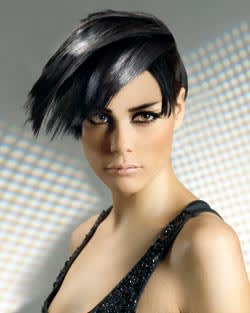
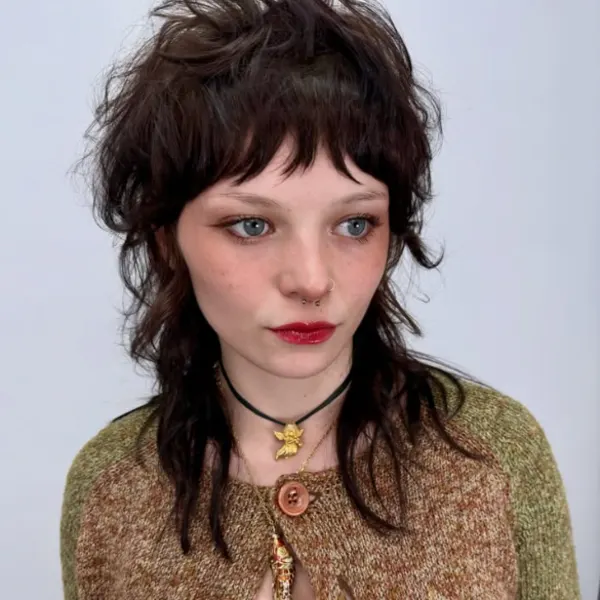
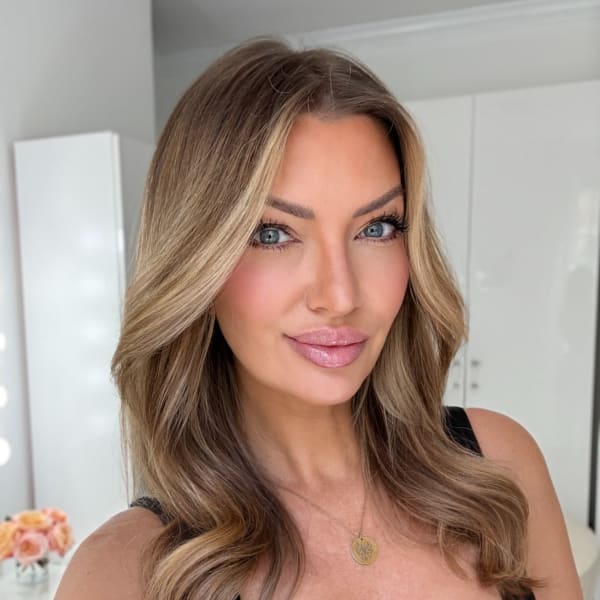
(Hair by Klaus Peter Ochs and the KPO Artistic Team; photography by Alex Zajaczek; make-up by Gudrun Muller.)
Whether your goal is to be color-famous in your hood or across the globe, the battle royale for bragging rights starts with skills excellence. That means being grounded in chemistry and theory, proficient at formulating for both level and tone, and skillful in your application.
Ad Loading...
The Hook
To muscle-up education, start with a realistic skills assessment. Establish specific criteria for colorists and amp-up education. Don't think mannequin work is too elementary; a doll's head is the best place to make a mistake. Put "color specialist" after your name or in your ad before you're ready, warn experts, and you hurt an entire industry while demolishing your own business.
Jay Dupree, owner of Dupree's Salon and Day Spa, The Color Specialist, in Virginia Beach, Virginia, agrees. He bought an established salon with a small spa 10 years ago. He knew he wanted a color focus, so he took every color class he could and then trained his staff.
"It took about two years from the time I bought the salon to the time we got a strong color reputation," says Dupree. "Classes are one thing, but experience is another."
Dupree knew he'd arrived when nearly 90 percent of new referrals came in for hair color.
Ad Loading...
Opinions split regarding departmentalization. Some say color and design are too big for one person; others say doing both is possible and practical. Susan Curtis, ABCH and co-owner of Susan Alan Salon 2000 in Northridge, California, employs four certified colorists but still does cuts herself.
"Ten years ago I tried to get out of cutting but my clients wouldn't go for it," says Curtis. "You limit yourself if you just do color."
The more common approach is to employ both specialists and generalists or "color stylists," says Shelley Manning, a Goldwell educator who with her husband co-owns Imagine in Encinitas, California.
"If you only do color, you have to be the best," she says. "By specializing in corrective color, I get referrals from other salons in the area. It's great, but it's not practical for everyone."
The (Tag) Line
Ad Loading...
Salons using "color specialist" taglines know certification is a draw. Many manufacturers have added their own color-certification programs, which help drive business to their salons and improve colorists' success rates.
In St. Louis, Missouri, Marie Harrison, owner of Salon St. Louis, says getting known for color was an evolution that relied on ongoing education for the entire staff. She's not departmentalized.
"To go beyond the norm and offer clients options, we added ‘Herringbone Color' and the ‘Z-Weave' to our menu," says Harrison. "Referrals, which come from consistent salon work, are huge; we're now becoming certified."
Dupree says education brought him word-of-mouth clients, which was all it took to become the place for color. But with so many salons aiming to be rainbow-central, is this all it'll take in the future?
Don Stacy's road to fame is a state-of-the-art example of a success slam-dunk. As a media-savvy editorial stylist in South Beach, Stacy had learned about photographic lighting before moving to Raleigh and opening his salon. Using his on-set know-how, he created three primary color rooms, fashioned for the colorist's eye.
"Our room for brunettes is yellow, the one for blondes is soft blue and the one for redheads is soft pink," explains Stacy. "By using full-spectrum lighting and accounting for reflections off the wall, colorists in the red room can control the color, so they don't get overly hot copper or too-cool burgundy. It was this concept more than my magazine connections that got publicity."
Stacy says his color-focused website not only lured the media; it attracted top-notch colorists who were relocating to booming Raleigh. Now, he has two locations plus an advanced hair color school, and his salons have gotten ink in every magazine from Allure to Elle. He's also appeared on CNN, Regis and Kelly and Ambush Makeover.
"If you want to be known for color, stay focused on your philosophy and do photo shoots," he advises. "Send the media your best work with an original idea. Sell the sizzle, not the steak."
Ad Loading...
Showing off your skills at community events and fashion shows gets you local notice; cultivating media relationships brings national attention. Harrison says becoming proactive with the local press and doing high-impact color makeovers helped secure her reputation.
"Editors are very open to new makeover ideas that involve color," she says. "Inviting people who are highly visible in the community to be color models is another good idea."
Like Stacy, Curtis says her website was instrumental to growing her business. Focusing on "excellence in hair color and design," she uses the tagline on her website and all printed material.
"To be known for color, you need a defined vision, and everything you do has to support it," she says.
She has another weapon in her arsenal for future-proofing her salon. While she's built her business on the promise of healthy hair color, she's never given cutting and design the short shrift. Expanding on the idea that certification counts, she got four of her staffers certified in Japanese thermal straightening. This gives her employees both a specialty and a range-they do it all, but also offer specific expertise.
What makes salon content worth a pause? Hairstylists Janelle Eyre, Sean Crutcher and Luis Rodriguez share how they show their work, earn guests’ trust and make posting feel manageable. You can get MORE from these artists in our upcoming webinar!
Anny VanDriel, owner of Be Rosie Salon and creator of Pricing Isn’t Personal, volunteered to share a pricing presentation to beauty school students a year ago, and ended up learning more than she expected.
From the launch of the Ulta BeautyArtist Collective to the evolution of Trendspiration, celebrating stylists is what The Salon at Ulta Beauty does best.
With more than four decades in the industry, hairdresser and MODE Education founder Stan Newton has built a career around the art and discipline of cutting hair, learning the rules so he can break them.
Beauty professionals should evaluate each service based on its popularity, profitability, and alignment with current trends. Conducting client surveys and analyzing booking data can provide insights into which services are in demand and which might be phased out.
LifeSpa leader Ali Yanez explains why strong mentorship, predictable income, meaningful recognition and the right work environment help beauty professionals build careers that last.
Whether a beauty professional chooses a commission salon, booth rental, salon suite or salon ownership, the common thread is having more choices than ever before.
Sport Clips Haircuts will host its inaugural "Level Up Live," a first-of-its-kind virtual event that combines live haircutting education, career inspiration, product knowledge, and employment opportunities for licensed stylists and cosmetology students nationwide.
Orthopedic PT reveals three daily exercises plus ergonomic advice that can help salon professionals avoid the aches and injuries caused by standing, bending and repetitive overhead work.
Salon suite pioneer Karen Kaminski argues that the next evolution of independent beauty businesses won't be defined by beautiful spaces alone, it will be driven by smarter systems that help professionals spend less time on administrative work and more time serving clients.
At a time when many LGBTQ+ people felt compelled to hide parts of themselves, Carlos Valenzuela found a career in beauty and a community that offered opportunity based on what you could do and how well you could do it.
Whether it's social media, fashion, film, art, or culture, Chaz Dean advises stylists to stay aware of what's inspiring people. Take the elements that make sense for you in these five lessons learned through a life in beauty.
For Jessica Domoney, building a successful career isn't about saying yes to every opportunity, it's about protecting your time, investing in yourself and creating an experience clients won't forget.
"The mistake people make is treating AI like a vending machine instead of a personal assistant." Digital marketing expert Scott Moon shares how beauty professionals can use AI while staying authentic