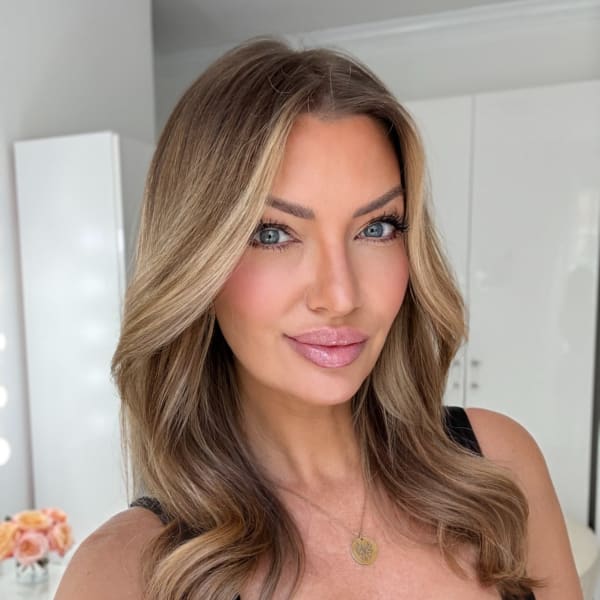
Q. My client is at the age where she’s looking to change from her long, single-process brown hair to a highlighted look with layers. She likes the “silver” look she’s seen on women her age.
by Web Editor
July 11, 2011
3 min to read
bethminardi
The following response comes from internationally acclaimed salon colorist, educator and product consultant, Beth Minardi. She is recognized as one of the world's leading experts in all phases of coloring.
Q. My client is at the age where she's looking to change from her long, single-process brown hair to a highlighted look with layers. She comes in every three weeks because she hates the gray she's seeing, but then she mentions she likes the "silver" look she's seen on women her age. She has a 50-percent salt and pepper mix in the front and top crown, which I've been coloring with a Level-4 permanent color, and her eyebrows are almost black. How do I go about highlighting her without the orange crisis? And what should I say about "silver"?
Ad Loading...
A. As I've said before, gray is an option every colorist must know how to handle, but it's not for every client. For some good guidelines on who can and cannot pull off the gray look, pick up Going Gray, Looking Great by Diana Jewell, for which my husband Carmine and I did gray-based hair and color designs. (You can get it at www.goinggraylookinggreat.com or through www.amazon.com.)
My recommendation is to avoid rapid, significant color changes at this stage, and start blending the gray gradually. My preferred formula is equal parts Shades EQ 06G and 07NB with Processing Solution, applied with a bottle to regrowth only. Do not refresh the hair shaft with this formula. Process the color for 20 minutes under heat, then an additional 10 minutes at room temperature, followed by a shampoo, condition and styling.
You will note that this formula blends the white hair to about a Level 6 without significantly altering the natural Level-4 strands. The gray will appear to be a dark blonde highlight.
Repeat this technique every four to six weeks until about three inches of hair is blended rather than covered. You and your client can then choose whether to enhance the new shade with highlights, lowlights or a combination of both. You may even opt for a less-blended effect, achieved by switching to a more translucent formula such as equal parts Shades EQ 06G and 09NB. Because the client's eye has adjusted to less coverage, she can now visit you for color every six to 10 weeks.But don't be surprised if after six to nine months, your client wants to return to her previous total-coverage color. Many (but not all) simply don't look good gray. For those who do, a salon silver is very attractive. I promise to provide my readers with regular gray blending updates to build our expertise in this valid, potentially lucrative, salon service.
What makes salon content worth a pause? Hairstylists Janelle Eyre, Sean Crutcher and Luis Rodriguez share how they show their work, earn guests’ trust and make posting feel manageable. You can get MORE from these artists in our upcoming webinar!
Anny VanDriel, owner of Be Rosie Salon and creator of Pricing Isn’t Personal, volunteered to share a pricing presentation to beauty school students a year ago, and ended up learning more than she expected.
From the launch of the Ulta BeautyArtist Collective to the evolution of Trendspiration, celebrating stylists is what The Salon at Ulta Beauty does best.
With more than four decades in the industry, hairdresser and MODE Education founder Stan Newton has built a career around the art and discipline of cutting hair, learning the rules so he can break them.
Beauty professionals should evaluate each service based on its popularity, profitability, and alignment with current trends. Conducting client surveys and analyzing booking data can provide insights into which services are in demand and which might be phased out.
LifeSpa leader Ali Yanez explains why strong mentorship, predictable income, meaningful recognition and the right work environment help beauty professionals build careers that last.
Whether a beauty professional chooses a commission salon, booth rental, salon suite or salon ownership, the common thread is having more choices than ever before.
Sport Clips Haircuts will host its inaugural "Level Up Live," a first-of-its-kind virtual event that combines live haircutting education, career inspiration, product knowledge, and employment opportunities for licensed stylists and cosmetology students nationwide.
Orthopedic PT reveals three daily exercises plus ergonomic advice that can help salon professionals avoid the aches and injuries caused by standing, bending and repetitive overhead work.
Salon suite pioneer Karen Kaminski argues that the next evolution of independent beauty businesses won't be defined by beautiful spaces alone, it will be driven by smarter systems that help professionals spend less time on administrative work and more time serving clients.
At a time when many LGBTQ+ people felt compelled to hide parts of themselves, Carlos Valenzuela found a career in beauty and a community that offered opportunity based on what you could do and how well you could do it.
Whether it's social media, fashion, film, art, or culture, Chaz Dean advises stylists to stay aware of what's inspiring people. Take the elements that make sense for you in these five lessons learned through a life in beauty.
For Jessica Domoney, building a successful career isn't about saying yes to every opportunity, it's about protecting your time, investing in yourself and creating an experience clients won't forget.
"The mistake people make is treating AI like a vending machine instead of a personal assistant." Digital marketing expert Scott Moon shares how beauty professionals can use AI while staying authentic