






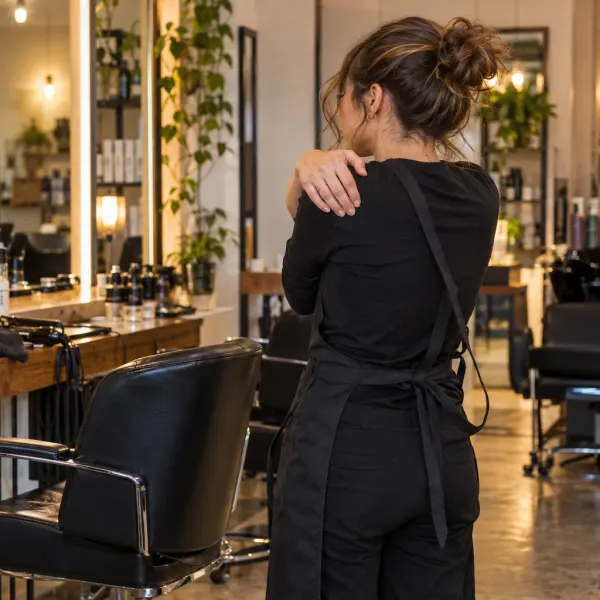
Why Salon Work Makes Your Body Ache & What You Can Do to Feel Better
We learn some simple moves and strategies to keep the blood pumping through the muscles and limit posture problems from The Balanced Beauty Pro
by Anne Moratto
 MENU
MENU SEARCH
That week early November 2014 was supposed to be one of the best of her life, but Jenni Burke, co-owner of The Head Shoppe in Lower Sackville, Nova Scotia, doesn’t even remember it.The birth of her second daughter had gone as planned: a ...
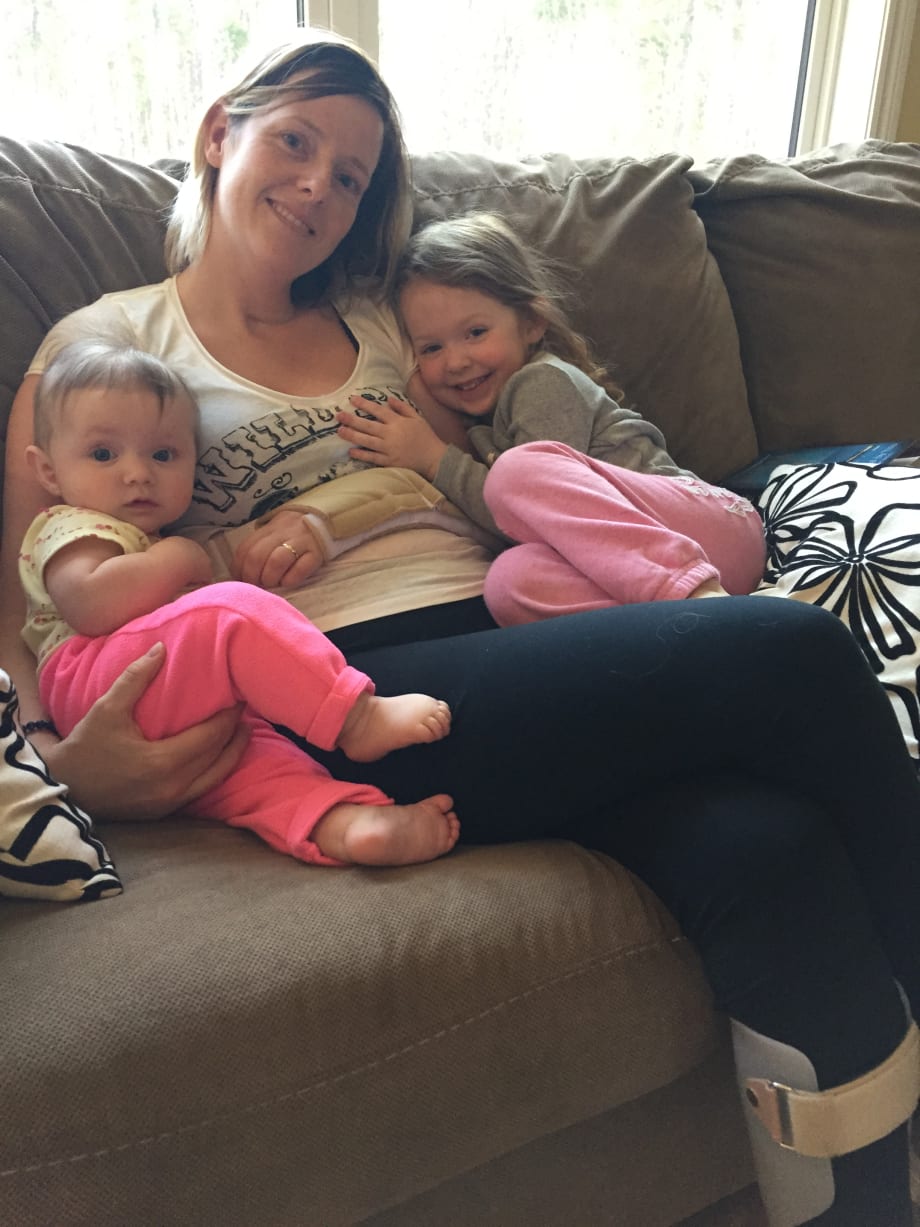
Jenni Burke, co-owner of The Head Shoppe in Lower Sackville, Nova Scotia (photo credit: Getty Images)
Getty Images
That week early November 2014 was supposed to be one of the best of her life, but Jenni Burke, co-owner of The Head Shoppe in Lower Sackville, Nova Scotia, doesn’t even remember it.
The birth of her second daughter had gone as planned: a C-section followed by the bonding of a healthy mother and child. Two days after they came home, however, Burke didn’t feel well. Her husband rushed her to the emergency room, where the doctors determined that, despite being just 34 years old and in otherwise good health, Burke was having a stroke.
Although most stroke patients are decades older than Burke, 28 percent are under age 65. Young stroke patients are more likely to dismiss symptoms and not seek treatment and to be misdiagnosed when they do seek treatment. This is unfortunate, because being treated within the first three hours with clot-busting medication improves the prognosis after an ischemic stroke, which is caused by a clot that blocks blood flowing through an artery on its way to the brain.
Burke’s stroke was the second, rarer type—hemorrhagic, caused by blood leaking from an artery or bursting through a ruptured artery, resulting in too much pressure on the brain and possibly damage to the brain cells. After successful brain surgery to stop the leak, doctors put Burke in an induced coma. When she was brought out of it, she didn’t know what had happened.
The stroke had severely impacted Burke’s left hand, arm, leg and foot. Her speech was a bit slurred at first, most likely because of the paralysis on the left side of her face. After two months of therapy in the hospital, Burke was transferred to a rehab facility to continue her long climb back to what she hopes will be full mobility. Eventually she was permitted to spend weekends at home, and now she’s back at home and goes for both physical and occupational therapy twice weekly.
“When I arrived at rehab, I was in a wheelchair,” Burke says. “I couldn’t get into the bed by myself. It took a couple of weeks just to take my first steps. Being able to walk out when I left was awesome.” Retraining the brain to send messages to the body requires a lot of
determination. “I would try to move that side, and nothing would happen,” Burke says. “In rehab, they’d attach electrodes that would flex the muscle, and I would concentrate on what that muscle flex felt like. I would try to mimic that through repetitive movement, which helps to clear that path to the brain. It gets easier, but it takes lots of repetition and patience—and patience is not my strong suit!”
Luckily, patience came easier to Burke’s husband, who was extremely supportive. But it was the sense of missing her motherhood experience that motivated Burke to work hard at rehab. In Canada, parental leave is generous, and her husband was able to stay home to care for the baby and their three-year-old. During weekend passes to come home, Burke noticed that her older daughter would ask her husband, rather than her, for permission to do things. Now that Burke has returned home full-time, she’s slowly reclaiming her place as Mom while going for both physical and occupational therapy twice weekly.
“My physical therapy helps me to use my leg, improve my balance and build endurance,” Burke says. “In occupational therapy, I learn one-handed techniques for dressing and cooking— how to live my life with one hand and at the same time try to get my hand and arm to work.”
Although she’s told it might take two years, Burke hopes to return to the salon in every capacity. “Going back to doing hair all day is a long way off for me,” she says. “Being an owner, I can do management tasks, but right now I go back only to visit. It’s so busy and noisy there—that’s hard on my brain.”
Anticipating a year of maternity leave, Burke had already referred her clients to other stylists in the salon. In addition to being understanding, her clients and two co-owners have come through for Burke by donating money to her through a GoFundMe.com page established by friends.
“We raised $30,000 in just a few days,” Burke says. “My husband and I also had disability insurance on our mortgage, which really saved us.”
Peter Mahoney, president of Salon Resource Group, the parent company of The Head Shoppe, says there’s a lesson here to never take anything for granted. “Have good medical insurance for your staff because financially this can be an impossible burden,” Mahoney advises owners. “Jenni was a perfectly healthy person. She’s been a trooper.”
Burke’s home is on one level, and she can manage the outside steps to the garage with the help of the railing, so she hasn’t made many modifications to her house. She hopes to begin driving soon, even with continuing paralysis in her arm and weakness in her leg. “People keep telling me how strong I am,” Burke says. “I ask them, ‘What’s the alternative?’ But I do think I’m tougher now. Being dependent was hard on me; I couldn’t get my head around that. Now I’m independent, and there’s more work to be done, but I’m in celebration mode. In rehab, other patients were in their 80s. I discovered that, with stroke, everyone thinks, ‘How could this happen to me?’ So I never say ‘why me’ because, really, why anyone?”
Every 40 seconds in the U.S., someone has a stroke. Stroke is the fifth leading cause of death and the leading cause of disability; one out of six people will suffer a stroke in his/her lifetime. For most age groups, men are at higher risk for stroke than women, but in all age groups, stroke causes death in greater percentages of women than men. Blacks, Hispanics, American Indians and Alaska natives have a greater chance of having a stroke than do non-Hispanic whites and Asians.
In addition to age, risk factors include:
• High blood pressure
• Heart disease
• Previous stroke
• Obesity
• High cholesterol
• Sickle cell disease
• Unhealthy diet
• Inactivity
• Excessive alcohol
• Smoking and second-hand smoke
If you suspect that someone is having a stroke, think FAST:
Face drooping. Ask the person to smile. Is the smile uneven? Does one side of the face droop? Is it numb?
Arm weakness. Ask the person to raise both arms. Does one arm drift downward? Is it weak or numb?
Speech difficulty. Ask the person to repeat a simple sentence. Can the person speak? Is the speech slurred or hard to understand?
Time to call 911. Even if these symptoms disappear, get the person to the hospital immediately. Check the time so you’ll know when the first symptoms appeared.
We learn some simple moves and strategies to keep the blood pumping through the muscles and limit posture problems from The Balanced Beauty Pro

Anny VanDriel, owner of Be Rosie Salon and creator of Pricing Isn’t Personal, volunteered to share a pricing presentation to beauty school students a year ago, and ended up learning more than she expected.

From the launch of the Ulta BeautyArtist Collective to the evolution of Trendspiration, celebrating stylists is what The Salon at Ulta Beauty does best.
Sponsored by Ulta Beauty

With more than four decades in the industry, hairdresser and MODE Education founder Stan Newton has built a career around the art and discipline of cutting hair, learning the rules so he can break them.
Beauty professionals should evaluate each service based on its popularity, profitability, and alignment with current trends. Conducting client surveys and analyzing booking data can provide insights into which services are in demand and which might be phased out.

LifeSpa leader Ali Yanez explains why strong mentorship, predictable income, meaningful recognition and the right work environment help beauty professionals build careers that last.
Whether a beauty professional chooses a commission salon, booth rental, salon suite or salon ownership, the common thread is having more choices than ever before.

Sport Clips Haircuts will host its inaugural "Level Up Live," a first-of-its-kind virtual event that combines live haircutting education, career inspiration, product knowledge, and employment opportunities for licensed stylists and cosmetology students nationwide.
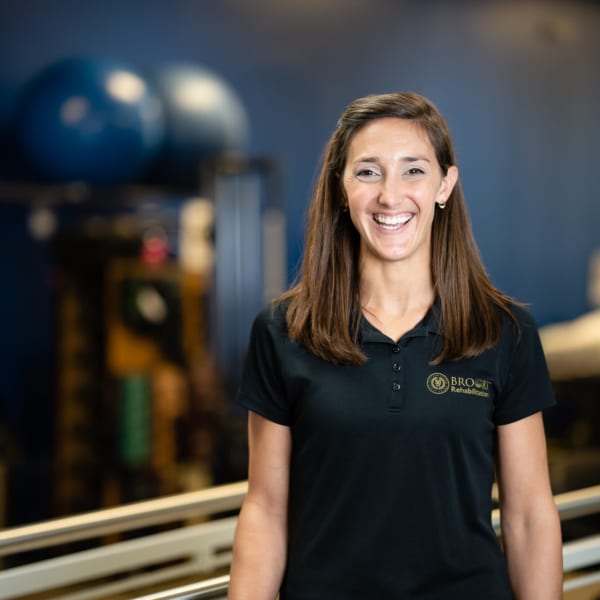
Orthopedic PT reveals three daily exercises plus ergonomic advice that can help salon professionals avoid the aches and injuries caused by standing, bending and repetitive overhead work.

Four publications for beauty industry professionals to enhance their leadership skills, financial awareness, professional growth, and joy!
Salon suite pioneer Karen Kaminski argues that the next evolution of independent beauty businesses won't be defined by beautiful spaces alone, it will be driven by smarter systems that help professionals spend less time on administrative work and more time serving clients.

At a time when many LGBTQ+ people felt compelled to hide parts of themselves, Carlos Valenzuela found a career in beauty and a community that offered opportunity based on what you could do and how well you could do it.

Whether it's social media, fashion, film, art, or culture, Chaz Dean advises stylists to stay aware of what's inspiring people. Take the elements that make sense for you in these five lessons learned through a life in beauty.

For Jessica Domoney, building a successful career isn't about saying yes to every opportunity, it's about protecting your time, investing in yourself and creating an experience clients won't forget.
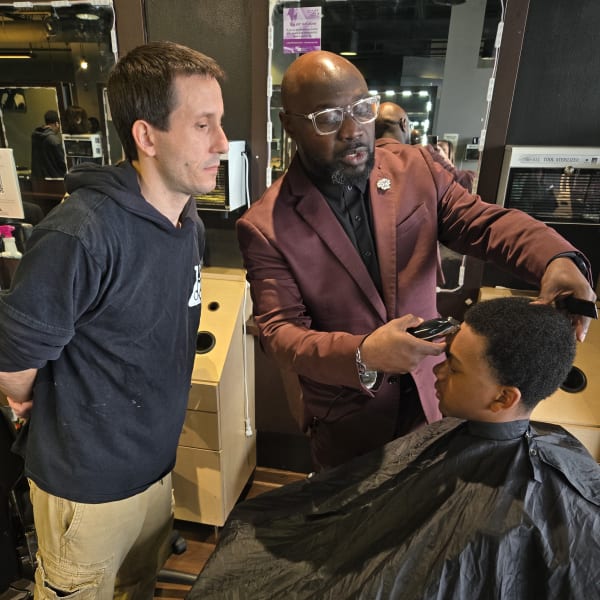
MODERN SALON sat down with Samuels to discuss the book, beauty education, mentorship and the habits that help beauty professionals thrive.
"The mistake people make is treating AI like a vending machine instead of a personal assistant." Digital marketing expert Scott Moon shares how beauty professionals can use AI while staying authentic

Real-world advice on creativity, consultations, color, burnout, business, boundaries, inclusivity, client care, and career growth from educators and industry experts.