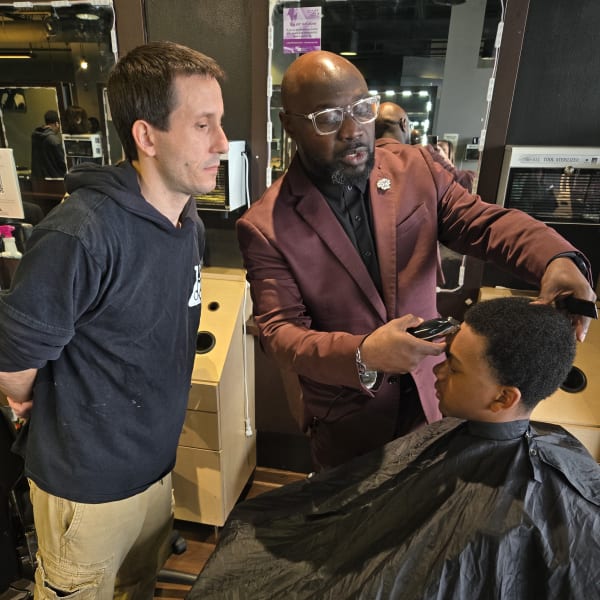
Education is necessary for beauty professionals to maintain their cosmetology licenses, and paying for that education can be burdensome, but it doesn't have to be. Understand which education tax credits can help you offset those costs.
by Eva Macris and Tina Azarvand, Esq., LL.M.
July 31, 2024Whether you are an employee or employer in the beauty industry, education is necessary to receive and maintain your license. There are various paths to complete the requisite training, all of which come at a cost. Paying for your education can be burdensome and sometimes overwhelming, but it doesn't have to be. For stylists, education tax credits can be a relatively simple and efficient way to alleviate the stressors of receiving necessary training while obtaining tax benefits to help offset educational expenses. As an employer, working with your employees to take advantage of education tax credits not only improves their expertise but also can enhance your business.
What Style Works Best for You?
Choosing the educational tax benefits that are right for you ensures more money in your pocket. The following tax benefits can help both employees and employers accomplish that:
1. Lifelong Learning Credit
The Lifetime Learning Credit is a nonrefundable federal tax credit worth up to $2,000 that is available to taxpayers who pay qualified tuition and related expenses to attend an eligible educational institution. This credit is intended to help offset the costs of post-secondary education and specific continuing education courses. Hair stylists can utilize this credit to enroll in advanced courses involving hairstyling techniques, hair coloring, or business management at accredited vocational schools or colleges. The Lifetime Learning Credit enables hair stylists to invest in their continued education and career growth by reducing the financial burden.
The Lifetime Learning Credit is 20% of the first $10,000 in qualified education expenses, with a maximum credit of $2,000.
Highlights:
This credit can be claimed for any number of years.
The credit can include both tuition and fees.
The credit is usable for all students, including those taking courses to improve job skills.
There are no specific enrollment or criminal record restrictions; the credit may apply to any post-secondary educational institution, such as a college, university, or trade school, that qualifies to participate in a student aid program administered by the Department of Education.
Lowlights:
This credit does not cover course materials.
The credit is nonrefundable, meaning it will only reduce tax liability.
The credit phases out for higher-income individuals, with limits beginning at $80,000.
The credit is limited to one credit per tax return.
2. American Opportunity Tax Credit
The American Opportunity Tax Credit is a refundable federal tax credit worth up to $2,500 for eligible students in their first four years of higher education to help cover qualified educational expenses. For hair stylists pursuing an undergraduate degree or other recognized credential in cosmetology at accredited institutions, this credit can be a stepping stone towards a brighter future. By covering tuition, fees, and required course materials, the American Opportunity Tax Credit helps alleviate the financial burden of education, allowing stylists to focus on acquiring the skills necessary for their profession. This credit supports the career advancement of hair stylists, contributing to their professional growth and success.
The American Opportunity Tax Credit is 100% of the first $2,000 in qualified education expenses and 25% of the next $2,000 of qualified education expenses paid, with a maximum credit of $2,500.
Highlights:
This credit provides up to $2,500 per student per year.
The credit can include tuition, fees, and course materials.
If the credit reduces your tax to zero, you can receive a refund of 40% of the remaining credit (up to $1,000).
Lowlights:
The credit is available for only two tax years (reduced from four years under the Tax Cuts and Jobs Act of 2017).
Students must be within the first four years of higher education to apply for this credit.
The credit phases out for higher-income individuals, with limits beginning at $80,000.
The credit requires at least half-time enrollment and no felony drug convictions.
3. Section 2206 of the CARES Act
Section 2206 of the CARES Act permits employers to contribute tax-free money annually to an employee's student loan repayments, up to $5,250 annually through 2025. These contributions are free from FICA tax and excluded from the employee's taxable income, resulting in a double tax benefit. Hair stylists employed by salons or other businesses can benefit from this provision if their employers choose to offer this assistance. By receiving tax-free contributions towards their student loan debt, stylists can reduce their financial burden and focus on advancing their careers without the stress of loan repayment.
Section 2206 was introduced in response to the COVID-19 Pandemic to amend the Internal Revenue Code Section 127 (IRC 127). Before the amendment, IRC 127 covered tuition, fees, books, supplies, and equipment for courses. Section 2206 of the CARES Act now permits employers to contribute up to $5,250 annually toward an employee's student loan debt. The contribution is excluded from the employee's income. Although introduced as a temporary measure applicable only to payments made in 2020, this provision was extended through 2025, meaning the benefit is only available for payments made in 2024 and 2025.
Highlights:
This section applies to tuition, fees, books, supplies, and student loan repayments.
Section 2206 reduces taxable income by excluding the amount from gross income.
There are no income limits for the employee to be eligible.
Employers can offer this to multiple employees.
This can be utilized with the American Opportunity Tax Credit or Lifetime learning Credit for different expenses.
Lowlights:
Takeaways
Utilizing education tax credits can optimize your savings. As a stylist, strategically using the American Opportunity Tax Credit or Lifetime Learning Credit can offset education costs, allowing investment in advanced courses or certifications. If your salon offers student loan repayment assistance under Section 2206, utilize this benefit to reduce your debt.
Section 2206 benefits employers through FICA savings and improved employee retention. It also attracts talented stylists and fosters growth.
Smart tax planning maximizes financial benefits in the evolving salon industry. Don't leave money on the table by neglecting tax benefits like Section 2206. Regular tax planning, like hair maintenance, prevents costly corrections later. Consult a tax professional to ensure compliance and maximize benefits.
At Azarvand Tax Law, we are dedicated to providing comprehensive tax planning for businesses and individuals, helping you uncover hidden savings and implement education benefits that can give your business a competitive edge. Let us help you keep more of your hard-earned money where it belongs – in your business.
Email us at Info@AzarvandTaxLaw.com or book a free consultation online at AzarvandTaxLaw.com to discover how proactive tax planning can benefit your business today.