






Travel Tuneups: Wellness Retreat in Portugal for a Healthier 2027
From restorative treatments to personalized fitness and nutrition, Longevity Senses Cascais offers three wellness getaways to help guests build healthier habits.
by Anne Moratto
 MENU
 SEARCH
Learn how to make the most of your hard-earned dollars from a financial adviser. Her three-step plan requires you to commit to saving, make it a habit and allocate wisely.

From NAILS Magazine Career Handbook.
With money’s familiarity, it’s easy to lose sight of its importance in your life today and—more importantly—in your future. Because of this, it’s often a good practice to put away debit and credit cards and use cash only to make money less intangible and more familiar.
However, in the beauty profession, the opposite is true. Because salons are a cash-based business, it is always available, and cash too becomes insubstantial and familiar. It becomes just as elusive as money spent with debit and credit cards.
Dollars become just pieces of paper, and you can easily fall into an easy-come-easy-go pattern of money management. But the earning of those dollars isn’t easy, and it’s a shame that this familiarity lulls you into unconscious behaviors where you don’t make the most of your money today, but more importantly, you don’t save your money for tomorrow.
So how do you change this unconscious pattern with money?
THREE STEPS TO FINANCIAL RESPONSIBILITY:
Commit to using your hard-earned dollars for both today and tomorrow.
Divide a sheet of paper down the middle. On the left side, list all the reasons why you don’t save now. On the right side, list the reasons why you want to save. Analyze the list and decide on which side you want to be—not where you think you should be, but rather where you want to be. A commitment needs to be your choice, not someone else’s. Once you choose, you will commit consciously to saving for the future instead of unconsciously spending for today.
Choose one day a week to contribute to your future.
Take the entire day’s earnings (or a portion) and deposit it into a separate savings account. Make this a weekly ritual that takes priority over everything. No excuses. After a month, it will become a habit that replaces your old pattern of spending.
Allocate for the future.
When you have $1,000 in your new account, you can allocate between short-term and long-term investments. Allocate a portion or percentage of the new account as a safety net for emergencies (six months to a year), a portion for larger, projected expenses (one to five years), and a portion for long-term investment (five years or more). It’s important to fund all three segments at the same time or you fall prey to never getting beyond the safety net portion. Once you have done the allocation, separate the money into three accounts, divide your weekly deposits in the same way and watch them grow.
These three easy steps are all it takes to set up a lifetime savings plan. You’ve made the commitment, formed a habit and allocated wisely.
Once your plan is underway, you’ll need to decide where to invest these dollars. There are many types of accounts. Here are a few points to consider:
Convenience. Because you are trying to make this a habit, set up your initial accounts where it is easy to make deposits. Remember, it won’t take much of an obstacle to end a habit. Make it easy to stay committed.
Fees. Because today’s savings accounts only pay about 1%, find accounts where monthly fees won’t eat up the earnings. Credit unions are often a great source for low fees.
Risk tolerance. As your money grows, there are more investment options for generating higher investment returns (earnings). Higher returns generally mean higher risk of loss. Don’t be talked into investments that keep you awake at night worrying. Find an investment with a comfortable level of risk.
Investment horizon. This refers to the length of time you expect your money to be invested. If you will use the money within a year, use a savings-type account where there is no risk for untimely fluctuations in value. But if you won’t be using the money for a long time, you can invest in something that has higher returns, more risk, and consequently more fluctuations. With a longer investment horizon, you can time the withdrawal of these dollars and not worry about having to do it on a bad market day.
Mutual funds. With more than 10,000 funds to choose from, you have a wide variety of investments to match your risk tolerance and investment horizon. Using mutual funds gives you the option to not put all your eggs in one basket. So even with only a small amount to invest, you can invest in small pieces of many stocks and bonds allowing you to diversify and spread out your risk.
Retirement plans. For long-term investments, take advantage of tax laws that allow you to defer and/or eliminate tax consequences. By doing so, you’re using government dollars to contribute to your future. There are many types of retirement plans to choose from. Consult your tax professional to find one that fits you best.
These are just some of the investment considerations ahead of you. Before you know it, your savings will grow into something to be proud of, and you’ll be on your way to financial freedom. Regardless of your age, today is the perfect day to begin a new conscious life with money.
To learn more about saving for retirement, visit nailsmag.com/retire.
From restorative treatments to personalized fitness and nutrition, Longevity Senses Cascais offers three wellness getaways to help guests build healthier habits.

YWCA Metropolitan Chicago and Ulta Beauty Charitable Foundation (UBCF) brought together 150 girls ages 9–14 for Pretty Empowered, a hands-on experience designed to build confidence and introduce girls to careers options.

Like many hairdressers, I saw opening a salon as the next logical step. But I also wanted my salon to be a little different, and needed to figure out ways to stand out in a sea of salons.

Powered by the brand’s Suite Relief Program, a North America initiative funds education and trade show access for students across cosmetology, barbering, esthetics, nail technology, and massage therapy.

What makes salon content worth a pause? Hairstylists Janelle Eyre, Sean Crutcher and Luis Rodriguez share how they show their work, earn guests’ trust and make posting feel manageable. You can get MORE from these artists in our upcoming webinar!

We learn some simple moves and strategies to keep the blood pumping through the muscles and limit posture problems from The Balanced Beauty Pro

Anny VanDriel, owner of Be Rosie Salon and creator of Pricing Isn’t Personal, volunteered to share a pricing presentation to beauty school students a year ago, and ended up learning more than she expected.

From the launch of the Ulta BeautyArtist Collective to the evolution of Trendspiration, celebrating stylists is what The Salon at Ulta Beauty does best.
Sponsored by Ulta Beauty

With more than four decades in the industry, hairdresser and MODE Education founder Stan Newton has built a career around the art and discipline of cutting hair, learning the rules so he can break them.
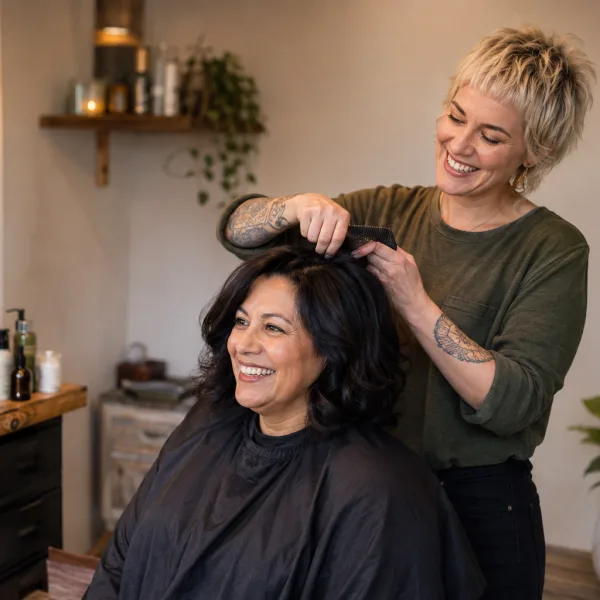
Beauty professionals should evaluate each service based on its popularity, profitability, and alignment with current trends. Conducting client surveys and analyzing booking data can provide insights into which services are in demand and which might be phased out.

LifeSpa leader Ali Yanez explains why strong mentorship, predictable income, meaningful recognition and the right work environment help beauty professionals build careers that last.

Whether a beauty professional chooses a commission salon, booth rental, salon suite or salon ownership, the common thread is having more choices than ever before.

Sport Clips Haircuts will host its inaugural "Level Up Live," a first-of-its-kind virtual event that combines live haircutting education, career inspiration, product knowledge, and employment opportunities for licensed stylists and cosmetology students nationwide.

Orthopedic PT reveals three daily exercises plus ergonomic advice that can help salon professionals avoid the aches and injuries caused by standing, bending and repetitive overhead work.

Four publications for beauty industry professionals to enhance their leadership skills, financial awareness, professional growth, and joy!
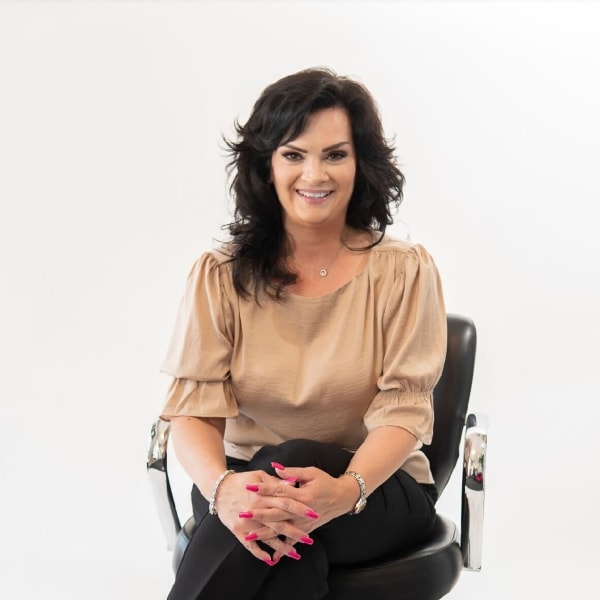
Salon suite pioneer Karen Kaminski argues that the next evolution of independent beauty businesses won't be defined by beautiful spaces alone, it will be driven by smarter systems that help professionals spend less time on administrative work and more time serving clients.

At a time when many LGBTQ+ people felt compelled to hide parts of themselves, Carlos Valenzuela found a career in beauty and a community that offered opportunity based on what you could do and how well you could do it.