Education extends beyond passing your state board exam, and an assistantship is step one to a successful future.
Lauren Quick・Contributor
June 19, 2014
6 min to read
By Lauren Quick and Anne Moratto
It's increasingly rare for salons not to have assistantship programs in place. Think of it like an internship before you nail your first job; it's a sneak-peek at what you might be doing for the rest of your life and a way to get your foot in the door of a company or, in this case, a salon. An assistant's job is to learn everything he or she needs to know to be successful as a stylist or colorist. Some programs have assistants specialize in style or color while others provide a taste of both; it really depends on the salon.
Ad Loading...
Assistant programs don't just help future professionals, though. While you're honing your skills in styling, coloring and more, the salon is sizing up its next greatest stylist (if you play your cards right). What better way to employ stylists and colorists than to train them at the salon they'll be working for and make sure their expertise is exactly in line with what is expected of a specific salon's stylists?
Sometimes it can be unclear why an assistantship is worthwhile. Being the "new guy" (or gal) isn't always easy, and you could just do booth rental, right? Well, maybe you could—if you had the money—but you'd be missing a priceless opportunity to learn from the best in the business.
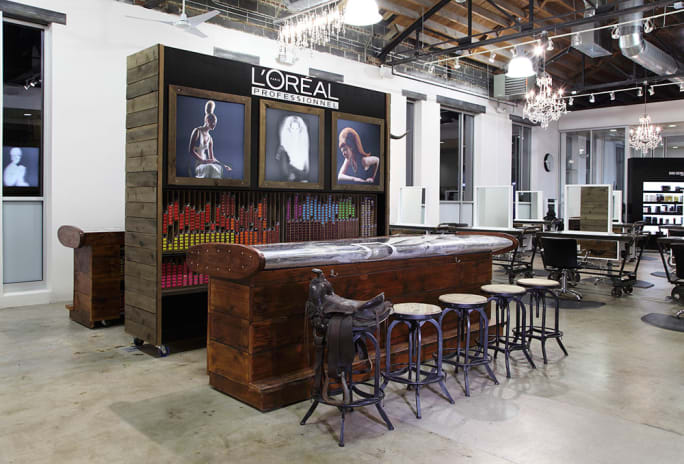
Matthew Morris Salon and Skincare in Denver, Color.
THE IDEAL CANDIDATE Matthew Morris, owner of Matthew Morris Salon in Denver, Color., views assistants as the next generation of hairdressers in his salon. As such, he wants hardworking individuals and holds to the salon's recruitment policy: "Hire people, train on skill."
"Pretend you're on a first date the whole time," Morris says. "Take the stylist's lead. We want to see your personality, but we don't want to see you run with it like you've been at it for five years."
Morris says it's easy to hire someone to acquire a skill—anyone can do that, really—but training someone to be a good person is another matter. His salon is looking for future professionals who have good hearts, are natural leaders and want to grow with the company, but this criteria is unique to different salons.
Ad Loading...
Ryan Cabe, salon manager for The Harlot salon in Venice, Calif., says his staff "aura" is a little more laid-back, but they still look for potential assistants who really want to be there.
"We want to see that fire in their eyes," Cabe says.
Similarly, Beth Minardi, renowned colorist, color educator, Joico spokesperson and founder of Minardi Luxury Color Care and Beth Minardi Signature Shades, says she looks first and foremost for someone who has a good head on his/her shoulders.
"I don't even care if they know what they're doing," Minardi says. "I just want them to have a great attitude and know they're not going to get rich the first year they work in Manhattan.
"You're entering an assistant program," Mindardi continues. "There is a hierarchy in the salon, and you're at the bottom of the totem pole and have to work your way up."
Ad Loading...
Andi Steloff, salon manager at the Sally Hershberger Salon in Los Angeles, considers herself something of a matchmaker. Steloff connects assistants to stylists and colorists in her salon and does all the hiring of assistants. It's her approving nod that might mean an aspiring beauty professional has what it takes to make the grade.
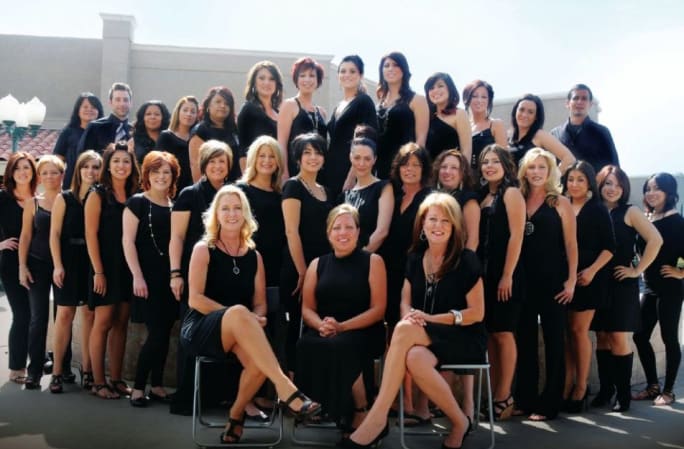
The Salon Estique team in Phoenix, Ariz.
"When I need to staff up, I contact local schools like Paul Mitchell, Aveda, Vidal Sassoon and local colleges to let them know we're looking for people," Steloff says. "I already know my cast of characters—my stylists and my colorists—and I know what personalities will team up well with them.
"Some are old-school and not always polite," Steloff says. "It takes a special personality to respect that and not take it personally. I will bring in a potential assistant to spend a day or two here to see what we're all about and so we can see them, too."
Above all, be passionate about your career path and make sure you're grateful and happy to be where you are. Salons and stylists frequent beauty and cosmetology schools for assistant prospects, and if you're really interested in a specific salon, make sure you keep up with them; if you stay in touch throughout your time in beauty school, you could be top-of-mind for them when you're graduating and they're looking for new talent.
THE PROCESS Many salons invite the candidate into the salon to shadow for a few days to get a better sense of the culture, environment and clientele.
Ad Loading...
"Some take 'shadowing' literally, and they are afraid to make a move, but the ones who are proactive and not afraid to get their hands dirty are the ones I want," Steloff says.
At Sally Hershberg Salon, an assistant program lasts approximately two and a half years, during which they take weekly classes in cutting and coloring that are taught by senior staff.
"During their training, we do classes, and sometimes they have to bring in a model for a live demo," Steloff says. "If they show up three times in a row without a model, they will never work here. They can continue to assist, but they won't be in the program that gets them promoted to the floor."
Remember: Many salons believe that if a candidate is struggling to find a model or two each month for a class, it can be reflective of your ability to build up a clientele.
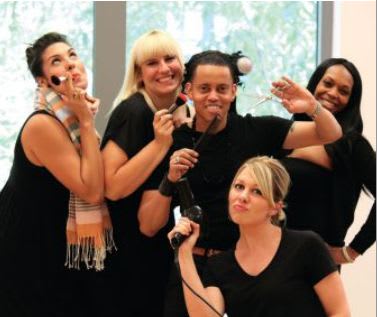
Staffers at Modern Salon and Spa in Charlotte, N.C.
"I always tell assistants that for the next two and half years, they are kind of signing their life away to us," Steloff says. "It's really hard to find coverage on the weekend because we don't have a lot of spare assistants. Our stylists are so busy that they can't make their way without an assistant, so it's a big commitment. I tell our candidates right up front that they are not getting holidays off for the next two to three years because that is our busiest time of year."
Ad Loading...
A VALUABLE EXPERIENCE Expect to learn—a lot. Your job isn't meant to be easy, but it is meant to teach you how to be an exemplary stylist or colorist from beginning to end of an appointment. This means you should come out of your experience knowing everything from greeting a client and getting him or her a drink, to moderating a successful consultation, to conducting top-notch services and guaranteeing your client leaves smiling.
Almost all salons have some kind of more formalized education you'll complete as an assistant outside of just shadowing stylists and colorists. The Harlot salon holds classes for assistants every Monday, Cabe says. Stylists choose what kind of classes they want to teach—cut, color, style—to the assistants so they can educate on their expertise.
Morris' salon also has an education regimen in place, and it starts with very basic skills, such as effectively communicating, social media usage, shampooing and a career growth plan. The education phases continue with everything from how to time manage to learning the ins and outs of balayage and color correction, and assistants must complete a test-out quiz at the end of their experience.
Schooling doesn't stop after you pass your state board exam, but you should come out on the other side with everything you need to know to be a successful stylist and get a job!
Anny VanDriel, owner of Be Rosie Salon and creator of Pricing Isn’t Personal, volunteered to share a pricing presentation to beauty school students a year ago, and ended up learning more than she expected.
From the launch of the Ulta BeautyArtist Collective to the evolution of Trendspiration, celebrating stylists is what The Salon at Ulta Beauty does best.
With more than four decades in the industry, hairdresser and MODE Education founder Stan Newton has built a career around the art and discipline of cutting hair, learning the rules so he can break them.
Beauty professionals should evaluate each service based on its popularity, profitability, and alignment with current trends. Conducting client surveys and analyzing booking data can provide insights into which services are in demand and which might be phased out.
LifeSpa leader Ali Yanez explains why strong mentorship, predictable income, meaningful recognition and the right work environment help beauty professionals build careers that last.
Whether a beauty professional chooses a commission salon, booth rental, salon suite or salon ownership, the common thread is having more choices than ever before.
Sport Clips Haircuts will host its inaugural "Level Up Live," a first-of-its-kind virtual event that combines live haircutting education, career inspiration, product knowledge, and employment opportunities for licensed stylists and cosmetology students nationwide.
Orthopedic PT reveals three daily exercises plus ergonomic advice that can help salon professionals avoid the aches and injuries caused by standing, bending and repetitive overhead work.
Salon suite pioneer Karen Kaminski argues that the next evolution of independent beauty businesses won't be defined by beautiful spaces alone, it will be driven by smarter systems that help professionals spend less time on administrative work and more time serving clients.
At a time when many LGBTQ+ people felt compelled to hide parts of themselves, Carlos Valenzuela found a career in beauty and a community that offered opportunity based on what you could do and how well you could do it.
Whether it's social media, fashion, film, art, or culture, Chaz Dean advises stylists to stay aware of what's inspiring people. Take the elements that make sense for you in these five lessons learned through a life in beauty.
For Jessica Domoney, building a successful career isn't about saying yes to every opportunity, it's about protecting your time, investing in yourself and creating an experience clients won't forget.
"The mistake people make is treating AI like a vending machine instead of a personal assistant." Digital marketing expert Scott Moon shares how beauty professionals can use AI while staying authentic
Real-world advice on creativity, consultations, color, burnout, business, boundaries, inclusivity, client care, and career growth from educators and industry experts.
Real-world advice on creativity, consultations, color, burnout, business, boundaries, inclusivity, client care, and career growth from educators and industry experts.