Hesitant to broach sensitive subjects
with your clients? Never feel tongue-tied again!
Use expert tips from our comprehensive guide to talk
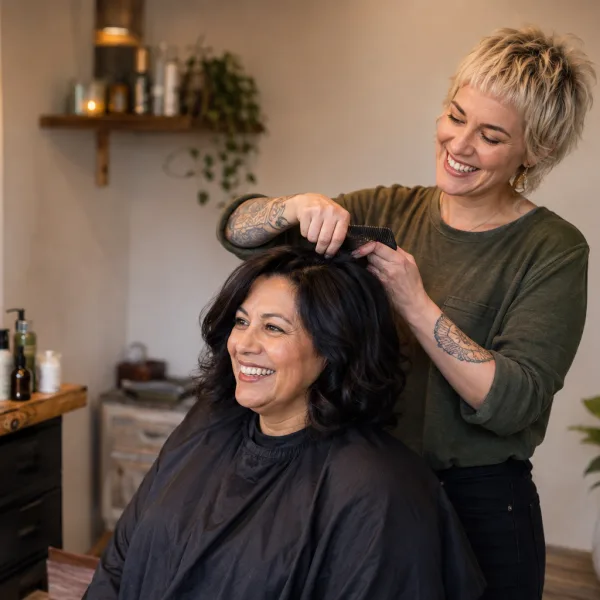
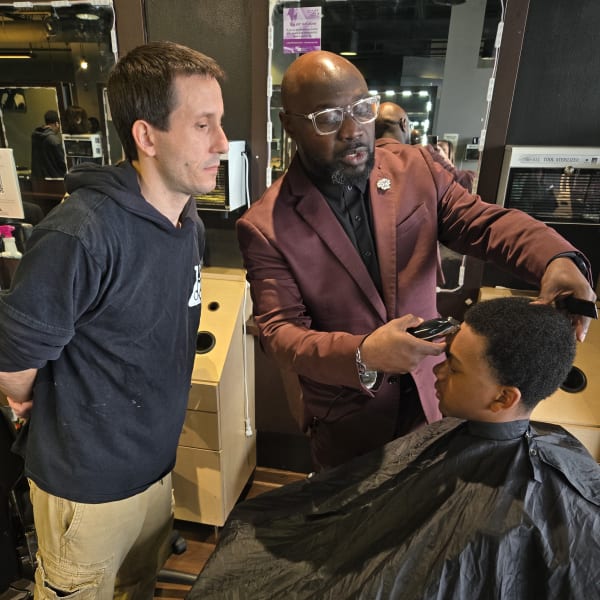
to clients with professional confidence. Most clients will tell you directly their hair concerns—whether she is bored with her cut, tired of fighting the frizz or facing thinning strands, says Joe Santy, a hair professional for 35 years and vice president of education for Dennis Bernard Inc. The best approach for all your clients is to jump-start the conversation during the consultation.
by Kelly Cison
July 10, 2011
4 min to read
Hesitant to broach sensitive subjects with your clients? Never feel tongue-tied again! Use expert tips from our comprehensive guide to talk to clients with professional confidence.
howtotalk300
Ad Loading...
Most clients will tell you directly their hair
concerns-whether she is bored with
her cut, tired of fighting the frizz or facing
thinning strands, says Joe Santy, a
hair professional for 35 years and vice
president of education for Dennis Bernard Inc. The best approach
for all your clients is to jump-start the conversation
during the consultation.
"I begin by asking three basic questions," explains Santy.
"One: ‘What do you like most about your hair?' If you start
off telling the client how you would update their style or
what you would change, it breaks the rapport. But when you
know what they like, it gives you a better idea of how to approach
their hair.
"Two: ‘What do you not like about your hair?' Whether
it's texture or color, you can then find your selling point,
and off er the client a texture or color service. But make
sure you know what they like first, so you lower the risk of
off ending the client with your suggestion.
"Three: ‘What do you expect this cut or color service to
do for you?' Many clients have unrealistic expectations.
They bring in a photo of a hair style, then get upset when
they don't end up looking like the model in the photo.
Always find out the client's expectations."
For even more effective communication, Santy recommends
that stylists read as much as possible to build
their vocabularies and cultivate a professional image. One
option is Santy's own book, Passionate Salon Professionals,
written in conjunction with a psychologist, about the
unique dynamic between stylist and client.
If a client is reluctant to open up about a sensitive issue, you
can probe a little further. "I would ask, ‘Do you feel your hair is
as thick as it was a few years ago?' Or, ‘How do you feel about
hair color?'" says Santy. "Talk in terms of feelings to see where
they stand with it." Never discount how a client feels about her
hair, whether good or bad, since it will erode any trust.
Consider any hair issues a revenue opportunity for you.
Thinning hair is one of the top categories in hair care today-
think thickening products and treatments, extension services
or layered cuts to add volume. Even clients who decline commitment-
heavy services, like foils, may be open to more low-maintenance
options. "I have a client who doesn't like color
and she looks 20 years older than she needs to, but she's okay
with it," reports Santy.
"It's individual to each person. But even
she will get a glaze to add a nice shine to her hair."
Whatever solution you find, it's important your client understands
the commitment she'll be making to maintain her
new hair. "Mention the appointment interval that you recommend
before you begin anything," says Jessica Dodge, education director and lead stylist and colorist at Caruh Salon Spa in
Seattle, Washington. If your client isn't aware of how to keep
up with her new look, all your hard work will essentially be
undone when she walks out the door.
Maybe all she really needs is just a little refresher to her
look-but refuses to part with the '80s bangs or the '90s
"Rachel" cut. Again, tactical communication is key. "I'll stand
in front of her so I can see her face when I speak," says Janet
Rabig, a stylist at Salon 37 & Day Spa in Algonquin, Illinois.
"I'll look at her face shape, her whole style, and say, ‘Have
you ever thought about…' and suggest maybe a side-swept
bang instead of a straight bang as an update." Even if the
client rejects the idea, Rabig doesn't let herself get discouraged.
"At least she knows I'm considering her style and
working to keep her look fresh."
Showing off a "hair idea" file is a subtle way to encourage
clients to consider a change. "I'll show them pictures I
pull from magazines, something that is an update on what
they already have," adds Rabig. "If they still say no, that's
okay because I might have planted a seed. And it has happened
that a few appointments later a client will ask, ‘Do
you still have that picture you showed me? Can you still do
something like that?'"
The bottom line when confronting sensitive topics? "Hair
issues are only a problem when a stylist makes it a problem,"
advises Santy. "You should approach every client with the
same enthusiasm." After all, he notes, the only thing that
separates a good cut from a bad one is if the client likes it.
With more than four decades in the industry, hairdresser and MODE Education founder Stan Newton has built a career around the art and discipline of cutting hair, learning the rules so he can break them.
Beauty professionals should evaluate each service based on its popularity, profitability, and alignment with current trends. Conducting client surveys and analyzing booking data can provide insights into which services are in demand and which might be phased out.
LifeSpa leader Ali Yanez explains why strong mentorship, predictable income, meaningful recognition and the right work environment help beauty professionals build careers that last.
Whether a beauty professional chooses a commission salon, booth rental, salon suite or salon ownership, the common thread is having more choices than ever before.
Sport Clips Haircuts will host its inaugural "Level Up Live," a first-of-its-kind virtual event that combines live haircutting education, career inspiration, product knowledge, and employment opportunities for licensed stylists and cosmetology students nationwide.
Orthopedic PT reveals three daily exercises plus ergonomic advice that can help salon professionals avoid the aches and injuries caused by standing, bending and repetitive overhead work.
Salon suite pioneer Karen Kaminski argues that the next evolution of independent beauty businesses won't be defined by beautiful spaces alone, it will be driven by smarter systems that help professionals spend less time on administrative work and more time serving clients.
At a time when many LGBTQ+ people felt compelled to hide parts of themselves, Carlos Valenzuela found a career in beauty and a community that offered opportunity based on what you could do and how well you could do it.
Whether it's social media, fashion, film, art, or culture, Chaz Dean advises stylists to stay aware of what's inspiring people. Take the elements that make sense for you in these five lessons learned through a life in beauty.
For Jessica Domoney, building a successful career isn't about saying yes to every opportunity, it's about protecting your time, investing in yourself and creating an experience clients won't forget.
"The mistake people make is treating AI like a vending machine instead of a personal assistant." Digital marketing expert Scott Moon shares how beauty professionals can use AI while staying authentic
Real-world advice on creativity, consultations, color, burnout, business, boundaries, inclusivity, client care, and career growth from educators and industry experts.
Real-world advice on creativity, consultations, color, burnout, business, boundaries, inclusivity, client care, and career growth from educators and industry experts.
Today's clients are hearing more about longevity, biohacking, inflammation, and healthy aging than ever before. This article explores the science and language behind the skin longevity movement, and what it could mean for client consultations, treatment recommendations, and professional credibility.
Licensed to Thrive, Anna Manukyan's all-in-one beauty career and financial masterclass, is being gifted to professionals who enroll in L'Oreal LEVEL Rewards for a limited time.