Securing hair models is vital when it comes to learning new concepts and building confidence in your abilities in the beginning stages of your hairdressing career. As your career progresses, the need for models doesn’t diminish; success ...
Securing hair models is vital when it comes to learning new concepts and building confidence in your abilities in the beginning stages of your hairdressing career. As your career progresses, the need for models doesn’t diminish; success within the industry demands constant education as well as creativity in the form of contest entries and editorial work, among other opportunities. In this ever-evolving art, it will always be important to know how to recruit and select hair models.
Soliciting friends and family members to be your guinea pigs can work for a while, but many hairdressers find it important to know how to procure models in order to have a new experience and get a fresh face in their portfolio—besides, your mom/best friend/cousin might not be willing to get the specific cut or color technique you need to demonstrate. It can, however, be intimidating to approach a stranger and ask her to be your hair model.
WHO’S THAT LADY?
Stylist Daniel Rubin of the North American Goldwell Artistic Team is always collecting models, as he is continually working on new platform and print projects.
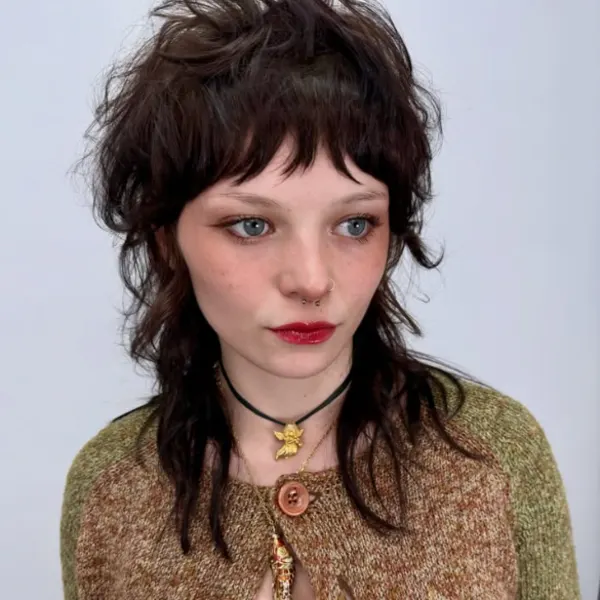
“Your photograph looks stronger if the model is super strong,” Rubin says. “With the right model, the hair becomes even stronger.”
Although there are many places one could approach a potential model, Rubin finds talking to people walking down the street works for him more often than not. “If her body structure and the way she carries herself speaks to me, I’ll try to start a conversation,” he says.
Hiring models is another route many take, but with that comes agency fees and boundaries on how radical a change a model can make to his or her appearance.
“If models have a limitation with cutting or color, it can interfere with the creative process and doesn’t allow you to fully express yourself depending on the story you want to tell,” Rubin says. However, he acknowledges that, in the beginning, it can be quite intimidating to approach a stranger and initiate the conversation.
CONFIDENCE IS KEY:
Cameron Kepford, owner of Haus of Heir in Davenport, Iowa, stresses the importance of staying poised when approaching a potential model. “Be confident, communicate your vision, and be prepared to show her a portfolio or storyboard,” Kepford says. “The worst anyone can say is no. Don’t be afraid to put yourself out there. The more you step outside your comfort zone, the more natural it will begin to feel.”
Rubin echoes this sentiment. “Recruiting models on the street is like an uncomfortable haircut: You’ll get more comfortable and eventually perfect your approach. Remember, most people on street don’t look at themselves as models, and most are really flattered when you approach them with the idea.”
Alexis Digiacomo, recent graduate of Paul Mitchell The School in Chicago, tries to keep in mind that “most people are ready to jump at free salon services.” This confidence has assisted her in finding models relatively easily, though some specific styles—such as A-line bobs—aren’t what everyone wants. “And some salons require you have five models for each focus of practice,” Digiacomo says.
Aside from being armed with confidence, Rubin suggests carrying sample imagery with you while scouting for models.
“If you can show inspiration images of looks that you are trying to emulate, bring them with you,” Rubin says.
Kepford stresses the importance of dressing the part. “Presentation is key—especially when approaching a stranger,” Kepford says. “Make sure your image is approachable and reflects your work.”
Of course, having a business card or credentials with you is important, not only so prospective models can reach you with any questions, but to demonstrate your professionalism.
SCOUT ABOUT
In an urban environment, Rubin says, stylists have the advantage of easily scouting for models on the street.
For people across the country that don’t have that, he recommends getting more creative by scouting for models at beauty schools, colleges and stores. Rubin, in fact, landed two models for a recent competition entry at a beauty school in Chicago.
He suggests meeting with the human resources department at the school to explain that you are working on a creative project and get permission to observe a class. After visually scouting for the appropriate models, Rubin will approach his prospects after class to discuss his project and vision.
“I try to see students at the earliest phase in their beauty school career, as most of the time they have untouched hair and are open to a more creative look,” he says. The same technique works well on college campuses, Rubin says.
Coffee shops, concerts, boutiques, grocery and department stores are great places to recruit as well. These venues attract all different types of people and styles, which makes them great places to initiate conversation with potential models. If nerves are getting the best of you, Rubin suggests approaching a grocery store clerk or department store employee. These people can be less intimidating because friendly customer service is expected. They tend to be more approachable and open to conversation in their own work environment.
Facebook, Twitter and Instagram can be effective and convenient recruiting tools as well. “Social media has been a huge platform when selecting models for our shoot,” Kepford says. “If you constantly interact and engage with your social media audience and begin to create a relationship with them, you’ll have a plethora of models in no time.”
NO-SHOWS ARE NO-NOS
It is important to be sure you and your model are on the same page about the finished look you are hoping to achieve.
On the day of a class or shoot, you don’t want to learn that the model is suddenly squeamish about the color or cut you’ve planned. If you’ve found a model that says she’s on board, make sure not only to provide her with your information, but also to secure hers as well.
“You don’t just want to hand her a card and say, ‘call me,’” Rubin says. “Get her information and continue your conversation via phone or email, and be sure to confirm all details.” Staying in contact with your model is important to guarantee she will show up, but sometimes an incentive helps, too.
For his NAHA entry, Rubin offered complimentary color services to his models, returned their hair color to that of their preference and kept up with them for six months. “A lot of times, models will continue to work with me, and I’ll use them again for future projects,” Rubin says. Having a reliable base of hair models has been useful for Rubin as well as other hairdressers on his team.
On occasion, Kepford’s stylists offer service and product incentives to models that participate in photo shoots or continuing education in the salon. More importantly, they’re sure to follow-up and be gracious.
“Don’t be afraid to ask them their preference of contact, whether it be phone, text or email, and be sure to confirm with them the day before,” Kepford says. His team always follows up with a hand-written thank-you letter, which can make a model not only more likely to participate in future events, but could also convert a model into a new client.
CREDITS:
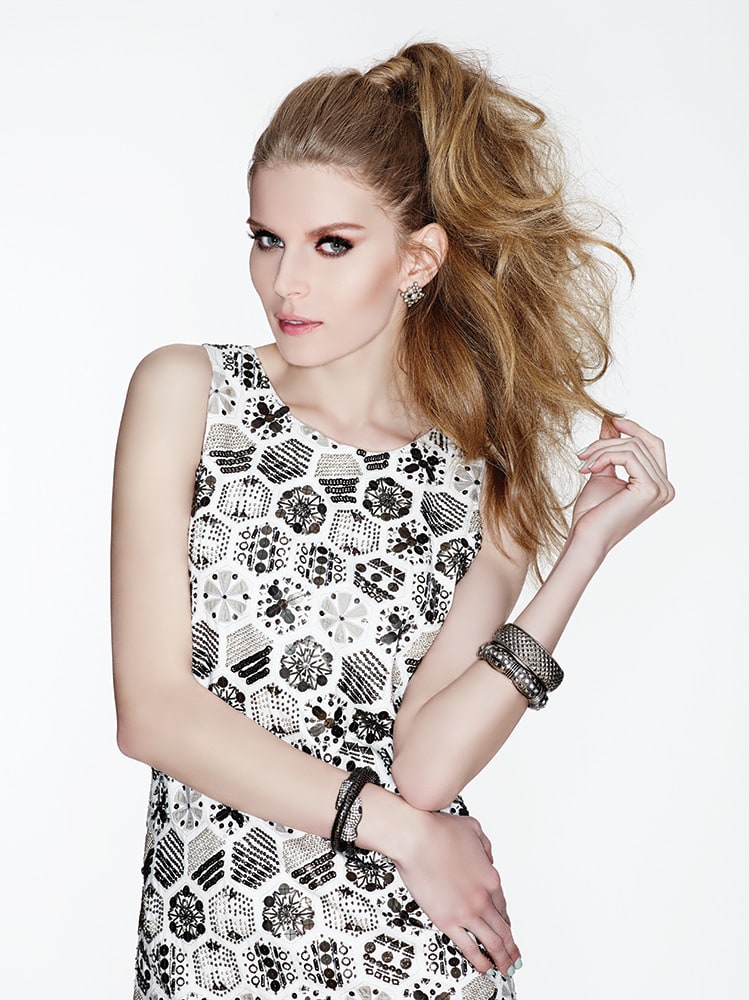
Model 1:
Hair: Ted Gibson and Jason Backe
Assisted by: Kitty Nadel, Eric Rosado, Jennifer Vanel, Devin Toth
Photography: Roberto Ligresti
Makeup: David Maderich
Fashion Styling: Rod Novoa and Dennis Pinto
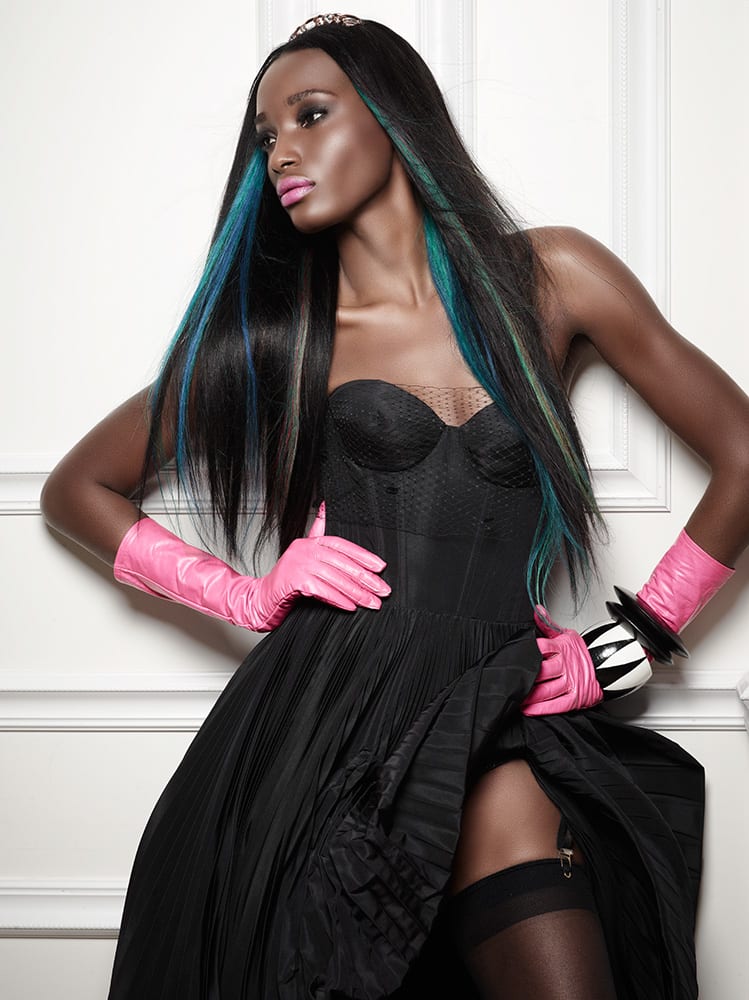
Model 2:
Hair: Daniel Roldan assisted by Vicky Yeremchuk
Photography: Roberto Ligresti
Makeup: David Maderich
Fashion Styling: Rod Novoa assisted by Dennis Pinto
Nails: Amanda Smith